










































Impact Assessment of SAT-7 ARABIC's Female Heads of Households Project
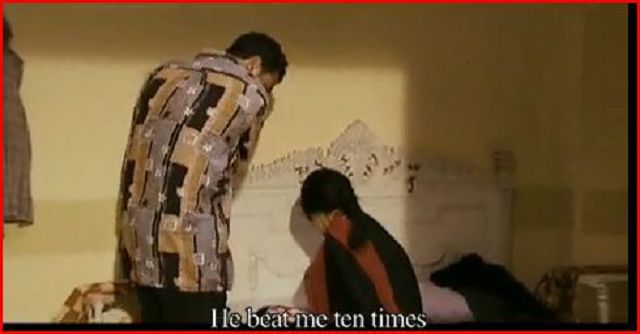
"Bearing in mind that these issues are social and cultural, the change is a remarkable indication about the powerful change effect of SAT-7's program. These cultural and social issues usually takes a generation (about 30 years) to change."
This report shares the results of an evaluation study of "And I Am Not Just a Woman", an initiative revolving around a documentary by the Christian Arabic satellite TV-station SAT-7 that aired in Egypt, Jordan, and Morocco. It seeks to shed light on the many challenges - legal, economic and social - which female heads of households in the Arab world face. In addition to the documentaries, SAT-7 has produced a series of short TV spots raising awareness about the rights of women living in the Arab world. The project has also included a series of live interactive talk shows, where women have discussed the challenges they face as the sole person responsible for the household.
The impact of the campaign was surveyed in 6 villages in rural Egypt in September 2009; in the survey, respondents were asked about their attitudes towards women. After the baseline, dishes were set up and families connected via satellite dishes to watch the broadcasts of SAT-7. In June 2010, after 8 months of exposure to the documentaries, spots, and talk show, a final survey was carried out.
Indicators showing positive change:
- Question 2: "It is better for a woman to stay with her husband, even if he is a drug addict or is beating her." The number of respondents agreeing with this statement fell from 47.6% to 35.1%. The breakdown shows that the change was significant only for educated people and males. After the intervention, the attitudes of men to this question were at the same level as that of women.
- Question 4: "If I see a young widow coming home late in the evening, I think she is having an affair." Only 23.8% agreed with this statement after the intervention, as opposed to 31.7% before. The breakdown shows that females were most positively impacted.
- Question 7: "The right place for girls and women is home." Positive change has occurred across all groups, although not significantly for females (the majority of whom disagreed with the statement even before the intervention). The number of men agreeing with the statement fell from 57.7% to 42%.
- Question 9: "Rape happens due to women's and girls' bad behaviour." The number agreeing with the statement fell from 53.6% to 43.9%. The change is most significant among the educated and females.
- Question 11: "It is better for a widow or a divorcee to find a new husband than to find a decently paid job." This indicator was positively impacted across all groups, from 59.2% to 47.8%.
- Question 13: "If a woman is abandoned by her husband, it is probably because she was a bad wife." The number of illiterate people agreeing with this statement fell from 40.9% to 26%.
- Question 14: "A woman's children should have the right to acquire her nationality just the same as that of men." (Several of the documentaries and the talk show addressed the question of nationality, which is a major issue in many Arab countries.) This indicator was positive, from 66.9% to 75.3% agreeing with the statement.
- Question 15: "A husband has the right to discipline his wife in his own way." The number of persons who agree with this statement fell from 59.3% to 45.3%, and the change is significant across all groups.
Indicators showing negative change:
- Question 1: "Girls have the same right to education as boys." ..."[I]t is possible that the many documentaries showing the problems of women married to an unemployed and uneducated man have led some illiterate male viewers to think that these problems could have been avoided if more men were given an education and a job at the expense of women. This would be a negative side effect."
- Question 5: "It is a shame for a widow or a divorcee to receive support from the government." ..."The reason is probably to be found in the documentaries, as several of the cases in the documentaries tell with pride that they have refused help from the government. So this result is an unintended negative side effect of the project."
- Question 6: "It should not be allowed for girls under 18 to marry." "...The problems of early marriage was an issue in many of the programs, and it is difficult to imagine any explanation for this negative change."
- Question 8: "Women have the right to have a say in spending money and budget." "...Again this negative change is hard to explain."
Indicators showing no change
- Question 3: "Women have the right to work in the same type of jobs as men."
- Question 10: "It is not suitable for a woman to be responsible for spending money and budget in the home."
- Question 12: "If a widow remarries, her children of the first marriage should be with the family of the first husband."
Reflections from Mette Schmidt, Project Manager:
"This is not a scientifically 'controlled' study. But on the positive side, this is very much like 'real life'. The respondents were not asked to watch the programs on FHH, but had the freedom to watch any programs on SAT-7 when they wanted to. In this way, they are similar to the rest of SAT-7's audience.
Can the results be taken as an indication of a change in the attitudes of SAT-7's audience across the Arab world? While rural Egypt is certainly very different from urban Cairo and even more different than other locations in the Arab world, it can be argued that a traditional, patriarchic culture is prevailing in the entire region, and among all religious groups. So while the actual percentages of the study cannot be extrapolated to the entire population, it is safe to assume that some positive change has occurred among the millions of SAT-7 viewers across the region.
Another question is whether the change in attitudes is a lasting change. The positive results are very encouraging and demonstrate the potential of utilizing satellite TV to influence and change people's core attitudes. But attitudes may change again, if the audience is exposed to alternative messages. A continued effort is therefore important to ensure lasting, positive change for the women of the region."
March 2013 update:
SAT-7 conducted a post-survey one year after the project had ended. The organisation was doing a survey in October 2011 in connection with a nutrition project in the same villages, so they included the questions about attitudes about women in this survey. The results show that the positive change (on 7 of 13 indicators) is sustained - and even improved - on some indicators. For example, the number of respondents who disagree with the statement that rape happens because of women's behaviour increased from 46.6% (at baseline) to 56.1% (at midterm) to 68% (at final report). The number of persons who disagree that if a husband left his wife it was probably because she was a bad wife increased from 68% to 77.7% and finally to 79.7%. And the number of persons who disagree that a husband has the right to beat his wife increased from 40.7% to 54.9% and finally to 64.6%.
Click here for the 16-page report in Word format.
Emails from Mette Schmidt to The Communication Initiative on February 14 2011 and March 8 2013.
- Log in to post comments