











































Impact Data - Project UMANG
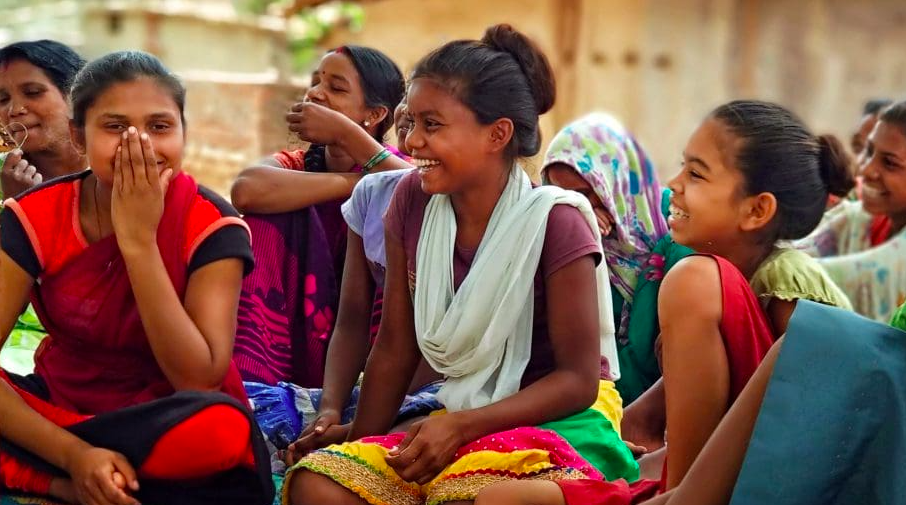
"UMANG girls performed better and were relatively better off than non-UMANG girls in education enrollment, which is a critical mediating factor in reducing the incidence of child marriage."
Project UMANG (see Related Summaries, below) is a multilevel programme designed to increase school retention and reduce child marriage in Godda and Jamtara districts of Jharkhand, India. The programme's multilevel approach meant that project activities engaged girls as well as the family and wider community. Girls were engaged at schools and in the community through group sessions and participation in sports activities, men and boys of the community through group sessions, the community in general through street theatre and community radio, and through activation of village child protection committees.
Specifically, the project worked towards the following outcomes: (i) enhanced aspirations of girls to delay marriage, pursue higher education, and seek employment; (ii) enhanced agency of girls to negotiate the timing of marriage and choice of partner, as well as to pursue higher education and seek employment; (iii) positive shifts in attitudes toward gender and marriage-related norms among girls, boys, parents, and the community; and (iv) a stronger system related to adolescent issues that is responsive to the needs of adolescent girls.
The proportion of girls married before the age of 18 years increased from 10.0% to 17.4% in intervention areas and from 8.5% to 24.9% in control areas. However, the increase was much greater in the control area (16.4 percentage points) than in the intervention area (7.4 percentage points). Also, within the intervention areas, there was a lower prevalence of child marriage (14%) among those who were exposed to UMANG activities compared to a higher prevalence (26%) among those not exposed to UMANG activities. After adjusting for other confounders in the DID regression model, girls residing in intervention areas showed a significant impact of the UMANG programme compared to controls.
The percentage of girls currently enrolled in school/college rose in intervention regions from 51.0% to 55.0% and dropped in control areas from 48% to 41%. Also, there was a substantial difference within the intervention areas between UMANG-exposed girls and those not exposed to the UMANG programme: Girls who stated they were exposed to UMANG programne activity (62%) showed higher enrollment compared to girls not exposed to such activity (38%) at the endline. After adjusting for other confounders in the DID regression model, girls residing in intervention areas showed significant UMANG programme impact compared to controls.
The gender attitude index score increased in the positive direction in the intervention area (53.2 to 54) but moved in the negative direction in the control areas (53.1 to 52.2) between baseline and endline, demonstrating the pathways of the programme impact, which was highly significant.
The child marriage attitude index score increased both in the intervention area (44.1 to 46.5) as well as control area (44.4 to 45.6) between baseline and endline, with slightly greater increase in score in intervention area. Girls residing in intervention areas showed significant UMANG programme impact in terms of their attitude toward child marriages.
Aspirations for higher education by girls decreased from baseline to endline both in intervention (37% to 31%) and control areas (28% to 22%). Similarly, convincing parents for higher education ability by girls decreased from baseline to endline both in intervention (67% to 64%) and control areas (61% to 52%). However, the drop was much more in control areas, and intervention areas did better.
Addressing Child Marriage Through Comprehensive Gender-Transformative Program: Evidence from UMANG [PDF] on June 11 2024. Image credit: Hemlata Verma/ICRW Asia
- Log in to post comments