










































The Impact of the Social Environment on Zambian Cervical Cancer Prevention Practices
University of Antwerp (Nyambe, Kampen, Van Hal); Wageningen University (Kampen); University of Zambia (Baboo)
Cervical cancer is the most common cancer in Zambia. The purpose of this study is to determine how the key players of the sociocultural and political environment in that country recognise cervical cancer as a public health problem and therefore impact the provision of cervical screening and vaccination services.
The Social Ecological Model (SEM) and the Theory of Triadic Influence (TTI) are the theoretical frameworks that guided this study. The SEM is composed of the intrapersonal, interpersonal, organisational, community, and policy levels. The TTI comprises of the ultimate, distal, and proximal levels of influence, as well as intrapersonal, interpersonal social, and sociocultural environmental streams of influence. The SEM and TTI suggest factors that predict/influence health behaviour - in this case, screening and vaccination practices - which were used to develop study instrument topics based on 3 predetermined themes (cervical cancer in general, screening, and vaccination).
A cross-sectional mixed methods study was carried out from February to May 2016 in Lusaka City with 61 participants who were at least 18 years old. The qualitative interview data were collected as a more effective way to dialogue with the respondents on the phenomena of human health behaviour regarding cervical cancer and its prevention. The design involved triangulation of data sources by collecting information from different groups of people, as well as theory triangulation, by applying both the SEM and TTI.
The 3 predetermined themes are used to present the results of the analysis as reported by policymakers, special interest groups (advocacy groups, NGOs, media), and stakeholders (healthcare providers, teachers, church leaders). Selected communication-related findings are summarised here:
Cervical cancer in general:
- Policymakers stipulated that they inform the public on cervical cancer though the media and existing community structures (traditional marriage counselors), meetings at schools for vaccine awareness, and an mHealth project that will use SMS (text) messages. Special interest groups further mentioned running community outreach programmes, using social media sites (Facebook), developing brochures, and calling on brand ambassadors. Churches reported having health talks and encouraging members to seek health care. Teachers had meetings with healthcare providers and were given materials (handbooks, posters) for talking to pupils and parents. The respondents (policymakers, special interest groups, stakeholders) believe that the general public gains information by word of mouth. Policymakers also mentioned informal meetings (kitchen parties, church gatherings) and social media, while stakeholders mentioned peer educators, media, brochures, posters, workshops, and public announcements (in churches, schools, markets).
- Special interest groups and stakeholders agreed that more was needed for sensitisation. Respondents from special interest groups suggested that brochures should be printed in local languages and not only English to maximise coverage. The media (television, radio) was generally considered effective. The media reported airing health-related programmes, and some networks also had a health desk devoted to covering health-related topics. They requested that health experts should have a more permanent partnership with the media by making themselves available when needed, assisting in programme sponsorship, and building capacity among healthcare reporters.
Screening: Policymakers stated that screening coverage in Lusaka was low, and fear of dying drives screening uptake. The respondents (policymakers, special interest groups, and stakeholders) generally agreed that screening uptake was facilitated by having awareness and knowledge. Policymakers and healthcare providers also said that knowing someone who had cervical cancer and partners' support increases uptake of screening. Apart from having limited screening facilities/programmes, lack of awareness, lack of knowledge, and fear (of dying, pain, unknown, stigma, a positive result) was cited by most respondents as barriers to uptake of screening. Policymakers further said that partner's influence in decision-making (e.g., husband might refuse to abstain during treatment) can be a barrier. Special interest groups and healthcare providers also cited certain beliefs (cultural, religious, misconceptions) and lack of symptoms as barriers. Respondents from special interest groups further mentioned shyness in the presence of male doctors, procrastination, and refusal to return for call-back as reasons for low uptake.
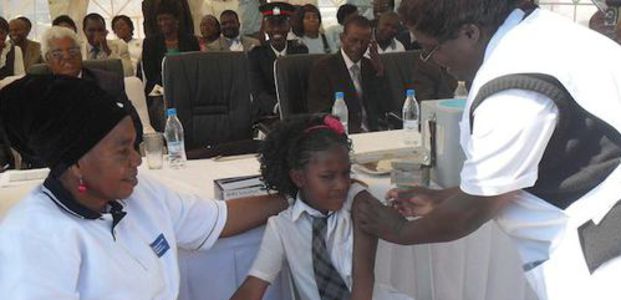
Vaccination: Policymakers and stakeholders reported that uptake of the vaccine was due to having awareness, knowledge, fear of having or dying from cancer, and knowing someone who had cancer. Stakeholders noticed that people who saw others practice vaccination without experiencing side effects made them want to have the vaccine. Policymakers said sensitisation on vaccination was effective, but there was poor social mobilisation because of low funds, which leads to misunderstandings (age limit, side effects). Policymakers and stakeholders also said that religious beliefs and policy restrictions (on age, gender) reduced uptake.
Overall, on the level of policy, the study found that the more involved a person was in cervical cancer and its prevention, the more likely he or she was to believe that cervical cancer is a main health concern in Lusaka. However, during the time of the research, there was no policy governing cervical cancer prevention, and the Ministry of Health (MoH) was finalising the strategic plan for improving Zambian health care. The lack of a functional strategic plan or policy has affected service provision and limited the information that is available to stakeholders.
Furthermore, most respondents stated that there was a lack of adequate facilities and workforce for provision of cervical cancer services. The vaccine was at the time of this research administered as a pilot, and some eligible schools did not participate in the vaccination programme, possibly because of poor registration of schools. Perhaps, the respondents asserted, more efforts should be put into involving volunteers (youth from the community), using existing structures (traditional marriage counselors), and introducing other methods that might reduce the interval of screening (low-cost HPV DNA test) or the need for personnel (self-screening kits).
On the level of information sources and knowledge, the researchers state: "Clearly, there is a need for more information sharing among stakeholders who have contact with the public to ensure that incorrect facts, religious and cultural beliefs that might increase the risk of cervical cancer are not encouraged."
They also indicate that, "As [is] evident from the results, very few men support their partners during cervical treatments. It is recommended to include men in cervical cancer campaigns because they affect decision making and influence the behavior of women...Furthermore, since vaccination of boys will not be considered at a national level, more emphasis should be given to circumcising boys. Then at an appropriate age, boys should be made aware of cervical cancer, taught condom use and remaining faithful to their partners when in relationships."
The researchers conclude that the SEM and TTI were effective in selection of study groups and determining factors that influence health-seeking behaviour. The sociocultural and political environments form the basis of the cervical cancer prevention programme, and they play an integral role in facilitating and supporting women in the uptake of screening. They make it possible for parents to allow their daughters to be vaccinated against HPV. However, this is limited by having insufficient staff and facilities, as well as the lack of policy. "The general low health seeking behavior among Zambians is a hindrance to cervical cancer prevention. In spite of all sectors agreeing that cervical cancer is an important health issue, being a silent infection makes it difficult to fight."
BMC Cancer. 2018; 18: 1242. doi: 10.1186/s12885-018-5164-1. Image credit: Chanda Chimba III via Zambia Reports