










































Integrating Human-Centered Design in Tertiary Care Hospitals to Reduce Missed Opportunities for Vaccination
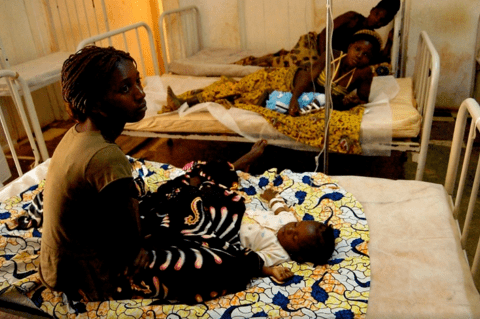
"Designing interventions by integrating multiple stakeholder perspectives, building upon their innovative ideas, and creating solutions targeted to the environment within health facilities can substantially improve vaccination coverage without causing undue strain on available resources or requiring additional resources."
Studies have indicated that a large proportion of children who miss out on vaccination services may already be accessing treatment and healthcare services in health facilities. These missed opportunities may be due to failure to execute established vaccination policies and procedures. Human-centred design (HCD) is a strategy that can help manage public health challenges such as missed opportunities for vaccination. The HCD approach is highly iterative, incorporates human factors into problem-solving, and puts people at the centre of intervention design and execution. This project used HCD to identify solutions to address persistent gaps in undervaccinated hospitalised children in tertiary hospitals in Kano State, Nigeria, and Chandigarh, India, in November 2020.
HCD involves understanding and identifying which people are best suited to solve a problem, facilitating early and continuous stakeholder engagement, and developing a systems approach that ensures that changes implemented at the microlevel will also influence the macrosystem. As healthcare and hospital settings involve a diverse range of teams with unique roles and responsibilities, HCD can be useful for designing interventions and solutions that are desired by, used by, and responsive to stakeholders' needs.
The three primary phases involved in HCD are as follows: (i) inspiration, (ii) ideation, and (iii) implementation. During the inspiration phase, researchers learn from the stakeholders and take time to discover their specific needs in the context of what is being studied. In the ideation phase, the researchers use the information from the inspiration phase to brainstorm ideas for potential solutions and create a prototype of solutions that stakeholders can pilot in their setting. In the implementation stage, the ideated solution to the specific public health problem is implemented while being continuously refined.
This project took place during the height of the COVID-19 pandemic, when travel and in-person meetings were not possible. Thus, the HCD workshops were conducted virtually. These workshops aimed to design a targeted intervention to facilitate catch-up vaccinations for hospitalised children. Organisers brought together diverse stakeholders, including traditional stakeholders like physicians, nurses, and immunisation workers along with less-conventional voices, such as the hospital administration team, medical and nursing students, and community health advocates. They were diverse across age and sex. Stakeholders were selected based on their knowledge of the hospital patients and staff and their perception of who would provide essential information to design an intervention. By bringing together this well-rounded group, organisers sought to develop an intervention that addressed hospital vaccination barriers from multiple perspectives.
During the workshops, the project team reviewed primary data from both hospitals, highlighting the high proportions of undervaccinated children in hospital wards and caregiver and healthcare workers' perceptions of barriers to vaccination in the hospital setting. They further leveraged virtual conferencing breakout rooms to facilitate small-group discussions to co-design the specific aspects of an intervention to overcome these barriers. In these breakout rooms, participants discussed the specifics of what content an intervention should highlight, how to implement the intervention, where to implement it within the hospital setting, who would be responsible for any additional tasks, and how to ensure the sustainability of any potential intervention.
After completing these breakout sessions, participants completed a ranking exercise on a "priority matrix" to assess the impact and feasibility of the intervention aspects of each proposed intervention. By mapping the interventions to one of the four quadrants of low-to-high impact and feasibility, the project team was able to develop a prototype of a bundled intervention at the end of the workshop. These interventions aimed to address a range of barriers to vaccination in health facilities, focusing on the four Ds: (i) dissemination of information to increase awareness through informational posters geared towards caregivers and vaccination education sessions for healthcare workers; (ii) documentation of vaccination status, where healthcare workers during their medical intake procedures of hospitalised children ensured collection of their vaccination data and tracked their vaccination status so that immunisation workers could quickly identify vaccine-eligible children and catch them up on missed vaccines; (iii) deployment of vaccines, with strengthened links between immunisation workers, physicians, and caregivers to improve vaccination delivery; and (iv) discharge advice, where healthcare workers and hospital staff provided information and referrals to vaccination clinics near patients' homes upon discharge.
Broadly, these solutions were aimed to achieve the same goals in both Nigeria and India. However, each of the four Ds was tailored to the particular barriers, misconceptions, and hesitations most commonly seen in each hospital. Furthermore, the language, visualisations in the posters, layout in the medical record form for vaccination data collection, and prescriptions at discharge were all customised according to local context and integrated into existing procedures for sustainability.
Immunisation and Vaccines, Children
Vaccination during hospitalisation is critical, particularly because undervaccinated children have multiple vulnerabilities and more frequent hospital admissions. Although there have been previous efforts to address catch-up immunisation during hospitalisation, this issue persists, with less than 20% of hospitalised children receiving all age-eligible vaccines upon discharge.
According to the project team, conducting the HCD workshops online meant they were able break geographic and systemic barriers that may have prevented many of the individuals from attending or speaking up in an in-person setting. They recorded high attendance, eliminated travel costs, and minimised working-hour losses. During the HCD workshops, they found that younger participants, those who were not as senior in their positions, and women were actively engaged in discussions and willing to share their perspectives. Furthermore, holding the HCD workshop online allowed for the financial flexibility to include a broader range of stakeholders to capture more unique perspectives that may have been missed in in-person meetings.
Johns Hopkins Bloomberg School of Public Health, Post Graduate Institute of Medical Education and Research, Aminu Kano Teaching Hospital, and Direct Consulting and Logistics Limited. This work was supported by the Bill & Melinda Gates Foundation.
"Integrating Human-Centered Design in Tertiary Care Hospitals to Reduce Missed Opportunities for Vaccination: Uplifting Voices for Sustainable Solutions", by Baldeep K Dhaliwal, Rachel Hill, Joseph L Mathew, Patience Obiagwu, Funmilayo Oguntimehin, Ebube Nwaononiwu, Chizoba Wonodi, and Anita Shet, Annals of Public Health, March 11 2024. https://doi.org/10.55085/aph.2024.714. Image credit: Pixnio (free to use)
- Log in to post comments