










































Intention to Participate in a COVID-19 Vaccine Clinical Trial and to Get Vaccinated against COVID-19 in France during the Pandemic
University Hospital of Saint-Etienne (Detoc, Bruel, Frappe, Tardy, Botelho-Nevers, Gagneux-Brunon); Université Jean Monnet, Université de Lyon (Bruel, Frappe, Botelho-Nevers, Gagneux-Brunon); Université de Lyon (Bruel, Frappe, Botelho-Nevers)
"Vaccine hesitancy will be the major barrier to COVID-19 vaccine uptake."
Vaccine hesitancy, described by the World Health Organization (WHO) in 2019 as one of the top 10 threats to global health, may have an impact on recruitment to COVID-19 vaccine clinical trials. After its clinical development, a COVID-19 vaccine will also face the challenge of acceptance by the general population in a post-crisis context. This is a particular concern in France, which has been shown to have among the highest levels of vaccine hesitancy globally. To explore the extent of the issue, these researchers conducted an anonymous online survey from March 26 to April 20 2020.
During the study period, 3,259 adults answered the survey, having been recruited via social media. Vaccine hesitancy was observed in 1,150 respondents (35.3%); 2,434 respondents (74.7%) had fears about COVID-19; and 2,124 (65.2%) considered themselves at risk for COVID-19. Key findings:
- 2,512 of them (77.6%) will certainly or probably agree to get vaccinated against COVID-19. Older age, male gender, fear about COVID-19, being a healthcare worker, and individual perceived risk were associated with COVID-19 vaccine acceptance. Vaccine hesitancy was associated with a decrease in COVID-19 vaccine acceptance.
- 1,550 respondents (47.6%) said they will certainly or probably agree to participate in a COVID-19 vaccine clinical trial. Older age, male gender, being a healthcare worker, and individual perceived risk were associated with potential acceptance to participate in a COVID-19 vaccine clinical trial. A portion of respondents who will certainly accept to participate in a vaccine clinical trial will not certainly get the vaccine if available; further examination of this discrepancy is called for, say the researchers. Vaccine hesitancy was associated with refusal to participate in a COVID-19 vaccine clinical trial.
The researchers note that vaccine coverage against 2009 H1N1 pandemic influenza was only 11.1% in France. However, a greater proportion of respondents to the present survey declared they had been vaccinated against 2009 H1N1 pandemic influenza, so this observation may suggest that the respondents are more pro-vaccine than the general population in France. Furthermore, a large number of healthcare workers answered the survey, and they were revealed to be were more prone to getting vaccinated or to participating in a vaccine clinical trial independently of the perceived risk of getting infected with COVID-19.
According to the researchers, multi-component interventions need to be developed to facilitate recruitment of volunteers in clinical trials and to increase COVID-19 vaccine acceptance. They urge that communities should be involved in the development of these interventions, noting that the rush to develop a COVID-19 vaccine may jeopardise public confidence in scientists.
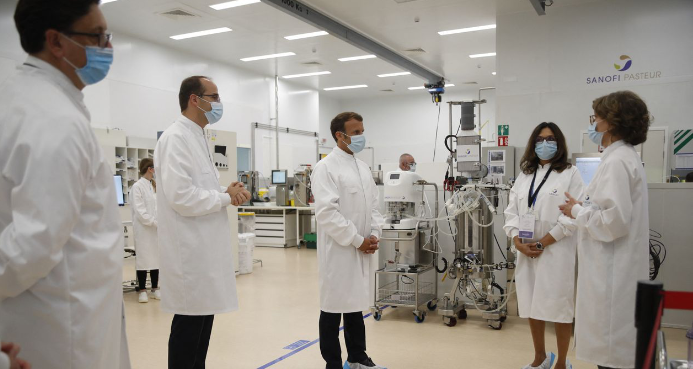
Vaccine, Volume 38, Issue 45, 21 October 2020, Pages 7002-06. https://doi.org/10.1016/j.vaccine.2020.09.041 Image credit: Pool/Zuma Press
- Log in to post comments