










































An Introductory Toolkit for Engaging Children & Youth in Conflict Transformation: Search For Common Ground Children Youth & Conflict
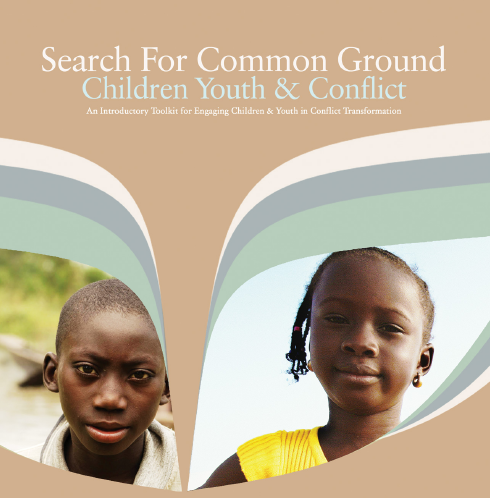
The Search for Common Ground (SFCG) published this document as a resource for staff and others in the peace-building community working to engage and develop the capacity of children and youth in conflict transformation.
The toolkit is an introduction to ways that children and youth can be included in programming and project design around conflict resolution and peace-building. The toolkit was designed as a core initiative within the SFCG Children and Youth Unit to meet the goal of integrating a global "children and youth" perspective. The tools discussed in the document focus on strategic partnership development, media and theatre production, training of staff and other participants, and programme mentoring. Additional chapters provide information on engaging children and youth, the institutionalisation of children and youth activities, and supplementary case studies and programme reviews. Some of the communication-related aspects of the tools described include:
- Developing partnerships that allow for the sharing of methodology, challenges, achievements, and lessons.
- Partnering with radio and media outlets to create platforms for youth voices.
- Using a variety of media programming to create issue awareness and peer encouragement and to provide a "'voice' to the 'voiceless'".
- Training of staff and partners to support the use of other tools and strategies, including a focus on children and youth as trainers in appropriate settings.
- Organisational mentoring to create possible future partners or help ensure the continuity of the programme's goals in a community or region.
- Using theatre production in addressing conflict to engage communities that are having a hard time with taboo or culturally sensitive issues and as a way of using role-play to help children and youth better understand difficult issues.
- Including children and youth in information gathering when monitoring programme activities.
Search for Common Ground Children and Youth website, June 23 2011.
- Log in to post comments