










































"It Takes Time to Build Trust": A Survey Ontario's School-based HPV Immunization Program Ten Years Post-implementation
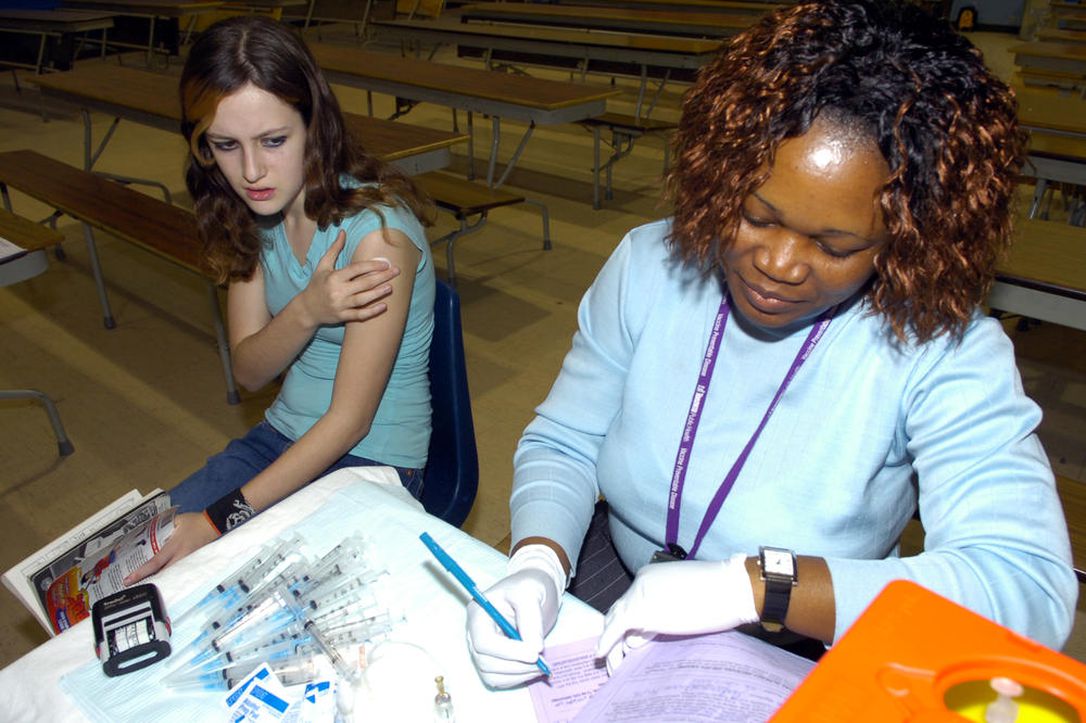
Institut National de Santé Publique du Québec, or INSPQ (Dubé, Gagnon); Centre de Recherche du CHU de Québec-Université Laval (Dubé); Université Laval (Dubé); Public Health Ontario (Wilson, Deeks); Dalla Lana School of Public Health (Wilson, Deeks, Dubey); ICES (Wilson); Toronto Public Health and the Canadian Immunization Research Network (Dubey)
"...the negative perceptions held by parents and school staff regarding the HPV vaccine including concerns about HPV vaccine safety and efficacy need to be addressed in a comprehensive strategy pertaining to misinformation and vaccine hesitancy."
Human papillomavirus (HPV) vaccination programmes have faced many challenges since their introduction in 2007 in Canada, including negative media coverage and, in some jurisdictions, opposition from publicly funded Catholic schools boards. Coverage has been well below public health goals in many provinces; in the 2017-18 school year, coverage in Ontario was 60%. As part of a multi-jurisdictional project on HPV vaccination in schools in Canada, this study sought to describe the HPV vaccination programme in Ontario from the perspective of local public health unit (PHU) level vaccine-preventable disease (VPD) managers to help elucidate the drivers and barriers of HPV vaccine acceptance and uptake in the province.
In 2018, VPD managers at each of Ontario's 35 PHUs were invited to participate in an online survey that asked questions about the school-based programme, training and support of vaccine providers, communication and promotion, assessing coverage rates, and perceptions of the programme's strengths and challenges.
Communication-centred findings include:
- Fact sheets, "Q&As", or other written information locally developed by PHUs were the main tools used to communicate with parents, students, school personnel, and school board officials. Some reported using online resources (e.g., the PHU's website). Very few respondents reported using material developed provincially (e.g., Ontario Ministry of Health and Long-Term Care fact sheet on HPV), and none reported using written information developed by national organisations (e.g., Immunize Canada or Public Health Agency of Canada materials).
- All PHUs reported sending additional communications to students who were away on the day of the school-based clinic (i.e., letter, telephone call, information sheets, or written notification to the parent).
- Respondents were asked if any strategies or interventions have been implemented in their PHU to improve coverage. The 10 respondents who provided an answer mentioned providing online information, calling parents, recalling students, sending information home, communicating directly with students, and implementing other communication campaigns.
- Among the strengths of the programme respondents cited: having good partnerships and support from school boards, having dedicated nursing staff, the perception that offering the vaccine in schools increased accessibility and convenience, and the communication efforts made by local staff (e.g., reminders and recalls). One respondent said, "School based immunizations decrease barriers to accessing vaccines (i.e. no appointment required, no HCP [health care provider] required) - they make vaccines 'normalized' within a school environment ('everyone gets vaccines in Grade 7' peer acceptance) - they provide students with the opportunity to make independent health care decisions ('I can decide about my own health!') in a safe and positive environment. They provide an opportunity to educate students/teachers about vaccines."
- The main barriers cited included the lack of capacity and resources to provide education, promote the programme, and address low vaccine uptake. Other barriers included the negative perceptions held by parents and, or school staff regarding the HPV vaccine, such as concerns about HPV vaccine safety and effectiveness and the "newness" of the vaccine. Logistical barriers were also identified.
- Respondents were asked about the reasons why they felt that HPV vaccine coverage in Ontario is substantially lower than for the other school-based programmes (i.e., hepatitis B and meningococcal vaccines).
- The main reasons cited were around parents' concerns (vaccine safety concerns, the perception that the HPV vaccine is newer than other vaccines offered in schools, concerns with the sexual health messaging associated with the vaccine), and the spread of HPV vaccine misinformation online, including on social media sites.
- One respondent said: "...HPV is relatively new and came with controversies that eroded public confidence. It takes time to build trust in larger authority bodies such as the government and the ministry. Educational messages about the benefits of HPV highlights to the public the importance of the vaccines. Sometimes celebrity illnesses that highlight the benefits of vaccination and specifically HPV has a positive impact for the public..."
- Some respondents commented that variation in coverage for Ontario's school-based immunisation programmes is also influenced by the fact that only one of the three vaccines offered is outlined under Ontario's school-entry immunisation legislation, the Immunization of School Pupils Act (ISPA).
Reflecting on the findings, the researchers note that it is possible to implement interventions to enhance vaccine acceptance and uptake in school-based programmes. In addition to reminder and recall systems that have been shown to be effective, interventions are currently being tested in Canada include the CARD system (C-Comfort, A-Ask, R-Relax, D-Distract), which is designed to impact student attitudes, knowledge, coping strategies, and symptoms during school-based vaccinations. Also, the Kids Boost Immunity (KBI), a Canadian web platform designed to increase students' knowledge about immunisation, could be a strategy for increasing students' knowledge and motivation regarding vaccination.
In conclusion: "Findings of this study indicate that low HPV vaccine uptake in Ontario's school-based program may be a result of many interrelated factors at the societal level (e.g., negative media coverage of the vaccine...), at the organizational level (e.g., limited resources for the program, frequent program changes, challenges in catching-up students missing one or more doses, etc.), at the policy level (e.g., only one of the three school-based vaccine programs are required for school attendance under the ISPA), and at the individual level (e.g., parents' negative perceptions and concerns regarding the HPV vaccine). Further research is needed to identify and understand how these social factors compare across jurisdictions in Canada..."
Human Vaccines & Immunotherapeutics, DOI: 10.1080/21645515.2020.1775456. Image credit: Toronto Star
- Log in to post comments