










































Keeping Journalists Safe Online: A Guide for Newsrooms in West Africa and Beyond
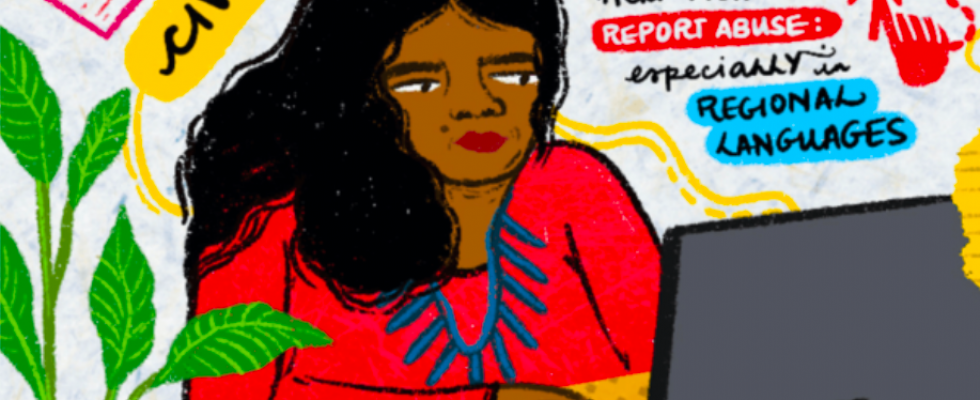
"The risks that online harassment poses to the free flow of information, press freedom, and the democratic exchange of ideas demand an urgent response."
This guide outlines steps and measures that newsrooms and journalists in West Africa can take to mitigate the problem of online abuse - a threat facing journalism today that has the potential to erode press freedom in West Africa if it goes unchecked. Modelled after research published by the United Nations Educational, Scientific and Cultural Organization (UNESCO) and the International Press Institute, this guide is specifically tailored to meet the unique demands and resource constraints facing newsrooms in West Africa.
In the introduction, the guide refers to the Reporters without Borders (RSF) 2020 Index, which shows that social media has generated prolific online harassment and abuse for journalists across Africa reporting on contested social economic and political issues. These online threats include targeted smear campaigns that can erode journalists' resolve to provide independent, critical reporting on crucial issues. In addition, iWatch Africa, an organisation that works to leverage the power of data journalism and new media to promote transparency and accountability in Ghana, tracked over 5,000 cases of online abuse and harassment directed at journalists in Ghana in 2020. This situation reflects what is happening in other countries across the continent, sometimes leading to physical harm. In 2017, the Committee to Protect Journalists found that in at least 40% of cases, journalists who were murdered had received threats, including online threats. A UNESCO survey also found that many women journalists have had to deal with mental health issues as a result of online harassment, and many others have resorted to self-censorship, complete withdrawal from all social media interaction, and avoidance of audience engagement.
To address these challenges, the guide outlines a roadmap that includes the five action points. The action points, which include links to additional tools and resources, are:
1. Build digital rights literacy - The first step is to build digital rights literacy in the newsroom. This involves undertaking training to build awareness of what journalists can expect and demand when working online, and what constitutes abuse: trolling, doxxing, cyber-bullying, etc. Content about digital rights should be made accessible in a variety of formats, such as videos, podcasts, memes, and posters in the newsrooms, because people learn differently. There should also be a continuous engagement process on the topic because abuse evolves as quickly as technology does.
2. Establish safety practices - Establishing a safety culture in the newsroom sends two important messages: First, it helps debunk the widespread feeling among journalists that being targeted with abuse on social media is the new normal; and second, it gives journalists a sense of security that the media organisation will support them. The first step is for top managers to make it clear that the organisation takes online violence and abuse very seriously.
3. Complete a risk analysis - With each new case of online harassment or abuse, the online safety team will need to conduct a risk assessment. It should focus on three key areas: physical risks, psychological risks, and reputational harm.
4. Implement support mechanisms - This section of the guide looks at how to ensure the provision for journalists of digital security, legal and psychological support, and public shows of support by the newsroom. These support mechanisms are meant to support journalists so they can do their work without fear of harm or abuse. This section also includes advice on how to moderate online content.
5. Assign roles and tasks - Addressing online abuse effectively requires the adoption of new roles and tasks in the newsroom, both for editors and journalists, and for managers and social media moderators. For example, one important role is an online safety coordinator to whom journalists can report incidents of online harassment.
According to the author, the guide is not intended to be a one-size-fits-all set of protocols but, rather, should be adapted and modified to fit the needs of individual newsrooms. In the long run, these guidelines will require constant reassessment and updating to accommodate rapid changes in technology, social media tools, and the political landscape that informs online attacks.
Reuters Institute website on December 16 2022. Image credit: iWatch Africa.
- Log in to post comments