










































Knowledge, Awareness and Attitude on HPV, HPV Vaccine and Cervical Cancer among the College Students in India
Amity University Uttar Pradesh (AUUP)
"Integrating knowledge and awareness programs with educational intervention for cervical cancer or HPV screening along with HPV vaccination will go a long way in reducing HPV infection and controlling cervical cancer in Indian women."
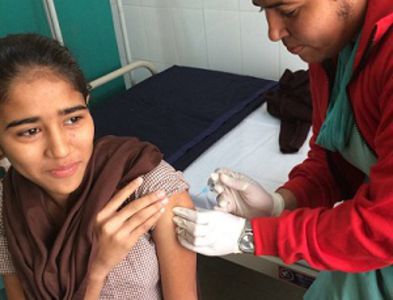
In an effort to prevent cervical cancer, two prophylactic vaccines have been developed against two major high-risk Human papillomaviruses (HPVs) types (16 and 18). However, because of societal, religious, and ethical issues associated with the vaccination of adolescent girls in India together with lack of awareness about HPV and HPV vaccines, no successful HPV immunisation programme has been employed in India. In that context, this study sought to determine knowledge, awareness, and attitudes of college students in India on HPV, HPV vaccine, and cervical cancer.
HPV vaccines have been available in India since 2008, but they are still not a part of the National Immunization Program. These vaccines were suspended because of certain unrelated deaths that occurred during HPV vaccine immunogenicity trials conducted in the states of Andra Pradesh and Gujarat by PATH (Program for Appropriate Technology in Health) and ICMR (Indian Council of Medical Research). HPV vaccination in India is therefore available only in private clinics and hospitals, and it has been observed that vaccine acceptability is mainly restricted to the educated mass. The majority of the studies have shown that most participants or parents of participants are unwilling to get their daughters vaccinated. Furthermore, studies report that awareness and knowledge about cervical cancer is very poor among both young undergraduate and postgraduate students from both rural and urban areas, which may be due to lack of education and exposure to print/audio-visual media, as well as to a variety of societal factors, social stigma, and ignorance. For example, many are of the opinion that HPV vaccines would make sex safe, leading to promiscuity and change in sexual behaviour in younger generation, which would cause social stigma and may tarnish family prestige.
A questionnaire-based survey was conducted from January to March 2015 among a total of 1,580 undergraduate students (684 girls and 876 boys) between the age group 16-26 years who were attending a private university. Although students of this university belonged to well-educated and affluent families, the percentage of girls who got vaccinated was very low (7%).
The study found that girls had more knowledge about cervical cancer (82.45%, p<0.001), HPV (45.61%, p<0.001), and HPV vaccines (44%, p<0.001) when compared to boys. However, none of the students was aware about the cancer-causing HPV types and names of the HPV vaccines. Students who were majoring in biology had more knowledge and awareness about cervical cancer (81.89%, p<0.001) and HPV (46.58%, <0.001) when compared to non-biology students. Analysis of odds ratio (OR) along with 95% confidence interval (CI) showed older girls with 1.2 to 3 fold (p<0.05) higher knowledge than boys. Both boys and girls showed positive attitude towards girls getting vaccinated against HPV after knowing that it can provide protection against HPV that causes cervical cancer (p<0.001).
The study highlights the need to improve public health education in view of the lack of awareness about cervical cancer and its possible prevention by vaccination in the community. Studies have shown that imparting education has positive effect in encouraging and motivating men and women to participate in screening and vaccination programmes. To achieve this, both print and audio-visual media may play a pivotal role.
PLoS ONE 11(11): e0166713. doi:10.1371/journal.pone.0166713. Image credit: World Health Organization, South-East Asia Regional Office