










































Knowledge, Practice and Acceptability of HPV Vaccine by Mothers of Adolescent Girls in Ilorin, Nigeria
University of Ilorin/University of Ilorin Teaching Hospital (Adesina, Saka, Adesiyun, Gobir, Olarinoye, Ezeoke); Sobi Specialist Hospital (Isiaka-Lawal)
In a developing society like Nigeria, most vaccination programmes are highly subsidised or provided freely by donor agencies, in order to facilitate wide coverage. As of the time of this writing, human papillomavirus (HPV) vaccine has not yet been subsidised. In addition to covering the cost, since the vaccine is currently available for girls below 18 years, parents have to give consent for the child to be vaccinated. Parental knowledge and attitude would thus influence parental willingness, which will indirectly translate to the uptake of the vaccine. In that context, this study sought to determine the knowledge of parents about HPV infection, their awareness about HPV vaccine, and their willingness to vaccinate their daughters. The hope is that the findings could serve as a foundation for the incorporation of HPV vaccine into the National Immunization Programme in Nigeria.
A cross-sectional descriptive survey of mothers of girls in 8 secondary schools in Ilorin, Nigeria, was carried out from February to April 2015. The instrument for this survey was a close ended (multiple choice) self administered questionnaire designed to determine the knowledge, attitude, and willingness of participants to HPV vaccination.
Of the 470 questionnaires returned for analysis, 161 (34.3%) knew HPV to be a sexually transmitted infection (STI), and 40.4% knew that it was the cause of cervical cancer. It was found that 35.1% were aware of HPV vaccine; the hospital/medical personnel were the sources of information in 28.1% of cases, while other sources such as mass media, health talks, journals/magazines accounted for approximately 15-21%. Only 1.9% had ever vaccinated their children, and less than half (44.9%) were willing to vaccinate their children. Women with good knowledge of HPV and cervical cancer were more willing to vaccinate their children than women with poor knowledge (P <0.001). Furthermore, 37.9% would like further consultation with a doctor or any health care provider before accepting the vaccine. In terms of cost, 22.3% would accept the vaccine only if free.
This study indicates that there is poor knowledge of HPV and practice of vaccination among mothers in llorin, which is similar to findings of studies carried out in other developing countries. Furthermore, willingness of mothers to vaccinate their daughters is suboptimal. From the researchers' perspective, "health education programmes on HPV infection as a risk factor for cervical cancer and other important related public health matters should form the core strategy for implementation of HPV vaccine in our society and not just merely making the vaccines available."
In conclusion, in addition to subsidies that would make the vaccine affordable (or even free): "A core preventive strategy is the implementation of the vaccine into National Immunization program after adequate and widespread community education....There is need for intense public campaigns and enlightenment programmes on cervical cancer, HPV and immunization to prevent cervical cancer."
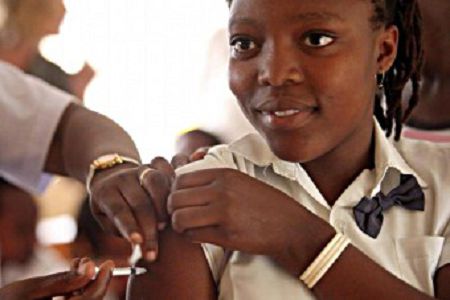
Sudan Journal of Medical Sciences, Volume 13, Issue no. 1, DOI 10.18502/sjms.v13i1.1687. Image credit: GAVI/2012/Youngblood