










































Landscape Analysis of Health Information Systems and Data Tools for Identifying, Reaching, and Monitoring Zero-Dose and Under-Immunized Children
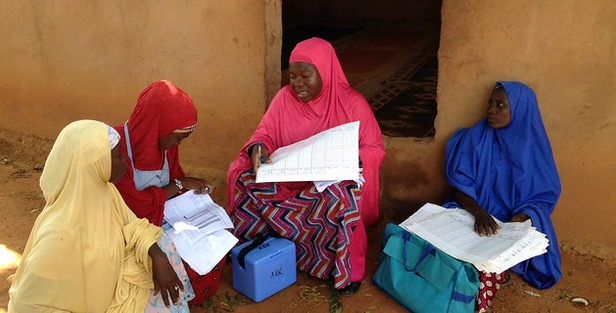
PATH (Osterman, Melgarejo, Hahn); JSI (Garcia)
"Health workers cannot identify all children for vaccination if they have weak or incomplete data on the number of eligible children and where they live."
Strengthening health information systems can foster the timely and evidence-based decision-making needed to provide populations with access to immunisation services in an equitable and inclusive manner. This landscape analysis describes information systems and tools to identify, reach, and monitor zero-dose and under-immunised children, with a focus on how they are being used in United States Agency for International Development (USAID) MOMENTUM Routine Immunization Transformation and Equity project countries, such as the Democratic Republic of the Congo (DRC), Kenya, Mozambique, and Nigeria.
As reported here, the ideal would be for decision-makers to have current, accurate population census data to inform immunisation planning, along with a well-functioning civil registration and vital statistics (CRVS) system that links to immunisation registries, making it possible to check that all children registered at birth receive vaccines. Since immunisation programmes are unable to rely on population census data and because CRVS systems are incomplete or non-existent in many low- and middle-income countries (LMICs), alternative methods are needed to calculate population denominators and identify unimmunised children and at-risk groups.
Key research questions include:
- What information is needed to identify, reach, and monitor zero-dose and under-immunised children?
- What data tools and information systems - including paper and digital - exist in selected countries for identifying, reaching, and monitoring zero-dose and under-immunised children, and what are the gaps?
- For these tools and systems, what are the facilitators and functional requirements in place to identify, reach, and monitor zero-dose and under-immunised children?
- What lessons can be drawn from tools and systems that have been introduced for COVID-19 vaccination?
This report answers the research questions through a non-systematic desk review of peer-reviewed and grey literature that was driven by Gavi's Identify, Reach, Monitor, Measure, Advocate (IRMMA) framework. Although the primary focus was immunisation, the researchers considered information systems and data tools that have been used by other health programmes and could be adapted for routine immunisation. It includes both paper-based and digital systems and tools.
The landscape analysis identifies 11 information systems and tools with strong potential to support the data-related demands of health workers and immunisation programme managers to identify, reach, and monitor zero-dose and under-immunised children. For each tool, the report provides examples, a discussion of challenges to expansion/improvement, and recommendations. The systems/tools include:
- Community-based information systems (CBISs) - e.g., mobile health apps, such as RapidPro, to register home births via short messaging service (SMS, or text) by a village representative or community health worker (CHW).
- Geospatial technologies (most widely used in polio eradication efforts) - i.e., satellite imagery, geo-positioning, drones, and mobile network operator (MNO) data.
- Denominator estimation methodologies and equity analyses for improving target population estimates for immunisation when a country's administrative data are outdated or inaccurate - e.g., CHWs enumerating community members within their catchment, producing registers with demographic data on households and then using the information to trace mothers and ensure that their children received all recommended vaccinations.
- Electronic immunisation registries (EIRs) - e.g., DHIS2 Tracker's metadata package, which enables tracking a child's immunisation history and provides decision support.
- Home-based records (HBRs) - e.g., the printed maternal and child health (MCH) booklet used in many countries.
- Client communications - i.e., mass communications for specific audience segments (e.g., demographic categories, geographic areas) or tailored communications for individual clients (e.g., to remind caregivers that their children are due for vaccination) transmitted through phone calls, text messages, email, and postcards, or shared through social media platforms such as WhatsApp, Facebook, and Instagram.
- Health management information system (HMIS) - e.g., DHIS2, which records and stores aggregated service delivery data and can facilitate converting data into information for decision-making.
- Immunisation coverage surveys - e.g., household surveillance, SMS and phone surveys.
- Monitoring charts and data dashboards - i.e., digital and paper-based tools that help health workers analyse routine immunisation data and make decisions to improve services.
- Data quality assessments to monitor the quality of vaccination data gathered by the health information system - e.g., the World Health Organization (WHO) immunization Data Quality Self-Assessment (DQSA).
- Client feedback systems - e.g., gathering responses to health services received so that health workers can mitigate challenges that prevent caregivers from bringing children to the facility for vaccination.
The landscape analysis identified 4 additional information systems that, when interoperable with immunisation information systems such as EIRs, can help create efficiencies in data entry (e.g., minimising re-entry) and make data more readily available to immunisation programme managers for vaccination planning, including:
- Human resource information systems that enable managers to oversee the health workforce;
- Logistics management information systems that enable managers to oversee commodity supply chains;
- Facility management information systems that enable managers to oversee service delivery; and
- Public health and disease surveillance systems that capture data for public health planning and response (e.g., mHero).
Key recommendations based on the analysis include:
- Use health information systems and data tools to improve the accuracy of immunisation programme targets (denominators). Examples: supporting increased investment in community mapping and enumeration, which may range from paper-based (low-tech) to geospatial mapping (high-tech), or a combination of the two, as part of improved microplanning for RED/Reaching Every Community (short term); and investing in broader efforts to strengthen health information systems and the foundational eHealth building blocks necessary for their success (long term).
- Expand the use of health information systems and data tools to determine where zero-dose and under-immunised children live (e.g., urban, remote rural, fragile settings), and leverage data already (e.g., by other health and social safety net programmes) to find children who miss routine immunisations. Example: using geospatial data and technology, enhanced by community involvement to ground truth and refine data and secure its acceptance by those to be reached with immunisation and other services (short to medium term).
- Take specific steps to faciliate identification, reaching, and monitoring individual children (vs. collecting aggregate data). Examples: investing in data capacity at community and facility levels, including health worker skills and practices related to collecting, recording, managing, and analysing data (short term); investing in digitising data collection at community and facility levels (medium term); establishing interoperability between information systems and tools at all levels of the health system - e.g., CBIS linked to an EIR that links with HMIS (long term).
- Expand monitoring systems to include different types of data and analyses, and reinforce the skills and decision-making processes that enable health workers to use data. Example: using rapid survey tools such as lot quality assurance sampling (LQAS) to supplement routine monitoring to identify communities with immunisation coverage under an acceptable threshold (short term).
- Explore opportunities to leverage and adapt digital tools deployed for COVID-19 to routine immunisation. Examples: rapid phone surveys to monitor coverage, client communication systems (e.g., SMS, WhatsApp Chatbot) to send reminder messages and health information, and social listening and monitoring tools to inform strategies to dispel rumours and misinformation (short to medium term).
USAID MOMENTUM website, August 29 2022. Image credit: © Photo Credit: Lisa Esapa/CDC via Flickr (CC BY 2.0)
- Log in to post comments