










































Macallinka Raddiyaha (The Radio Teacher)

The programme includes three teaching elements: a half-hour weekly radio programme broadcast by BBC World Service, print materials, and face-to-face teaching. The radio programmes use materials almost entirely from Somalia that look at human rights issues, ways of sustaining the environment, and strategies people can use to stay healthy. Literacy teaching is based on key words that emerge from the radio programmes. The radio programmes are heard all over Somalia and in neighbouring countries, including Ethiopia, Djibouti, Kenya and Yemen. (This means that the programme may reach even those populations that are displaced by violence, as long as the teacher and class can keep together as they move).
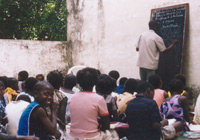
The programme is designed to encourage community initiative and involvement. If a community decides that it wants to take part, it will nominate a teacher, who will receive brief training, a teacher's print pack, and a set of students' packs. How classes are organised and where they take place is entirely up to the community, depending on what resources are available.
Education.
The programme hopes to help 12,000 men and women to learn to read and write within a one-year period. These men and women are veterans of the violence that has afflicted Somalia since the early 1990s. The United Nations Children's Fund (UNICEF) estimates that only 170,000 children received schooling in 1989. Even today, according to European Union and United Nations' agency estimates, only 20% of all children (and 5% of girls) go to school.
Early radio trials resulted in requests for 6,600 student packs.
The BBC Somali Service has been broadcasting since 1957; approximately 85% of the population listens.
BBC World Service Trust, AET.
Comments

- Log in to post comments