










































Mainstreaming of Accountability to Communities: An Operational Case Study
CDA Collaborative Learning Projects
"One of the core values of the International Red Cross and Red Crescent Movement is working in partnership with communities in order to improve program quality, reduce local vulnerabilities, and build safe and resilient communities."
This operational case study documents the steps taken by the Kenya Red Cross Society (KRCS) to mainstream the Accountability to Communities (AtC) framework - which stresses transparency, participation, feedback mechanisms, and community-led monitoring and evaluation - across its programmes and operations. Undertaken by the CDA Collaborative Learning Projects (CDA) on behalf of KRCS, the case study highlights the successes and challenges experienced by KRCS over a two-year period. It provides practical lessons for other National Societies (NS) and the International Federation of the Red Cross and Red Crescent (IFRC) about factors that may enable a successful AtC mainstreaming process. The main areas of interventions by KRCS are in disaster risk management, building individual and family resilience through the prevention of disease and promotion of overall wellbeing, and water, sanitation, and hygiene (WASH).
The AtC initiative forms part of the Community Engagement and Accountability (CEA) approach that underpins the Red Cross and Red Crescent programming and operations. CEA is supported by a set of activities that help put communities at the centre, by integrating communication and participation throughout the programme cycle or operation (see Related Summaries below for more information). The AtC initiative was introduced to provide a framework and a set of minimum standards intended to support greater accountability. Transparency, participation, feedback mechanisms, and community-led monitoring and evaluation represent the four minimum standards or pillars of the AtC framework. Each pillar of accountability is designed to provide a common goal for all programmes and is expected to be integrated across all programme lifecycles and emergency operations.
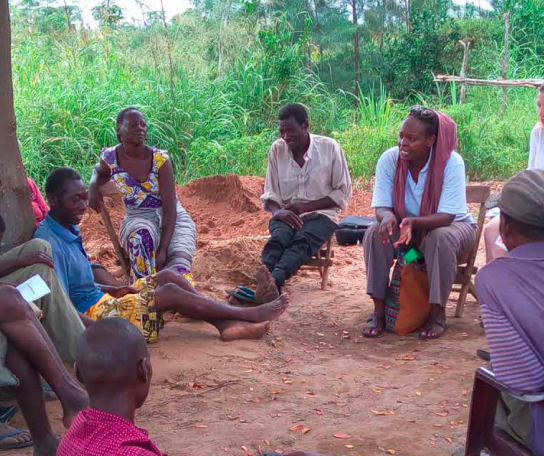
The study used a mixed-methods approach to identify and validate the strengths and weaknesses of the AtC mainstreaming process, and to ground the findings and options in triangulated data. The data for this study was gathered through: 1) a desk review of key KRCS and IFRC documents; 2) key informant interviews with KRCS, IFRC, and other NS staff; and 3) 12 days in the field with KRCS staff, volunteers, and community members, which included seven process mapping exercises and eight focus group discussions across the country.
As explained in the report, "The study shows that the integration of AtC has had a tremendous impact on the way the Kenya Red Cross works with the communities it serves." These successes include:
- Increased trust - AtC created an increased sense of mutual trust and engagement between KRCS staff and volunteers. Trust has strengthened lines of communication, making it possible for community members to engage in an honest dialogue about project implementation and outcomes.
- Enhanced project sustainability and user-driven projects - The shift towards a consultative approach encouraged more community members to become involved in and lead their own development initiatives. This has enhanced project sustainability and community resiliency.
- Improved access, security, and early warning systems - Increased and transparent communication and enhanced trust between KRCS and communities have allowed staff to operate more safely and appropriately in the context in which they are working. They can also respond more quickly to new challenges or issues that may arise and be better prepared to adapt to the quickly changing nature of their operations.
KRCS faced several challenges, some of which the organisation was able to overcome while others are ongoing. The report highlights the following main challenges and offers possible solutions to how they can be overcome:
- Too much emphasis on the feedback mechanism (FBM) - As there was a lot of emphasis on the creation of the FBM, this led to a less rigorous application of the other minimum standards. The FBM is described in detail in one of the chapters of the report together with ideas on how this process can be improved.
- Resourcing and regional inconsistencies - Longer-term resourcing of the AtC mainstreaming processes (including both human and financial resources) has been neglected, leading to inconsistencies in the implementation of AtC across the organisation's programmes and operations.
- Gaps in the AtC mainstreaming process - These included inadequate training (too short and not enough people involved); limited cross-departmental collaboration; communication channels for feedback processes not working optimally; and struggles to operationalise AtC across all management areas within KRCS, including recruitment.
The final section of the report offers a discussion of some of the factors that enabled KRCS's success. It is hoped that these may help provide a "road map" that can be adapted by other NS in their AtC mainstreaming processes. Some of these factors were, for example:
- Leadership buy-in and timing - Senior management's engagement in and support of the AtC mainstreaming process was fundamental to its success. In addition, discussions about the pilot of the AtC initiative coincided with KRCS' development of a new strategic plan, which encouraged leaders to utilise the AtC framework in KRCS' new strategic plan.
- Piloting phase - Piloting AtC allowed KRCS to test processes and systems and adapt them before rolling them out across all programmes and operations. This may have improved staff and volunteers' overall understanding of the pillars of accountability and their roles and responsibilities in relation to these pillars.
- AtC as an institutional objective - KRCS' Monitoring, Evaluation, Accountability and Learning (MEA&L) staff were the thought-leaders and owners of the AtC mainstreaming process; however, the team ensured that the process was seen as an organisation-wide commitment. They did this by: 1) engaging other teams early in the process; 2) requesting and using other's ideas and feedback throughout the process; 3) placing the ownership of AtC at the project level; and 4) creating accountability-related key performance indicators for staff.
- Staff attitude and interest - Success of AtC was largely due to the positive attitudes of all staff, the passion and interest of the MEA&L team who spearheaded the initiative, and the MEA&L team's ability to shift internal perceptions about the team's goals, roles, and strategy.
Other factors for success include the consultative approach to the development of the AtC-related systems across staff, volunteers, and community members; linking AtC to the programme cycle; flexibility and adaptability; dedicated resources allocated to this process; and opportunities to reflect and review in order to make alterations when necessary.
As stated in the report, "Overall, through an intentional and deliberate process, accountability has become embedded in the organization's core values and throughout all its activities. Support (both financial and technical) from IFRC and PNS [Partner National Societies] has helped to ensure that the process has had the appropriate technical expertise and resources in order to ensure broad uptake. This external support combined with internal promotion and endorsement (particularly by senior management) set a tone about the importance of accountability. In addition, AtC was also rolled out in a way that mandated broad ownership by all staff, volunteers, and community members. This has helped to ensure high levels of engagement by everyone. Collective ownership has led to collective success."
In conclusion, the report makes the point that "even with KRCS's significant success, accountability is not a one-time endeavor. KRCS will benefit from continued review and reflection of its AtC tools, guidance, frameworks, and practices in order to ensure that they remain relevant and appropriate."
IFRC website, December 2 2019. Image credit: Kenya Red Cross
- Log in to post comments