










































Maintaining Polio-Free Status in Indonesia During the COVID-19 Pandemic
Universitas Gadjah Mada (Azizatunnisa', Cintyamena, Ahmad, Mahendradhata); World Health Organization (WHO), Country Office for Indonesia (Bura); Ministry of Health of The Republic of Indonesia (Surya); National Certification Committee for Polio Eradication (NCCPE) Indonesia (Wibisono)
"Disruption and postponement of routine immunization may escalate the risk of future outbreaks of vaccine-preventable diseases, including polio, regardless of the COVID-19 pandemic's trajectory."
Both Indonesia's polio-free status and the Global Polio Eradication Initiative (GPEI)'s 2023 target of worldwide eradication have been threatened by disruptions to immunisation services caused by the COVID-19 pandemic and related restrictions. This article describes the impact of the pandemic on polio eradication efforts in Indonesia and the explores strategies to maintain polio-free status.
As explained here, in the early months of the pandemic, GPEI recommended postponing the polio vaccination campaign until the second half of 2020, shifting most of the polio resources and laboratories to pandemic response. Due to this postponement, approximately 80 million children around the world likely missed their vaccinations. Even before the pandemic, Indonesia had areas with low immunisation coverage. Diversion of resources due to COVID-19 has arguably also affected the acute flaccid paralysis (AFP) surveillance, which, along with environmental surveillance, is critical to monitor the circulation of wild poliovirus (WPV) and vaccine-derived poliovirus (VDPV). A chart showing trends in polio immunisation coverage, the non-polio AFP rate, and AFP specimen adequacy in Indonesia, 2011-2020, indicates that all three of these metrics reached their lowest rates during the pandemic.
The article discusses barriers on both the supply and demand side:
- On the supply side, the government of Indonesia's COVID-19-related physical distancing policy in the initial pandemic period led to the temporary closure or suspension of posyandus (integrated health posts) and puskesmas (primary health care centres), which are the frontline and backbone in immunisation delivery, respectively. Also, available human resources, including vaccinators and other healthcare workers, were diverted to cope with the pandemic mitigation effort.
- On the demand side, fear of contracting COVID-19 caused hesitancy to visit healthcare facilities for vaccination, including for the polio vaccine. A July 2020 survey by the Ministry of Health indicated that parents' and caregivers' attitudes regarding immunisation services had changed compared to before the pandemic, despite immunisation resumption in the second half of 2020.
Based on this analysis, the article outlines the following strategies:
- Incorporate polio eradication efforts into the pandemic response to resume vaccine services. The government and key stakeholders should work to resume vaccination programmes quickly by establishing a committee to develop a resumption plan, monitor unvaccinated children, and identify long-term strategic adjustments for the polio eradication programme. Provincial and local levels should be empowered for operational decision making based on their specific context.
- Ensure that relevant, reliable, and timely data continue to be collected on vaccine coverage rates and vaccine stock so that disruptions in services and the supply chain can be prepared for and mitigated efficiently. "Using data and information systems will facilitate efforts in predicting the impact of the pandemic on immunization programs and planning strategies to minimize the disruption of immunization services during the COVID-19 pandemic and beyond."
- Adjust programme plans accordingly to address human, physical, and financial resource gaps. Context-specific guidelines will be needed to support healthcare workers in delivering immunisation services safely.
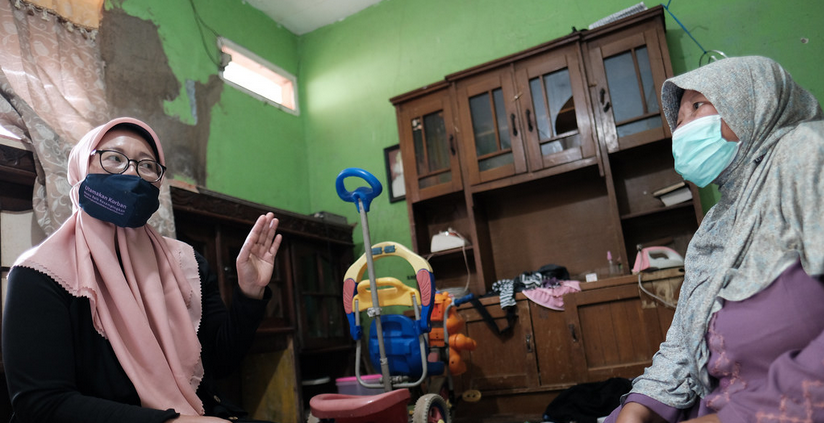
- Mobilise the community to increase advocacy and awareness. "Community mobilisation has had a significant role in the success of polio campaigns in the past during Indonesia's national immunization days...This strategy can be adopted to identify the missing children during the pandemic by involving every sector related to immunization programs." For instance, collaboration among the government, non-governmental organisations (NGOs), and the private sector is pivotal in developing strategies and tools to engage with policymakers, educate healthcare workers, and inform health champions and the public that immunisation is essential and should be continued despite the ongoing pandemic. Use of popular and culturally acceptable media and strategies is one strategy for raising community awareness. Engaging key actors and champions who have influence in the community, such as religious leaders, community leaders, and community health workers (volunteer cadres), is also critical. Women have also been found to play an essential role in social mobilisation, especially at the household and community levels. Personal rapport, credibility, and trust have been identified as central to successful community mobilisation.
- Use community-based surveillance strategies to improve AFP surveillance. In Indonesia, the pandemic has strengthened solidarity among community members who have cared for each other during this difficult time. Community groups have developed many initiatives to strengthen their resilience during the pandemic. This foundation is an opportunity to strengthen community-based AFP surveillance, provided that community members are given adequate education on polio and AFP.
Global Health: Science and Practice 2022 | Volume 10 | Number 1. Image caption/credit: Women of Indonesia on the COVID-19 Prevention Response - UN Women/Putra Djohan and Ali Lutfi via Flickr (CC BY-NC-ND 2.0)
- Log in to post comments