










































Marketing on the Airwaves: Marketing Information Service (MIS) and Radio
Farm Radio International
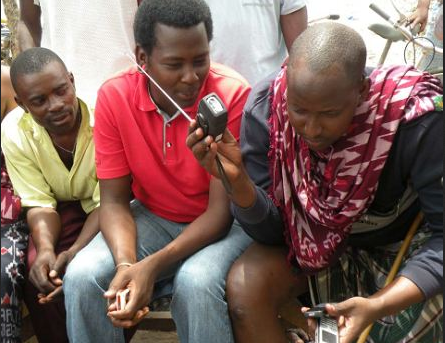
This 63-page report presents the findings and lessons learned from a series of radio-based Marketing Information Service (MIS) case studies designed to respond to the unique market information needs of local farmer listeners in Ghana, Uganda, Mali, and Tanzania, to improve food security. The case studies were part of a 42-month action research project called the African Farm Radio Research Initiative (AFRRI), which sought to discover, document, and disseminate best practices for using radio-based communications to enhance food security in Africa. The findings conclude that an effective MIS has the potential to benefit smallholder farmers in profound ways. Regular, up-to-date prices from a range of markets can help farmers make decisions on what to grow, when to grow, and how much to grow. Information on how to increase the value of their products can enable farmers to boost their incomes with minimal investment. In the long term, by understanding market trends and national – or even international - price fluctuations, farmers can better adapt to changing supply and demand.
Key findings are outlined as follows:
- Radio has the capacity to reach and impact a large audience - A survey of approximately 1000 household representatives living in listener communities showed that an average of 64.8% of respondents were aware of the MIS radio programmes, and 84% of those who listened found the programmes to be "very useful". When farmers are directly engaged in the creation and implementation of MIS radio programming, their listenership of specific programmes increases. In Mali, for example, of 200 households randomly selected for an outcome survey in 2010, 68% of respondents in ALCs said they were aware of and had listened to the MIS programming on Radio Fanaka, compared to 45% of those in passive listening communities (PLCs). Of those that listened in PLCs, however, 95% claimed to find the information on the MIS radio programmes "always useful."
- Radio programmes can provide an integrated approach to MIS, by engaging farmer listeners in discussions of timely and relevant issues - Radio can help farmers link to new markets and buyers, strengthen their ability to negotiate prices, and help them adapt crops to meet demand. MIS radio hosts are well-positioned to provide listeners with accurate and timely information that is in the best interests of farmers. MIS radio programmes included price announcements from different markets, but were also designed to address more in-depth topics identified by listeners. This enabled farmers to address specific barriers to reaching new markets on-air, and in turn to earn more for their products. In Fana, Mali, for example, social and cultural taboos against walking past a cemetery had deterred many farmers from selling their chickens at a new market. Talking through these beliefs on air allowed farmers to find comfortable alternatives, such as travelling to the market in groups. AFRRI’s household survey during the final outcome evaluation revealed that women are almost as interested in market information as their male counterparts and they, too, benefit from access to, and use of, radio-based market information service. In all five of the radio stations studied, an average of 83% of female respondents reported that they were aware of the programmes, and 69% of those who listened found the programmes "very useful".
- Private sponsorship that emerged in response to the popularity of MIS radio programmes suggests that a sustainable funding model is possible - Although unique, Mega FM in Gulu, Uganda was able to use the popularity of its MIS radio programme to attract a sponsor that is now sustaining the programme through paid advertising. This demonstrates the potential for radio station managers to regard MIS radio programmes not as airtime "sold" to donors, but as indispensible services that attract listeners – and therefore advertising dollars – in a competitive marketplace.
Drawn from country reports, feedback from farmers, radio broadcasters and Farm Radio staff, the following lessons learned should be considered in any future work on MIS for radio:
- MIS requires strategic partnerships to boost capacity system;
- financial support is needed to sustain long-term MIS programmes;
- provision of information beyond prices is necessary;
- interactive voice response systems proved to be a very popular way to share market prices;
- stations require improved monitoring and documentation systems for their market information programmes;
- women can benefit from greater access to market information; and
- further research is needed.
The report concludes The AFRRI MIS study shows the potential for radio to facilitate knowledge sharing in this area, specifically by linking farmers with buyers and technical specialists. In the process, the capacity of radio stations to design, deliver, and evaluate farm radio programming that makes use of new ICTs to increase interaction with listeners and boost the reach and accessibility of their services was strengthened. As a result, farmers will continue to benefit from higher quality farm radio services into the future. Radio stations that broadcast enhanced MIS programming through Farm Radio International reported an increase in popularity of programs that provided market-focused agricultural information. When the AFRRI campaigns ended, many of the radio stations continued to provide similar programming due to listener demand. There is a need for a business model that will ensure MIS on the radio becomes sustainable, perhaps through strategic partnerships between service providers and radio stations or public-private partnerships.
Farm Radio Weekly, February 20, 2012 accessed on August 26 2012.
Comments

Radio Marketing In Emerging Markets
Great piece Sheila
I often think the role radio plays in marketing in the West itself is underused and underated - but in the third world and emerging economies - especially with the advent of the 'wind up radio' - there is a real opportunity for not only conducting successful marketing campaigns, but also educating and empowering the listening population.
Kind regards
Loz James