










































Mediation - Understanding Information through Dialogue
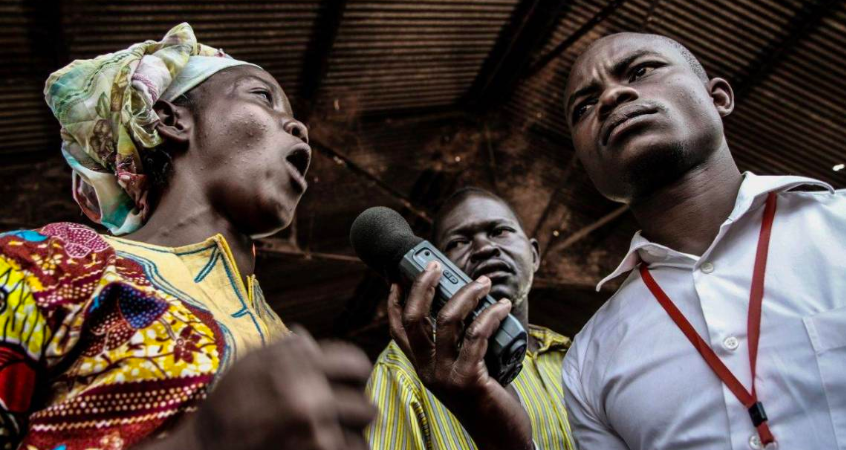
"Through our work, millions of people in war-affected countries, post-conflict areas, humanitarian crises, and societies in democratic transition have access to media that speak to them and give them a voice."
This biannual newsletter, published by the Hirondelle Foundation, explores a wide range of issues related to the role of media and information in crisis situations. It discusses and shares the experiences of the Hirondelle Foundation and its partners, as well as of specialists and actors working in media and conflict resolution. Issues dealt with include, for example, gender equity, media viability, and the role of journalism in mitigating violence, fostering intergenerational dialogue for peace, and helping mitigate the effects of climate change.
The Hirondelle Foundation is a Swiss-based non-profit organisation that works in 22 countries around the world that are facing major crises such as conflicts, humanitarian disasters, revolutions, climate change, or massive human rights violations. It helps media outlets produce and broadcast information and dialogue programmes, and it supports and strengthens its media and partners through training and editorial, managerial, and structural support to enable them to function more sustainably.
As explained in the first edition of "Mediation", "Fondation Hirondelle has been providing information to populations faced with crises by creating or supporting media and teams of journalists on the ground. In such contexts, where the veracity of information can be vital, we pay particular attention to the verification of facts. But is that our only role? Faced with new forms of propaganda, competition from social media and the media's economic model in crisis, journalists need to better explain the specificities of their profession and the utility of their mission." Drawing on the Hirondelle Foundation's experience in crisis and transition countries, the newsletter is designed to "help feed this global debate on the role of media and information".
Each of the 6-page newsletters discusses in depth the theme of the publication, including data and maps, and features interviews that share the experience of the Hirondelle programmes. In addition, interviews and testimonies from international journalists, experts, and researchers explore possible avenues for action.
The editions to date are:
- What Is Journalism For? - Mediation No 1, July 2018: Faced with record levels of mistrust, notably in the oldest democracies, journalists must succeed in convincing people of their social utility. This first edition of "Mediation" offers analyses and shares experiences that highlight how responsible journalism can help manage crises and build more peaceful societies.
- Fostering Inter-Generational Dialogue - Mediation No 2, January 2019: This edition looks at how the media can make the voices of young people heard and create dialogue between generations to contribute to more peaceful societies.
- Time for Women in the Media - Mediation No 3, July 2019: This edition looks at the need to make newsrooms and editorial coverage more gender balanced and explores how media can promote gender equality in fragile contexts.
- Informing in the Era of Social Media - Mediation No 4, January 2020: This edition looks at the challenges social networks pose in conflict situations and how media can use social media to disseminate vital information and initiate dialogue between conflicting parties in an inclusive manner.
- The Vital Role of Journalism in Times of Crisis - Mediation No 5, June 2020: The COVID-19 pandemic highlighted the need for reliable and credible information during a major crisis. This edition looks at the social role of journalism in providing life-saving information, as well as the importance of building trust in the media.
- Media at the Service of Education - Mediation No 6, December 2020: In a world where social networks are a major source of information and disinformation, knowing how to distinguish between a fact and a lie is a democratic issue. This edition of Mediation looks at the role of the media in education and the importance of fact-checking and media literacy.
- Violence and the Media - Mediation No 7, July 2021: Since the beginning of the 2010s, violence, whether armed or not, has changed and been fuelled in diverse ways on social networks. This edition looks at how to report on the complexity of violence without fuelling violence and the importance of credible reporting in reducing hate speech.
- Listening to the Voices of the Public - Mediation No 8, January 2022: Faced with a major crisis of confidence since the beginning of the 2010s, traditional media are multiplying initiatives to try to reconnect with their audience, even giving them a real role in the production of information. This issue looks at the importance of building trust and connecting with audiences, as well as ensuring that the voices of the most isolated populations are heard.
- Financing Independent Media: A Global Challenge - Mediation No 9, July 2022: This issue looks at the evolution of media towards mainly digital platforms, which has provoked a long crisis in their financing that often results in them being absorbed into large industrial groups seeking political influence. This edition looks at the sustainability of public interest journalism and discusses some of the economic models for independent news and information that are being explored.
- Informing on the Ecological Emergency - Mediation No 10, January 2023: Climate change and the collapse of biodiversity, caused by human activity, are already resulting in a major ecosystem crisis. This edition of "Mediation" looks at the crucial role of the media in bearing witness to this crisis and in highlighting mitigation and adaptation solutions. It also discusses some of the initiatives that are helping journalists play a more active role in mitigating climate change.
- Battered Media Cannot Be Guarantors of Democracy - Mediation No 11, July 2023 Digital companies' capture of news media revenues and the proliferation of misinformation have shaken the historic link between journalism and democracy. How can this link be restored? This question is explored in this edition of "Mediation", which features interviews and testimonies from journalists and researchers, as well as figures and maps to provide food for thought and pointers for action.
Publishers
Foundation Hirondelle website on October 20 2023. Image credit: Marc Ellison/Foundation Hirondelle
- Log in to post comments