










































Methods and Measures to Assess Health Care Provider Behavior and Behavioral Determinants in Reproductive, Maternal, Newborn, and Child Health: A Rapid Review
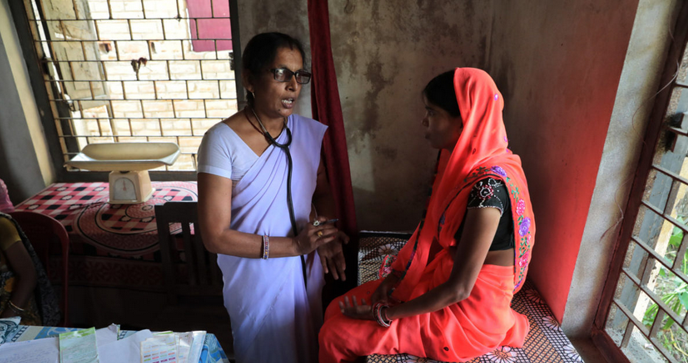
Population Council (Dougherty, Mathur, Spielman); Pathfinder International (Gul); EngenderHealth (Tripathi); Manoff Group (Wakefield); Tulane University (Silva)
"This review supports a call to action for programmers and researchers to advance evidence generation through theory-driven, systematic measurement of PBC [provider behaviour change] programs."
Social and behaviour change (SBC) programmes are increasingly engaging healthcare providers and introducing strategies across the entire ecosystem of influencers to improve their service delivery. But addressing the challenges associated with provider behaviour change (PBC) requires a process where the problem and its determinants are clearly defined in measurable terms. To that end, the Breakthrough RESEARCH project, which is funded by the United States Agency for International Development (USAID), and the SBC for Service Delivery Working Group collaborated to conduct a rapid research review to determine what methods and measures have been used to assess provider behavioural outcomes in the area of reproductive, maternal, newborn, and child health (RMNCH). This rapid review identifies opportunities and gaps in measurement of healthcare provider behaviour by focusing on domains that correspond to factors that influence provider behaviour and service provision and that incorporate elements beyond provider competency and skills.
Using PubMed, the researchers conducted a rapid review of published peer-reviewed literature on behaviours of health workers providing RMNCH services in low- and middle-income countries (January 2010 - May 2021). Information on study identifiers (e.g., type of provider), select domains from the PRECEDE-PROCEED framework (e.g., predisposing factors such as attitudes), study characteristics (e.g., study type and design), and evidence of theory-driven research were extracted from a final sample of articles (N=89) and summarised.
More than 80% of articles were descriptive/formative and examined knowledge, attitudes, and practice, mostly related to family planning (FP). Most articles (75%) focused on the quality of client-provider interaction, though topics and modes of measurement varied widely: 65% focused on providers' ability (knowledge, skills, and access to clinical training); 70% focused on predisposing factors (attitudes, beliefs, and perceptions); 57% focused on enabling factors (resources and skills required to make behavioural changes); and 36% focused on reinforcing factors (e.g., peer support and supervisor feedback). Research driven by behavioural theory was observed in only 3 studies, and very few studies incorporated a validated scale to measure underlying constructs, such as attitudes and beliefs. Among the few evaluation studies, training-focused interventions to increase provider knowledge or improve competency in providing a health service were dominant. Most studies did not test associations between behavioural determinants and provider behaviours.
The review identifies several promising studies that have aimed to understand the complex environment where providers operate by capturing information across multiple domains. One study incorporated structural measures, including, for example: infrastructure, including privacy; availability of information, education, and communication and visual aids; clinical information systems; and other factors, such as the number of facility staff available. Some studies have endeavored to measure predisposing, reinforcing, and enabling domains, as well as providers' ability and behaviour. Other studies have contributed measurement tools that can be used to frame and strengthen our understanding of treatment of women during facility-based childbirth, validated quality-of-care scales related to FP and reproductive health, and healthcare provider job satisfaction. Finally, while there were few standardised measures to draw from, a number of studies developed multiple-item closed-ended questions through in-depth literature reviews and formative research to ensure contextual factors were reflected in the research.
The researchers offer these implications of the rapid review:
- Programme implementers, donors, and researchers should support the evaluation of PBC programmes to shift the evidence base from one that is focused on describing behaviours to one that uses theory-driven approaches to understand behavioural antecedents and impacts of behaviour change interventions on provider behaviours and their drivers.
- Evaluators should develop and apply validated measures of provider behaviour that address internal and structural factors related to a provider's behaviour (beyond knowledge-enhancing training approaches). These measures could enable comparable learning and support policymakers to target quality improvement and invest in evidence-based PBC programmes.
Global Health: Science and Practice, July 2023, https://doi.org/10.9745/GHSP-D-22-00407. Image credit: Paula Bronstein/Getty Images/Images of Empowerment (CC BY-NC 4.0)
- Log in to post comments