










































Mobile Diabetes Education and Care
Running from August 2010 to November 2012, the Mobile Diabetes Education and Care project is working to improve awareness of diabetes and related non-communicable diseases (NCDs) and their common risk factors, as well as improve diabetes care in 20 rural communities in Lagos State of Nigeria. Health Matters Incorporated (HMI) is implementing this project in collaboration with the Diabetes Association of Nigeria and with technical expertise from Lagos University Teaching Hospital.
According to Health Matters Incorporated, awareness of risk factors like unhealthy food, physical inactivity, harmful use of alcohol, and tobacco consumption, as well as how to reduce these risks, is expected to decrease the rise in the number of people developing diabetes and other related NCDs. Empowering people with simple tools to avoid risk factors can have beneficial effects and reduce premature deaths as well health and economic suffering.
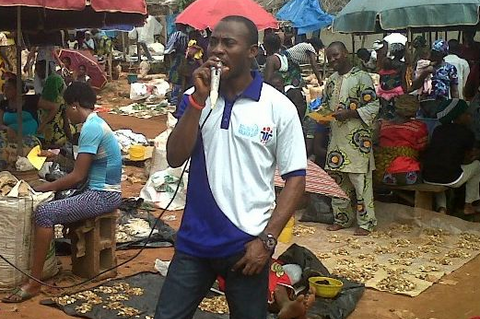
The Mobile Diabetes Education and Care project is creating programmes to reach out to the public and create awareness about diabetes. This includes a media campaign focusing on primary prevention, early detection, and management. Five radio announcements will be aired on a popular radio station and a jingle will be developed to create general public interest and response. In addition, materials and information kits including posters, leaflets, stickers, T-shirts, and caps will be distributed.
In order to improve the existing health care system in diabetes care, five day workshops are being conducted for health care personnel. The training curriculum is based on the International Diabetes Foundation (IDF) Africa's training manual and covers topics like diagnostics, primary and secondary prevention and care, as well as treatment of complications. Capacity building also includes sensitisation seminars for stakeholders and community leaders from 20 districts in Lagos State to inform them of the risks and consequences of diabetes.
In addition to the training of health care personnel, peer educators are being trained and sensitised on diabetes risk factors, assessment, primary prevention, self care and management, behavioural changes, and improving life style skills. Trained peers are expected to reach out to ten people a month. In order to ensure the maintenance of peer support and continuation of the peer educators' activities, a community based organisation (CBO) is being formed. This initiative is designed to ensure continuation of education, care and support in people with diabetes. Regular meetings will be held for the peer educators to discuss challenges, contributions, and achievements.
In order to improve diabetes care and awareness in remote areas, a mobile van is being used to perform visits to rural areas. A team of 12 health care personnel will offer diabetes education as well as screening. A person identified with diabetes or at being at risk of diabetes will be referred for further treatment to appropriate medical facilities. Data will be collected to guarantee follow-up during the next visit.
Diabetes, Health
According to HMI, in recent years non-communicable diseases like diabetes have emerged as a major public health threat not only to people living in the high-income countries, but also to people in low-and middle-income countries. Deaths due to non-communicable diseases are estimated to represent 60 % of all deaths worldwide. 80 % of these deaths occur in low- and middle-income countries. Many developing countries are experiencing the double burden of both communicable diseases and non-communicable diseases. The communicable disease HIV/AIDS has been a huge problem in low-and middle-income countries for a long time. Recent research has revealed a link between HIV/AIDS and an increased risk of diabetes. The HIV treatment therapy are increasing glucose homeostasis, dyslipidaemia, and insensitivity to insulin in patients with HIV/AIDS, and as HIV/AIDS result in a depressed immune system, the risk of developing diabetes is increased.
As of mid-2012, accomplishments include:
- 20 doctors, 40 nurses, and 40 paramedics from primary health centres have been trained;
- 9,045 people have been screened for diabetes. 1,100 (12%) of these were diagnosed with diabetes;
- 5,895 people have been screened for HIV/AIDS. Of these, 47 were referred to confirmatory HIV screening;
- 200 stakeholders have been sensitised;
- 18,750 behaviour change communication/information kits have been distributed;
- 250 peer educators trained; and
- About 3 million people have been reached by the media campaign through radio jingles with diabetes prevention messages.
Health Matters Incorporated (HMI), Diabetes Association of Nigeria , Lagos University Teaching Hospital.
World Diabetes Foundation website and Health Matters Incorporated website on July 23 2012.
- Log in to post comments