










































Monitoring Polio Supplementary Immunization Activities Using an Automated Short Text Messaging System in Karachi, Pakistan
The Aga Khan University
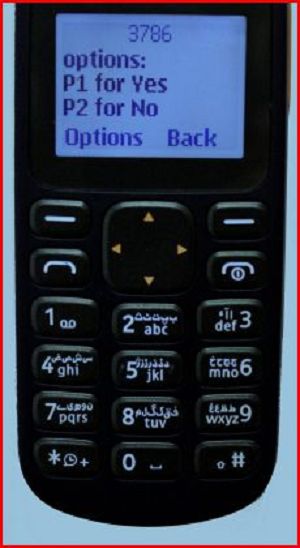
For the monitoring of coverage in supplementary immunisation activities (SIAs) carried out as part of the effort to eradicate polio in Pakistan (and, thus, globally), "automated systems based on short message service (SMS) texts appear to be an attractive and relatively inexpensive option." This is the conclusion of research conducted by Aga Khan University personnel with World Health Organization (WHO) funding.
The researchers note that, in Pakistan, mobile phones have become very common over the past 10 years. Many of these phones are used to send short message service (SMS) texts. Mobile health ("m-health") technology is increasingly being considered for various health interventions, such as sending reminders for clinic visits, immunisations, and medication adherence. In this context, the researchers wondered if m-health could be used to measure vaccine coverage in polio SIAs, particularly in resource-limited areas and those with poor security. Therefore, they conducted a feasibility study to assess if a low-cost automated system that could send SMS messages to the mobile phones of caregivers could be used to monitor the coverage of SIAs in Karachi, Pakistan.
During each of 7 SIAs, mobile phone numbers of the caregivers of a random sample of eligible children were obtained. (A cluster sampling technique was used to select representative samples of the caregivers of young children in Karachi in general and of such caregivers in 3 of the 6 high-risk districts of the city where polio cases were detected in 2011.) A computer-based system was developed to send 2 questions as SMS texts automatically to each number after the immunisation activity: "Did the vaccinator visit your house?" and "Did the enrolled child in your household receive oral polio vaccine?" Persistent non-responders were phoned directly by an investigator.
In most of the SIAs investigated, vaccine coverages estimated using the SMS system were very similar to those estimated by interviewing by phone those caregivers who never responded to the SMS messages. In the high-risk districts investigated, coverages estimated using the SMS system were also similar to those recorded - using lot quality assurance sampling - by the WHO. The major reasons given by caregivers for not responding to an SMS message were that they were too busy (36%), not interested in replying (32%), or unable to read the message (20%). The overall response rate to phone calls made by investigators was almost twice as high as the corresponding response rate to SMS messages (44% versus 23%).
Researchers say: "The rate of response to our automated SMS messages gradually increased over time, as we improved the format and language of the messages. It would be relatively easy to scale up our SMS-based system to cover SIAs or other vaccine campaigns at the provincial or country level. However, there may not be sufficient human resources to permit follow-up phone calls to be made to all of the non-responders in such large-scale campaigns." They note that, although they collected mobile phone numbers and located children who were eligible for polio vaccination through household visits, the same information may become available online in the future. For example, if local laws, rules, and regulations permit it, "the phone numbers of potential caregivers could be collected from service providers and the identities and addresses of eligible children could be obtained from health records. Caregivers could be encouraged to provide the same data for inclusion in national registries. Vaccine coverage could then be assessed with very little human intervention."
The key message, which researchers say may be useful in other large-scale immunisation campaigns, seems to be that automated SMS-based monitoring "allows for the separation of the vaccine delivery and monitoring teams. It eliminates errors made by human data collectors, reporting bias by field teams - who may exaggerate coverage to improve their apparent performance - and the risk of data collectors being attacked....If an SMS-based system is implemented, the human resources previously occupied with monitoring can focus exclusively on the delivery of vaccines."
Bulletin of the World Health Organization, Volume 92, Number 3, Pages 220-225, March 2014 - sent via email from Mohammad Iqbal Roshani to The Communication Initiative on April 6 2014. Image credit: Dr. Abdul Momin Kazi
- Log in to post comments