











































Mouvement Byrsa
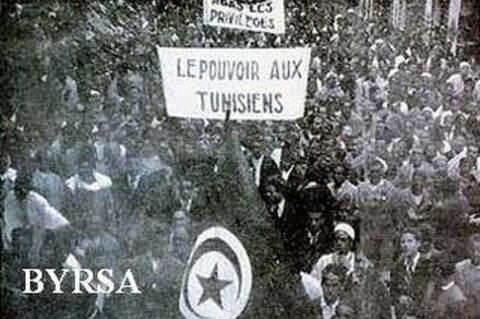
"It was the coming together of different struggles," explains Selim Ben Hassen, president of the Byrsa movement. "People broadcast these videos out of solidarity, and by doing this, went beyond the fear which Ben Ali was playing on."
Byrsa is a youth-led movement of reflection and social media activism that brings together young Tunisian citizens from all over the country and all walks of life who use social media and other tools to speak out for their rights and for the future of their country. Much of their work was sparked by protect against the injustices - leading to despair over Tunisia's soaring unemployment and rising food prices - that they felt were being precipitated by the rule of then-president, Zine El Abidine Ben Ali (see Key Points below for context).
"When a father can no longer feed his children, he loses his place...and his dignity," said Selim Ben Hassen, president of the Byrsa movement. "It's not just a question of money. It’s a question of honor." Mr. Ben Hassen credits Facebook for spreading word of the unrest - and bolstering timid citizens to break their traditional code of silence. "The psychological barrier of fear has fallen," Mr. Ben Hassen said. "People now know it's possible to go into the streets, cry 'Freedom!' and say 'We don’t want a president for life.'" Video-sharing sites like YouTube and Daily Motion are banned in Tunisia, where newspapers are tightly censured, but Facebook abounds, and videos posted there are quickly spread around. One in 10 Tunisians has a Facebook account, according to Mr. Ben Hassen, whose movement is also on Facebook. "It's a form of civil resistance," he said.
Byrsa uses Facebook to, for example, organise citizen consultations. In October 2010, Byrsa held 12 filmed lectures that addressed the main concerns of Tunisians in various areas of public life: employment, health, education, purchasing power, justice, culture, transport, religion, language, identity, sports, etc. These conferences were organised on the basis of a broad public consultation that took place every day for 2 months on Byrsa's Facebook page. Here, social media was used to organise a broad debate among citizens, encouraging discussion of what citizens want for themselves and for Tunisia. Specifically, each day, a theme (and sub-themes) was offered on the Byrsa's Facebook "wall", and members of the page were able to share their opinions, testimonials, and expert views more generally on the issue and how it was going to be discussed during the conference. As the consultation progressed, the themes were addressed at first more generally, then with successive rounds of increasingly detailed discussion. People were asked to participate in each theme by: completing surveys (answering questions and providing new questions), sharing opinions, views, and visions (posting comments and/or sending written or video testimonials about the difficulties that they encounter), expressing hopes and ambitions for Tunisia, and/or publishing notes or articles.
Byrsa also maintains a YouTube channel, which features 32 video as of this writing - including a 12-minute film featuring citizens describing their experiences with "Loi 76".
Democracy and Governance, Rights, Youth
Per Wikipedia, Zine El Abidine Ben Ali was the second President of Tunisia from 1987 to 2011. On January 14 2011, following a month of protests against his rule, he was forced to flee to Saudi Arabia. The interim Tunisian government asked for Interpol to issue an international arrest warrant, charging him for money laundering and drug trafficking. He and his wife were sentenced in absentia to 35 years in prison on June 20 2011. In June 2012, Ben Ali was been sentenced to life imprisonment in absentia for inciting violence and murder.
Another source indicates that, while the residents of Tunis were organising into neighbourhood committees to protect themselves from Ben Ali's militia, Twitter and Facebook users were passing along the news, often practical, sometimes vital bits of information, helping to elucidate the chaos - e.g., protests and riots, some of which turned deadly - that preceded and followed the fall of the dictator. Byrsa was one of those groups using social media to communicate.
Réponse à Al Mawkif et l'interview Selim Ben Hassen, May 28 2012; "Mouvement Byrsa: Pour la première fois de notre Histoire, nous Tunisiens allons débattre de ce que nous voulons pour notre pays", Tunisie Blogs, accessed December 5 2012; "Jobless Youths Riot over Unemployment", by Elaine Ganley and Bouazza Ben Bouazza, Associated Press, The Washington Times, January 12 2011; and Tunisia: "Social networks were a Centerpiece of this Revolution", World Religion Watch, by Elodie Auffray, trans. Pierre-Olivier Cazenave and Kelly Orsini, February 7 2011. Image credit: Tunisie Blogs
- Log in to post comments