










































The Multi-sectorial Emergency Response to a Cholera Outbreak in Internally Displaced Persons Camps in Borno State, Nigeria, 2017
Johns Hopkins University Bloomberg School of Public Health (Ngwa, Winch, Sack); World Health Organisation, or WHO (Wondimagegnehu, Okudo, Owili, Ugochukwu, Clement, Devaux, Pezzoli); Nigeria Centre for Disease Control (Ihekweazu); University of Maiduguri Faculty of Social Science (Jimme)
"Understanding behaviours and community norms through rapid formative research should improve the effectiveness of the emergency response to a cholera outbreak."
Nigeria's Boko Haram conflict has displaced thousands into unsanitary internally displaced persons (IDPs) camps in Borno state, leading to a cholera outbreak (5,340 cases and 61 deaths) in Muna Garage IDP camp in August 2017. In response, the Borno Ministry of Health (BMOH) and international partners implemented an oral cholera vaccine (OCV) campaign. This qualitative study was conducted as part of monitoring and evaluation to inform future emergency response efforts.
From February 19 to 28 2018, the researchers conducted 39 key informant interviews (KIIs) and focus group discussions (FGDs) and reviewed 21 documents with 17 government and 22 partner representatives involved with water, sanitation, and hygiene (WASH), surveillance, case management, OCV, communications, logistics, and coordination.
In terms of initial, communication-related elements of the outbreak:
- Among the 3 surveillance systems used in communicating the outbreak at various levels, the phone platform, consisting of alerts by mobile phone, was found to be critical at the early stages of the outbreak.
- Authorities were alerted quickly, but outbreak declaration took 12 days due to a 10-day wait for culture confirmation, which likely slowed the response and contributed to the disease's rapid spread from Muna Garage IDP camp to 6 other local government areas (LGAs). Outbreak investigation revealed several potential transmission channels, but a leaking latrine around the index case's house was not repaired for more than 7 days.
- Declaring the outbreak was not a health issue only; it was linked with political considerations. Reluctance to declare the outbreak was attributed to vacation and timing of the annual Muslim pilgrimage to Mecca. 'Eid El Kabir', a Muslim religious festival that entails considerable movement and food sharing, coincided with the outbreak onset and likely exacerbated its transmission and spread. "This suggests that national cholera plans should include specific guidelines with regard to handling religious festivals and funerals during outbreak emergencies."
- After the outbreak declaration, patients were treated in one or all of 3 facilities, which seemed to confuse patients about where to seek care (which partner (e.g., BMOH, Médecins Sans Frontières (MSF), United Nations Children's Fund (UNICEF), etc.) offered better care?) Some partners were concerned that their work was not recognised, asking, "Who gets the glory? Who owns the data?"
- Coordination was slow initially, but improved with activation of an emergency operations centre (EOC) that enabled implementation of an incident management system to coordinate multisectoral activities and meetings held at 16:00 hours daily.
- The synergy between partners and government improved when each recognised the government's leadership role.
Having identified the transmission routes, UNICEF-WASH undertook activities including engaging street water vendors about water safety and promoting good hygiene through social mobilisation. An unforeseen constraint was people's reluctance to use chlorinated water and latrines, which led to increased open defaecation. To address this, UNICEF-WASH engaged UNICEF's Communication for Development (C4D) team, who conducted mapping to understand the audience by strata, tribe, language, religion, and leadership. This process uncovered misconceptions and rumours about chlorine (that it would sterilise women); it appeared that fostering acceptance of chlorine required involving and mobilising 'Bullemas', trusted community gatekeepers, to trasmit key messages. (In addition, the technical people did not use the phrase "sterilise water", which the community could have mistakenly thought to mean sterilisation in the fertility sense.)
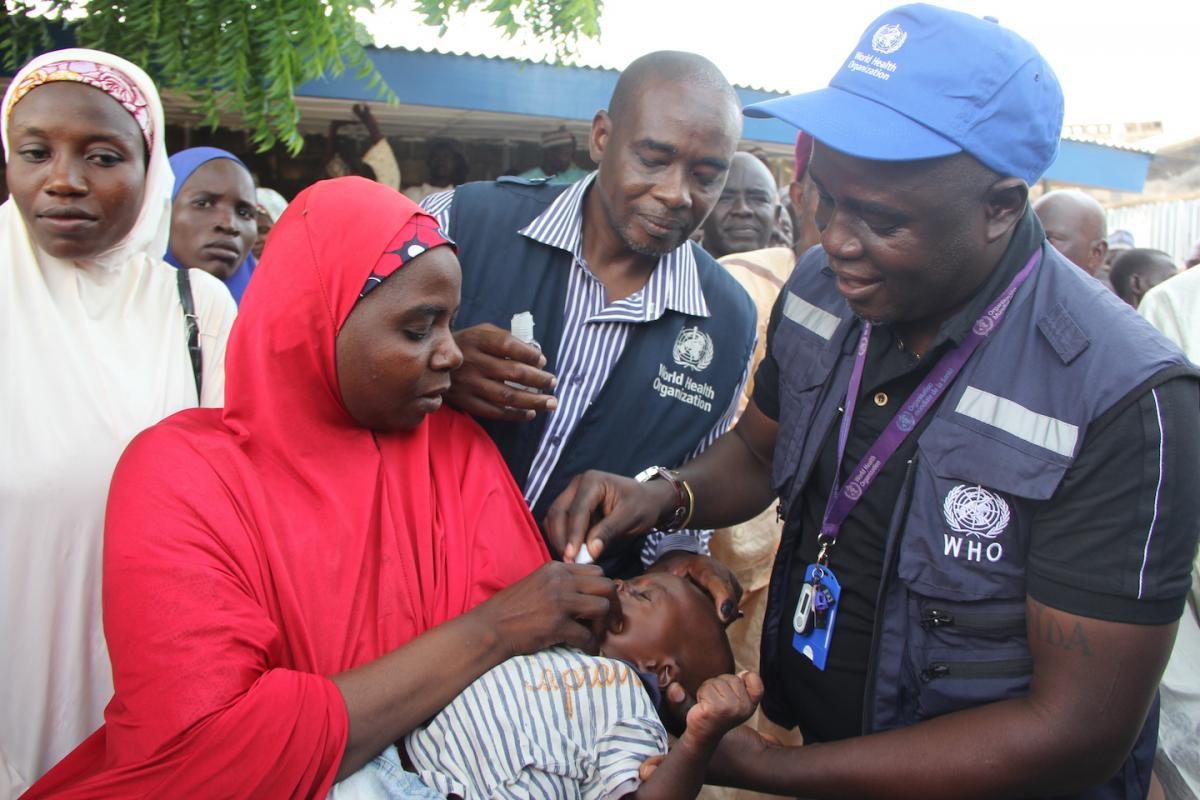
As a result of these efforts, nearly one million people received OCV, despite initial anxiety, rumour, and reluctance. Organisers stress that formative research should be initiated prior to the campaign to address issues of vaccine reluctance. OCV distribution benefited from a robust infrastructure for polio vaccination, though adaption of the polio platform for OCV had some challenges, including:
- Parents were reluctant to receive OCV, as they felt vaccination was for children and not for adults.
- Vaccination cards were not issued during the first round, with the assumption being that there would be no second round. Efforts during the second round to document reception of vaccine during first round proved futile.
- Poor communication networks hindered data flow from hard-to-reach areas to the central coordination and created anxiety as to whether relevant data would be available to inform needed actions. Supervisors had to travel to the villages to get the relevant data.
- In some instances, partners claimed ownership of data. However, partners came to understand that all data belongs to the ministry.
The World Health Organization (WHO) communication team's response was a 3-pronged approach encompassing:
- Risk communication - An outside broadcasting system used speakers to communicate cholera risks, as most in the affected community did not have access to mass media and electricity.
- Advocacy/visibility - WHO's mass media included 4 international radio stations, 1 international television station, 10 newspaper outlets, and the internet.
- Awareness raising - The team created pictorial awareness messages using different local languages and distributed flyers addressing frequently asked questions (FAQs) and basic facts about cholera. They also engaged a local drama group to foster positive attitudinal and behavioural change.
Initially, the mobilisers assumed Hausa was spoken widely and so communicated messages in that language. However, using a bottom-up approach, UNICEF-C4D stratified the community by tribe, religion, leadership, and language - leading to a change in the main language of communication from Hausa to Kanuri. This approach also uncovered deep mistrust of information from government-owned and -run media.
In reflecting on the findings, the researchers note: "There was need to strengthen intracollaboration and intercollaboration between water and health ministries to improve future response to emergencies. Importantly, within UNICEF, two groups were not communicating initially, UNICEF-WASH and UNICEF-C4D, but their later coordination led to the importance of consultation with the 'Bullemas'..." This engagement of the community and with communication experts was found to be critical: Community entry without community involvement has been shown in different contexts to lead to community resistance.
In conclusion, "all partners should understand that the government is in charge, but needs their support to respond to emergencies. In addition, government should ensure that all camps are officially recognised, establish communication channels between partners with a unified approach to the emergency response. Finally, partners need to put beneficiaries' interest first over partner interest, which is critical to dealing with emergencies."
BMJ Global Health 2020;5:e002000. doi:10.1136/bmjgh-2019-002000. Image credit: WHO Regional Office for Africa
- Log in to post comments