











































Fail Early, Fail Fast, Fail Often, But Don't Fail Big: Managing Behavioral Science-Backed Innovative Products and Services in Three Low Income Countries
Summary:
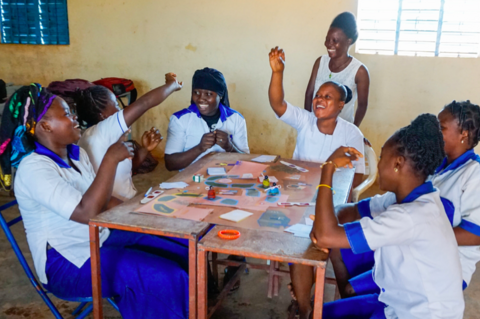
The (re)solve project seeks to develop innovative behavioral science-backed services and products to address the drivers of contraceptive non-use in Bangladesh, Burkina Faso, and Ethiopia. Following a context-specific segmentation analysis and behavioral diagnosis, we generated hundreds of ideas to address behavioral issues at the local, national, and global levels and 'pressure-tested' these before moving to scale. Early on, ideas were assessed for Impact, Scale, Feasibility, and Innovation. The promising ones were prototyped (i.e. low fidelity versions of the final product or service-delivery tool were designed using everyday materials) and tested with end-users and assessed for acceptability. Many ideas failed along the way. In this presentation, we will share examples of the ideas and prototypes that failed in each country and why. The project team learned from every failure. With each failure, we took action on whether we should continue strengthening the idea or prototype, discard it, or pivot (where the idea or the prototype was significantly modified to solve a different behavioral problem). These constructive failures allowed us to 'fail forward' and build stronger, responsive products and services that can address behavioral barriers to contraceptive non-use.
Background/Objectives:
Through a multi-disciplinary approach that combines behavioral science, segmentation analysis, user-centered design, and public health principles, the (re)solve project seeks to develop innovative services and products to address the drivers of contraceptive non-use in Bangladesh, Burkina Faso, and Ethiopia. The consortium works with multiple stakeholders at the global, national, regional, and local level to ideate, prototype, user-test, implement, and evaluate innovative products and services that are designed to address individual and structural barriers preventing contraceptive use.
Description of Intervention and/or Methods/Design:
We generated several ideas from women, girls, providers, government officials, program implementers, and the project consortium to address behavioral barriers to non-use. We used a Decision Gate tool to rank these ideas across our national and global team and eliminated ideas with low scores. These were our early, directional failures ideas that failed to meet our 'long-game criteria' of Impact, Scale, Feasibility, and Innovation. In Ethiopia, designing a 'family health commitment' pledge at baptism ceremonies with follow-up messages on birth spacing scored low because it would exclude Muslim families. A fertility-awareness tracking app idea failed the Feasibility criteria in Burkina Faso. Other failures became evident during user-testing - these were our acceptability failures. In Bangladesh, we struggled to design a contraceptive pill pack insert that could be understood by functionally literate garment workers. In Ethiopia, clarifying lactational amenorrhea method was problematic and discarded.
Results/Lessons Learned:
These directional failures as well as the acceptability failures allowed us to identify when and how to persist, perish, or pivot based on scores and end-user feedback. For example, all technology ideas perished early in Burkina Faso because of internet bandwidth issues. Also, mobile data is often used as currency by older men for transactional sex with young girls. Prototypes that were easily understood, easy to integrate into a workstream, and easy to use persisted. Stickers that offer a visual reminder for garment workers in Bangladesh to take their contraceptive pills daily received very positive feedback and persisted. A behavioral pregnancy risk assessment card in Ethiopia persisted. A failed interactive voice response solution pushing post-partum care and family planning messages to husbands in Ethiopia was pivoted and prototyped to remind garment workers to take pills consistently and ask about side effects in Bangladesh.
Discussion/Implications for the Field:
Having a clear process to identify and reflect on failures early, i.e. before implementing and testing at scale, allowed us to ensure that behavioral solutions are equitable, acceptable, feasible, scalable, and sustainable. Accepting and recognizing these failures allowed us to make decisions whether to persist with an idea or prototype, let it perish, or pivot the modality, channel, technology, target population, or country, while retaining core elements of the idea or prototype. These constructive failures allowed us to 'fail forward' and build stronger, responsive products and services that can address behavioral barriers to contraceptive non-use.
Abstract submitted by:
Reshma Trasi - Pathfinder International
Cecelia Angelone - Pathfinder International
Sohrab Hussain - Pathfinder International
Zakari Congo - Pathfinder International
Kesete Berhane - Pathfinder International
Mohamad Brooks - Pathfinder International
Approved abstract for the postponed 2020 SBCC Summit in Marrakech, Morocco. Provided by the International Steering Committee for the Summit. Image credit: Pathfinder International