










































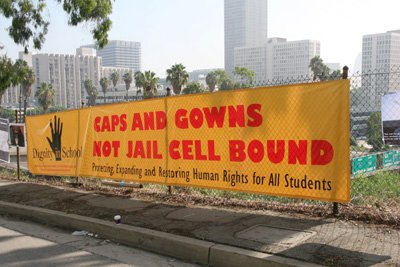
National Week of Action on School Pushout

During the Week of Action, communities around the country called on policymakers to adopt positive models, like restorative practices and positive behaviour supports, which DSC says are shown to reduce suspensions by 50% and improve school climate and academic achievement. DSC's advocacy during the week involved organising town hall meetings in communities and speaking with local, state, and federal policymakers. DSC also asked people to:
- sign and share the National Resolution for Ending School Pushout [PDF], a call to action signed by more than 200 individuals and organisations from 50 states and groups like the National Education Association and School Social Work Association of America;
- hold an event, show a video, or teach a lesson on school pushout in the classroom or community; and
- Post a story on school pushout on the national online DSC School Pushout Story Bank.
Education, Rights.
The latest report from the National Center for Education Statistics found that more than 3.3 million students were suspended from school at least once and 102,000 were expelled in one year alone. According to DSC, pushout impacts historically disenfranchised youth at higher rates. In middle schools, black male students are three times more likely to be suspended than their white peers, based on data from the Department of Education. DSC maintains that these punitive practices do not reduce misbehaviour but, rather, put students at greater risk of failing classes and dropping out. Click here for more facts on school pushout in PDF format.
Email from Rachel Falcone to The Communication Initiative on October 7 2010; and DSC Facebook page, January 27 2011.

- Log in to post comments