
























Development action with informed and engaged societies

After nearly 28 years, The Communication Initiative (The CI) Global is entering a new chapter. 

Following a period of transition, the global website has been transferred to the University of the Witwatersrand (Wits) in South Africa, where it will be administered by the Social and Behaviour Change Communication Division. Wits' commitment to social change and justice makes it a trusted steward for The CI's legacy and future. 

On the transfer, co-founder Victoria Martin expressed her pleasure to see this work continue under Wits' leadership, knowing that co-founder Warren Feek (1953–2024) would have felt deep pride in The CI Global's Africa-led direction. 

As Wits, we honour the team and partners who sustained The CI for decades and look forward building from that strong base. This includes co-founders Warren Feek (1953-2024) and Victoria Martin as well as La Iniciativa de Comunicación (CILA), which continues independently at lainiciativadecomunicacion.com with links to The CI Global site. We are also eager to forge new partnerships and entertain new ideas as we consider how best to contribute to social and behaviour change in our rapidly evolving environment.

If you are joining the International Social and Behaviour Change Communication (SBCC) Summit in Panama, please join Wits and CILA on Monday, 22 June, to share your thoughts and suggestion for the relaunch of the Communication Initiative. We will be in Pacifica 5 from 12-1:25 for the Refuel, Reflect, and Renew Lunch Series: The Communication Initiative: celebrating a driving force for Communication for Social Change and the way forward. We will reflect on the legacy of Warren Feek and family in creating the Communication Initiative, consider the contributions of CI over the years and then turn our attention towards the future in this dynamic session. 

If you are unable to join us in Panama, we still want to hear from you. Please contribute your thoughts by following this link: https://redcap.link/CommunicationInitiative2026 or reaching out to ci_surveys@commint.com

You can also follow the QR Code:

 https://redcap.link/CommunicationInitiative2026

Time to read
1 minute
Read so far

One Hour Is Not Enough
0 comments
Broadcast on Arabic satellite television, this talk show series promoted the rights of disabled people. The goal is to raise awareness about challenged persons.
Communication Strategies

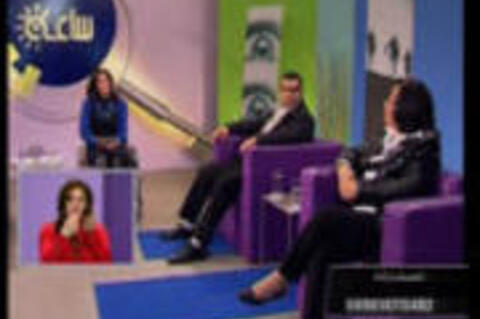
"One Hour Is Not Enough" drew on information and communication technologies (ICTs) to highlight the rights of disabled persons to education, work, and political participation. The weekly talk show programme aired live from Beirut, Lebanon, every Sunday evening by the TV channel SAT-7 for a 6-month period in late 2007/early 2008. The talk show tackled issues such as discrimination, independence, marriage, feelings, and violence. The programme was interactive; discussion included guests in the studio and with viewers, who called the show or send their comments via text messages from their mobile phones. (In Arabic, "One Hour is not Enough" is translated as "Sa'a Mish Say'a"; many viewers reportedly sent their short message service (SMS) comments to the "SMS-show").

All 27 shows were hosted by a two-person team: well-known Lebanese presenter Said Melki, and a young woman of Palestinian descent named Tania who was injured in a bomb attack when she was 9 years old. (Consequently, she uses a wheelchair. She is a law school graduate, but is not allowed to practice law because of Lebanese restrictions against Palestinians).

Development Issues

Rights.

Key Points

SAT-7 was created by Middle Eastern Christians in partnership with Christians around the world. The channel has its own studios in Lebanon and Egypt, and administration and broadcast facilities in Cyprus.

Organisers say that "The rights of disabled persons are often ignored in many Arab countries, and one of the main reasons for this is simply lack of awareness. The issue of disability is not generally discussed in Arab media, and SAT-7's show has created a lot of attention, also from other media."

An earlier disability campaign on SAT-7 included documentaries, spots, and children's programmes. After watching these programmes, the number of focus group discussion (FGD) respondents who strongly agreed with the statement "People with disabilities have a valuable contribution to make in the community," had increased changed from 48% to 65% in Jordan, from 77% to 86% in Morocco, and from 37% to 71% in Egypt.

Sources

The World Association for Christian Communication (WACC)'s Media Action, May 2008, sent to The Communication Initiative on June 5 2008.

Teaser Image
http://archive.waccglobal.org/var/storage/images/media/images/sat_1__1/47391-1-eng-GB/sat_1_medium.jpg