










































Overcoming the Taboo: Advancing the Global Agenda for Menstrual Hygiene Management for Schoolgirls
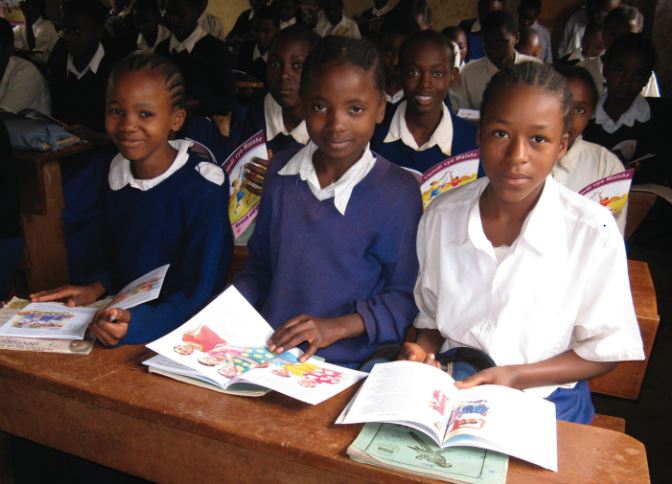
Columbia University (Sommer), UNICEF (Sahin)
"Inadequate water AND sanitation facilities pose a major impediment to school-going girls during menstruation, compromising their ability to maintain proper hygiene and privacy. A growing focus on menstrual hygiene management (MHM) from nongovernmental organizations [NGOs], the United Nations Children’s Fund (UNICEF), and other international agencies now highlights the profound impact of this problem on school-aged girls and provides the basis for a much needed research, programming, and policy agenda."
This document addresses the need for a range of research, programming options, and collaboration on the barrier to school attendance of girls' menstruation. Inadequate water and sanitation facilities, as well as cultural taboos and secrecy, pose a major impediment. Inadequacies causing embarrassment and gaps in schools attendance include: a lack of latrine doors; latrines also accessed by boys; water at a distance from the latrine; and lack of sanitary materials supplies and underwear.
"A growing focus on MHM from [NGOs], UNICEF, and other international agencies now highlights the profound impact of this problem on school-aged girls and provides the basis for a much needed research, programming, and policy agenda.... Evidence has shown that girls face a lack of guidance on menstrual management both in school and at home."
The document suggests that qualitative and participatory methodologies have increased awareness of the issue, but evidence of this kind needs to be supported by quantitative evidence of interventions that have effectively enhanced girls' participation self-efficacy, performance, and school attendance. "[C]reative approaches for gathering accurate attendance and other quantitative measures are possible and should be incorporated into future research conducted on MHM. More comprehensive and perhaps creative analysis will be essential to determine the most cost-effective and efficient means of addressing MHM in school."
Evidence of a change in interest and advocacy include a conference on MHM for Water, Sanitation, and Hygiene in Schools, co-hosted by Columbia University, New York, United States, and UNICEF. Early efforts to address barriers were highlighted by UNICEF country offices, and MHM issues in emergency contexts were discussed. In March 2013, the Water Supply and Sanitation Collaborative Council convened a global meeting to discuss moving forward on the MHM agenda. "[A] decision by the Joint Monitoring Program of the World Health Organization and UNICEF to advocate for the inclusion of MHM into the post-2015 sustainability goals initiated a series of discussions resulting in a clear and unified definition for MHM... and acceptable MHM facilities."
The publication Menstrual Hygiene Matters [See Related Summaries below] represents an effort to provide in-depth guidance to MHM practitioners in the development and humanitarian fields. Girls' puberty books are being published in Tanzania, Ghana, Cambodia, Sierra Leone, India, Zimbabwe, and elsewhere. (See Related Summaries below.) "Advocacy by the Forum for African Women Educationalists to remove value-added tax on the import of sanitary materials into sub-Saharan African countries; and numerous social entrepreneurial efforts to produce low-cost, environmentally safe sanitary materials."
In short, "[f]rom the perspective of both human rights and public health, every menstruating girl and woman should have a safe, clean, and private space in which to manage monthly menses with dignity."
American Journal of Public Health, September 2013, Vol 103, No. 9, accessed on August 9 2013. Image credit: Marni Sommer