










































Policy Briefing and Country Reports - Creating New Spaces: Women's Experiences of Political Participation in Communities
Womankind Worldwide
"Womankind Worldwide's research on women's political participation at the community level in Afghanistan, Ghana, Nepal and Zimbabwe has found that women-only groups or 'spaces' have multiple benefits for women's participation in politics and public life."
This Womankind Worldwide policy briefing, based on 2015 research in Afghanistan, Ghana, Nepal and Zimbabwe, focuses on the spaces created for women's participation in politics and public life by governments or by Womankind’s partners, examining "how women access the spaces, what they learn, what benefits they get from them and how far their participation enables them to organise and make demands on Local Government for better service provision....This briefing sets out the research's key findings, provides an overview of how Womankind partners (women’s rights organisations) in each country support the spaces, and makes recommendations for all actors engaged in work to support women's political participation."
Womankind worked with four partner organisations using women’s spaces as "mechanisms for women’s empowerment, building women’s confidence and preparing women to raise issues with decision-makers." The research examined the benefits women got from these spaces and "how they translate their involvement in decision-making spaces into real changes in their lives and the lives of others in their community." Partners included: Women in Politics Support Unit (WiPSU) in Zimbabwe; Gender Studies and Human Rights Documentation Centre (Gender Centre) in Ghana; Feminist Dalit Organisation (FEDO) in Nepal; and Afghan Women’s Resource Center (AWRC) in Afghanistan.
Results for women include:
- value of women-only spaces as safe places, for building women’s confidence, self-esteem and agency.
- preparation for entering male-dominated spaces through challenging discriminatory attitudes, behaviours and social norms.
- equitable decision-making in the home through new learning and confidence in talking as equals to men and boys.
- the gaining of knowledge and skills and knowing rights, such as the importance of making wills, securing birth, marriage, citizenship and identity certificates.
- leadership roles, such as attending and then running meetings and speaking out to make views known.
- taking action for change by lobbying decision-makers and/or taking action.
- the addressing of other forms of discrimination like 'untouchability'.
- the garnering of men's support for women's participation, particularly when men see household or community benefits.
Challenges include:
- an enabling environment: participation can be undermined by a lack of a legal framework that supports public participation of women.
- lack of economic empowerment and resources: Time away from work and fees for transportation impacted attendance. Nepali groups developed saving and loan programmes that helped with male approval and economic empowerment.
- low literacy: This affects confidence in taking on leadership.
- holding decision-makers to account: "... [T]he women often had few means to hold the decision-makers to account, beyond reminding them that they committed to specific actions, because of a lack of power or sanction.
- political nature of the work: This increased tensions.
- not essentialising women: Women’s aspirations and needs differed according to location and many other factors, so solidarity was not always achievable.
- sustainability: "Expecting women to do long-term development work, as volunteers without financial and other support, is the subject of much debate."
Recommendations for the policy briefing are the following:
- " Increase investment in women’s participation and leadership, particularly at the subnational level, and recognise that supporting the creation of women-only safe spaces is an essential element of this. Recognise and explicitly address the obstacles to women’s participation arising from the lack of enabling environment in policies and programming, and by partnering with women’s rights organisations.
- Recognise and support women’s diverse pathways into political participation and leadership, and the technical and political role women’s rights organisations play in working with women to understand and engage in political systems in a myriad of locally-relevant ways.
- Ensure funding for women’s political participation is long-term, sustainable, flexible and accessible to locally-based women’s rights organisations to enable social norm change around women’s participation and leadership, and so that they can respond to sudden and unexpected changes in the political context in which they work.
- Ensure that global and national indicators agreed to accompany Target 5.5 of the Sustainable Development Goals are robust and true to the scope and ambition of the target. This means capturing both qualitative and quantitative changes in women’s participation in decision-making, including at the local and household level."
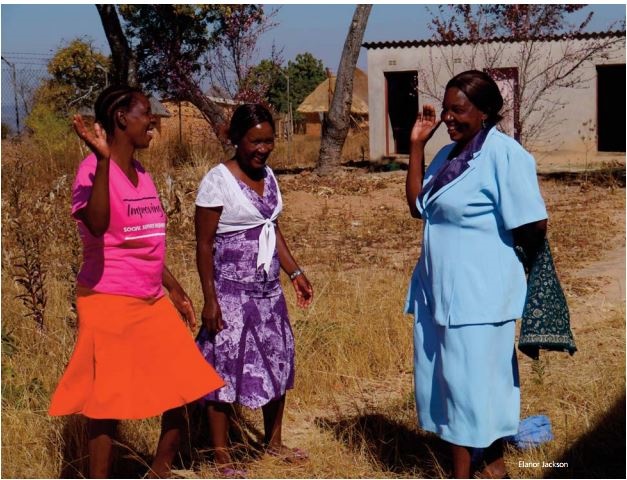
Womankind Worldwide website, August 23 2017. Image credit: Elanor Jackson
- Log in to post comments