











































The politics of love
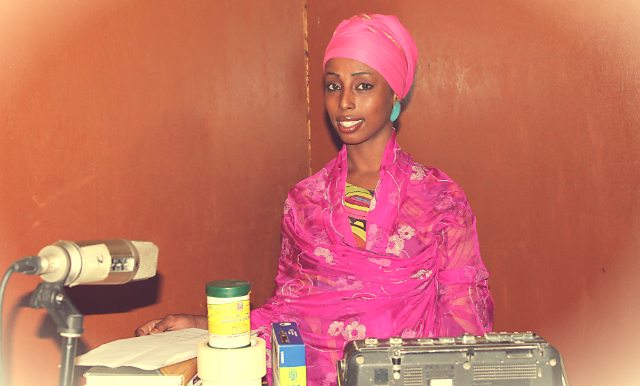
Author: Hoda Hersi, January 28 2015 - We are making a fun but educational drama in our Somalia office, with drama very much being the imperative word. When characters from different backgrounds come together in storylines, from Shakespearean classics like Romeo and Juliet and Othello to modern day TV shows Grey’s Anatomy and Days of Our Lives, I’ve always found it makes the drama juicier. But never could I have predicted that a Somali love affair in our fictional drama could generate a political drama in the real world.
As project coordinator in the BBC Media Action Hargeisa office, I am working with our team to create the radio drama Maalmo Dhaama Maanta (Better Days than Today). It’s Somalia’s first interactive programme where the listener gets to influence the fate of the characters. The weekly drama explores a variety of issues facing youth today, from jobs and relationships to migration.
With “Somali” being an ethnic term regardless of borders and regions, we hoped that a focus on “Somali youth” would avoid the politics surrounding terms such as “Somalia” or “Somaliland”, which can raise complex issues of former colonial and clan borders. As with our previous programmes, our drama is representative of the different regions. The programme includes heartbreak, humour and the trials of being a young adult and wanting to make your own way in life. Every month a key dilemma is voted upon by listeners across the different regions by phone, text message and online, with consequences for the character chosen by popular vote.
A Romeo and Juliet romance
What we did not expect was the level of discussion that would develop after a romantic situation between our main character Ugaaso from Somaliland and her partner Aweys from South Central. Ugasso is a young woman dreaming of a better life; and Aweys, who after returning from living in Europe, is taken by Ugasso’s beauty.
Our production team received a tonne of feedback on the love affair, with opinions very much divided. Some believed the romance was beautiful, since “we are all Somalis anyway”. However, others thought the story was politically controversial because it “translates to the unity of Somaliland and Somalia”.
Historical background
Historically, Somalis have used word of mouth to spread information. During the Siad Barre regime, open opposition was not permitted, so groups of people would use stories, songs, and poems - with underlying messages - to fight the good fight. Somalis have learnt to listen and interpret dramas in a different mode inherited from that time. Today, what would seem like a simple relationship between two people from different areas can still be seen by some people as an underlining story to unite the two. Somaliland declared independence in 1991 from Somalia, but to date, isn’t recognised by the majority of the international world. It is for this reason that some people may be sensitive about any message that could be interpreted as unity.
Following much discussion on the “politics of love”, our production team has decided to move forward with the romance because this is what majority of our listeners asked for.
Somalis can and do fall in love across divides despite where they come from, and since we had started this drama to reflect the real issues Somali youth face, this Romeo and Juliet love affair and all the hurdles that it will have to overcome, must be told.
Click here to access this BBC Media Action blog and related links on Somalia.
Image credit: BBC Media Action
Contact:
BBC Media Action
MC3A BBC Media Centre, 201 Wood Lane
London
W12 7TQ
United Kingdom (UK)
Phone: 44 (0) 20 8008 0001
Fax: 44 (0) 20 8008 5970
Media.action@bbc.co.uk
- Log in to post comments