










































Promising Practices in Peer Support for Adolescents and Young People Living with HIV
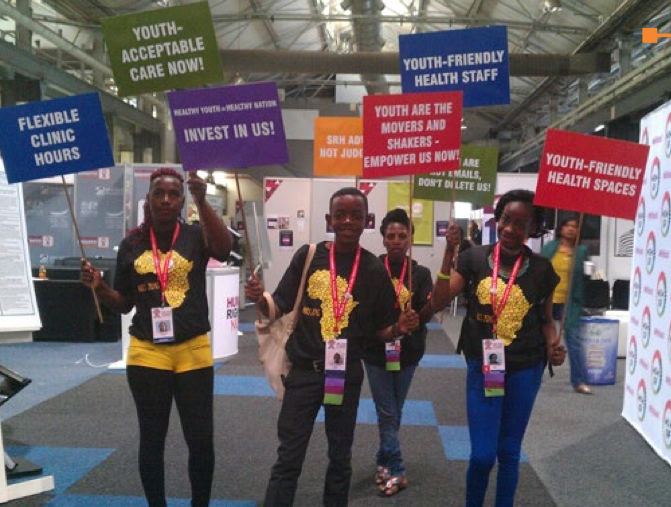
“The involvement of peers in the design, implementation and evaluation of services is emerging as a key element of many adolescent- and youth-friendly service strategies.”
This promising practice brief offers evidence and practical examples and models of adolescent and young people living with HIV (AYPLHIV) peer-led interventions at health facility level. Produced by PATA, an organisation working to improve paediatric and adolescent HIV prevention, treatment, care and support in sub-Saharan Africa, the brief is intended to inform how peer supporters can be more fully integrated into adolescent- and youth-friendly health services (AYFHS). As stated in the brief, “[T]he HIV response has long recognised the importance of peer-led interventions in supporting the health and wellbeing of people living with HIV (PLHIV). Such interventions draw on the knowledge and lived expertise of PLHIV to plan, deliver and monitor HIV services. Reported benefits of meaningfully engaging peers as frontline supporters include improved health, wellbeing and health facility cost savings.”
The brief draws on data and reports emerging from a call for promising models of practice in AYPLHIV peer support within the PATA network of health providers and partners. In-depth surveys (n=14, six countries), each documenting a particular model were received, and 12 were ultimately included and analysed thematically. Survey findings were complemented by focus group discussions and surveys from adolescent peer supporters and their supervisors (n=94) attending a PATA recent youth summit. Four projects are discussed in-depth in this report, looking at the context, the aim of the project, the approach being used, and the key results. The projects are:
- A partnership between Africaid’s Zvandiri Programme, PATA, and the One to One Children’s Fund’s Expert Patient Programme in Zimbabwe
- Sunburst Projects in Kenya implemented by Sunburst Projects and Family AIDS Care and Education Services (FACES)
- Peer Educator Programme in Tanzania implemented by Baylor College of Medicine Children’s Foundation
- REACH (Re-Engage Adolescents and Children with HIV) implemented by PATA in Ethiopia, Uganda, Malawi, Cameroon, Kenya, and Zambia
The aim of all four projects was to improve the quality of HIV treatment, care, and support services for children, adolescents and young people living with HIV. Yet approaches varied in relation to recruitment of peers, training, activities and responsibilities of the peer educators, remuneration, and participation in clinic run activities. The report highlights some of the cross-cutting principles which emerged from the four featured projects and other surveys. In brief, these principles for success are:
- Recruitment of peer supporters through facility programmes such as support groups ensures that peer supporters will have an existing relationship with the facility’s services.
- Provision of mentorship, skills development, and psychosocial support by clinic or programme staff to peer supporters is a fundamental component of successful peer programming. Well-supported peers are more likely to be motivated, have their psychosocial needs met, and be better equipped to provide support for their peers.
- Dedicated job descriptions and induction trainings for peer supporters provide a framework for expectations and important preparation for key tasks and responsibilities.
- Implementers of peer-led models may provide different types of financial and in-kind support to peer supporters. The spectrum of support includes a transport or food allowance, stipend, vocational training support or a salary.
- Inclusion and involvement of peer supporters in all stages of the programme, including design, implementation and evaluation, allows them to understand the project life-cycle and learn new skills, while providing highly-relevant input to ensure that the programme is best tailored to meet the needs of AYPLHIV.
- Common individual-level services provided by peers include psychosocial, adherence and sexual and reproductive health (SRH) counselling, and disclosure support. In some models (such as Baylor College of Medicine Children’s Foundation-Tanzania), home visits are conducted by the peer supporters directly, whereas in other models (such as the Africaid Zvandiri programme in Zimbabwe), peers provide home visit referrals to community peer workers.
The report also looks at the importance of support groups and teen clubs, which are considered critical services to widen the circle of support for AYPLHIV. “PATA findings have demonstrated the importance of creating safe spaces, such as support groups, in order to offer AYPLHIV opportunities to meet and engage with peers who are facing similar challenges, speak openly about sex and sexuality without fear of being judged, access factual and up-to-date information, and be alerted to relevant upcoming events, including social gatherings.” The brief also make the point that support groups should be motivating, inspiring and dynamic spaces with flexible content and programming in order to meet the changing needs of group members. They should include a variety of activities such as crafts, music, drama, writing, sports, and social events and cover topics of interest to young people beyond HIV and anti retroviral therapy (ART) adherence. The location of a support group - whether in the community or clinic based - needs to be considered as there are advantages and disadvantages with each option.
Some of the challenges that emerged from the spotlight case studies and surveys are also discussed. The following are just a selection:
- Few peer models are targeted specifically to young key populations such as young men who have sex with men, young sex workers, young transgender and gender non-conforming key populations, and young people who inject drugs.
- As with many programmes within the paediatric and adolescent HIV sectors, resources can be a major implementation challenge - these include financial resources, the availability of a physical space for confidential peer services, and staff time investment to train, mentor, and provide on-the- job support to peer supporters.
- As provision of peer support is not a long-term career opportunity, programmes must therefore manage peer supporter expectations and provide career development support and mentorship.
The brief also outlines some of the successes and lessons learned. For example, the research showed that, beyond their daily activities, peer supporters can model positive behaviours for their peers by demonstrating positive living while still having fun and connecting with others. This can help to combat the negative effects of self-stigma and peer pressure. In addition, before initiating any peer support programmes, existing staff should be briefed on the peer supporters’ role in order to understand its value and create buy-in. Experience also showed that it is important to include peers within clinic staff structures and activities such as meetings and committees.
The report ends off with the Dar es Salaam Peer Supporter Declaration, Call to Action - Peers to Zero.
PATA website on June 27 2017.
- Log in to post comments