










































Raho Swachch Jiyo Mast Campaign
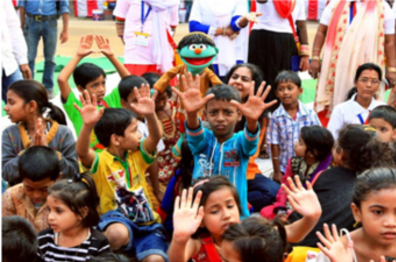
"Children are eager to learn and adapt to new behavior changes while also applying those behaviors formed in their early lives..."
Implemented by Sesame Workshop, "Raho Swacch, Jiyo Mast" is an Indian adaptation of the multi-country campaign "Cleaner, Healthier, Happier' (CHH) - see Related Summaries, below. It is part of the global health initiative WASH Up!, which aims to reduce the mortality rate of children under five years of age, who are susceptible to preventable and treatable diseases, by providing access to sanitation and hygiene education. Noting that over 200,000 children die of diarrhoea in India annually and that access to clean water, basic sanitation, immunisation, and nutrition positively impact child mortality rates, in November 2014, Sesame piloted this 11-week intensive behaviour change communication campaign under the aegis of Galli Galli Sim Sim (GGSS), the popular children's educational programme using the power of media and Muppets in an engaging and entertaining way to teach young children hygiene and other behaviours.
Raho Swachh Jiyo Mast reached out to 500 children in slum communities in Kolkata, West Bengal. The project aimed to contribute to reducing the number of children under the age of five that contract preventable and treatable diseases. The campaign translated complex and abstract concepts into developmentally appropriate and child-friendly activities. This behaviour change model combined multiple elements: a) Muppets (Elmo, and Global WASH! Ambassador Raya) as positive role models who engage children; b) providing engaging content and activities around concepts of sanitation, germs, hand washing, need to wear slippers to toilets, and the maintainence of clean toilets; c) strong partnerships with community-based organisations; and d) providing non-monetary incentives to children to be the change agents. Activities focused on helping children learn good toilet behaviours and teaching them about hygiene and health and the routines associated with them. They learned the vocabulary and language associated with these concepts and then brought their learning home.
Specifically, the campaign invited children to participate in improving toilet practices in their homes and communities, with four key messages: Go to Toilet, Wear Slippers to Toilet, Wash Hands with Soap and Water, and Pour Water after Using the Toilet. Children were recruited for workshops held by trained facilitators in community spaces, using multiple platforms that included print materials, interactive activities with the facilitator, digital games, and a mobile community viewing (MCV) that featured a repurposed vegetable cart fitted with a television and DVD to show GGSS segments.
Children, Health
Anecdotal evidence and findings from the evaluation study showed that children who had participated in the programme were 75% more likely to use a ventilated improved latrine at home and school, were twice as likely to wear shoes than before participating in the programme, and showed 16% greater improvement in using soap for hand washing compared to children who did not participate.
In July 2015, the campaign was scaled up to reach over 50,000 children living in some of the most vulnerable and economically poorest slums in Kolkata. "The initial stories from the ongoing scale up are highly motivating. The response from the communities is phenomenal. The children enrolled in the campaign are inviting more children to join and referring the campaign to other households within their communities. They have already become catalysts for change."
Looking ahead, Sesame hopes to reach more communities with Raho Swachh Jiyo Mast; disseminate the programme's learning to the government, corporate businesses, and to communities; and work with the government to influence policy.
Supported by the Bill & Melinda Gates Foundation.
Email from Meenakshi Khanna to The Communication Initiative on February 8 2016 including "Children as Agents of Change: Sesame Workshop in India's Experience of Implementing Raho Swachch Jiyo Mast Campaign" [PPT] - presented at the Storytelling | Fun & Games session at the International SBCC Summit 2016 - February 8-10 2016 - Health Communication Capacity Collaborative - Addis Ababa, Ethiopia; International SBCC Summit 2016 Abstract Booklet [PDF]; and "Young Champions of 'Raho Swachh, Jiyo Mast' Campaign Felicitated in Kolkata", newKerala.com.