










































Reflections on Nelson Mandela: An Indian lens
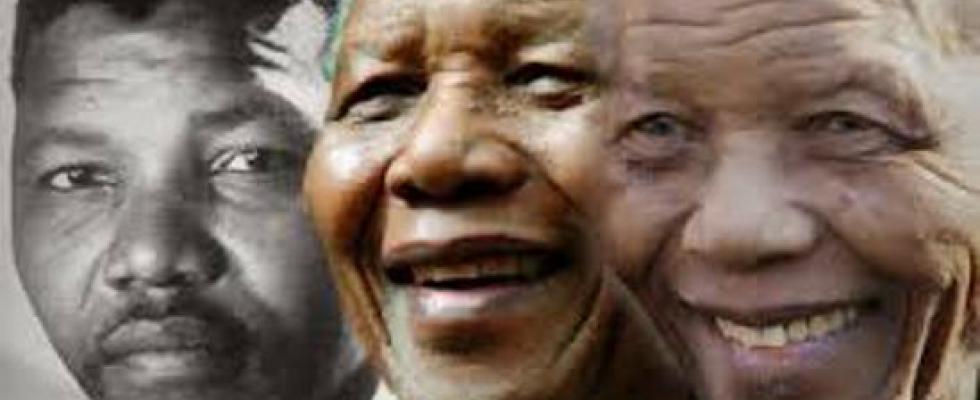
Author: Ranjani.K.Murthy, January 16 2014 The demise of Nelson Mandela makes one reflect on the relevance of Mandela’s beliefs and principles for one’s own country.
I come from India, a lower middle income country. Though the country has been growing economically over the last decade (albeit slowed down over the last two years), inequalities and segregation persist based on caste, ethnicity, religion, class etc. The Gini Coefficient has increased in rural and urban areas between 2004-5 and 2011-12[1].
Women and men are segregated at home through a marked gender division of labour. The public space is considered masculine, with persistent violence against women when women break the norms and enter the work space and assume non-traditional roles. Women earn less than men and are less found in decision making positions. Yet other marginal groups are sexual and gender minorities, with sexual relations between people of the same being a crime in the country and transgender persons living separately and occupying lower rungs.
A combination of institutions viz. family, community, markets, state and neo-liberal inter-state organizations come together to discriminate and segregate those belonging to marginal identities.
Nelson Mandela believed in addressing institutional racism and inequality, as well as reconciliation between races. He believed that the process should be non-violent and be based on representative democracy. India is a democratic country, with a history of affirmative actions taken by the state like reservation [holding places open] for Dalits, Adivasis (Tribals) and women in local self-governance institution, government programmes for poor[2], in public sector employment and reservation for Dalits and Adivasis in education. However, without changing the institutions of family, community, and markets in favour of people from marginalized identities reservations will not do. Further without reconciliation between groups occupying positions of power and those which are not reservations and other affirmative [actions] meet with resistance. For example, there are instances wherein a dalit man or woman is on paper holding the post of President of Gram Panchayat (lowest unit of self-governance), but in fact power is exercised by his/her upper caste employer. There are instances wherein women go outside and work, but have to hand over income to husbands. Yet another issue is when small amount of land is given to dalits or Adivasis by government, but a larger amount of commons is converted for industrial or other purposes[3].
Change in institutional rules, power and resources and reconciliation in a non violent manner - two strategies suggested by Mandela - are extremely relevant to contemporary India. Non-governmental actors and donors have an important role to play, but are often constrained by their sectoral mode of thinking (health, education, finance etc.) rather than wanting to change institutions and work towards reconciliation. There is however some experience on working with men on violence against women, from which lessons can be learnt on reconciliation. Corporates could also help by following ethical practices within the company via the workers/staff and community and promoting just corporateship.
Yes, there is much India can learn from the ideals of Mandela!
Ranjani.K.Murthy rk_km2000@yahoo.com
[1] In rural areas, the coefficient rose to 0.28 in 2011-12 from 0.26 in 2004-05 and to an all-time high of 0.37 from 0.35 in urban areas (Jha, 2013, Rich-poor gap widens in India, Business Standard, August 10, 2013)
[2] Like Mahatma Gandhi National Rural Employment Guarantee scheme, Indira Awaz (housing) Scheme etc
[3] Menon, N, 2011, Anbulla kaadu (My beloved forest): Madhumita Dutta, Kafila, February 18, 2011
- Log in to post comments