











































Regional Outreach Addressing AIDS through Development Strategies (ROADS)
Since 2005, the Regional Outreach Addressing AIDS through Development Strategies (ROADS) project has linked communities along transport corridors in east, central, and southern Africa with HIV/AIDS and other health services. ROADS uses a community organising approach that brings together local volunteer groups with similar focus and interest (such as women, out-of-school youth, or people living with HIV or AIDS). ROADS is led by FHI360 in collaboration with strategic partners, and funded by the United States President's Emergency Plan for AIDS Relief through the U.S. Agency for International Development (USAID).
Most visible in 52 "hot spot" towns, ROADS is working to strengthen transport corridor communities across 11 African countries: Burundi, the Democratic Republic of the Congo, Djibouti, Ethiopia, Kenya, Mozambique, Rwanda, South Sudan, Tanzania, Uganda and Zambia. Community cluster members jointly plan and implement activities that serve the community, reaching out to people where they live, work, or go to school. Through the cluster model, ROADS supports corridor communities in developing home-grown solutions for their most pressing health and development challenges. From generating demand for HIV testing and counselling to enhancing food security and livelihoods for women, ROADS is working to provide integrated solutions to meet the health, economic development, and social needs of people who need these services the most.
Health
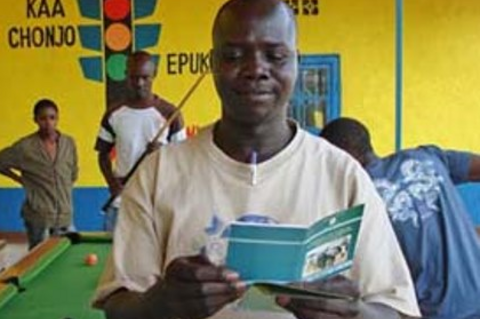
ROADS has established close links with public health systems, as well as private pharmacies and drug shops, to strengthen and improve access to health services, including services related to HIV, family planning, reproductive health, maternal and child health, and nutrition. To reach mobile men, a key identified audience, the project supports a network of branded, alcohol-free, SafeTStop Resource Centres at strategic stopover points. The centres are open at convenient hours and offer health education, HIV testing and counselling, condom distribution, diagnosis and treatment of sexually transmitted infections, and substance abuse counselling and referral. The centres also offer satellite television, movie screenings, billiards, and other recreational activities to attract men and draw them away from settings that put them at risk.
Economic development and nutrition
The project's LifeWorks component is working to strengthen livelihoods and boost household economic resilience by providing training and technical assistance in group savings and loan, livestock management (chickens, rabbits and goats), urban and organic gardening, and microenterprise development.
Children and youth
ROADS has expanded identification of households with children living with HIV and AIDS, providing children and families with food, education, clothing, shelter, psychosocial support, and vocational training. ROADS also works to strengthen the capacity of these households to independently meet their own needs.
Gender equality
ROADS is workings to advance the status of women through initiatives that promote women's health, create opportunities for leadership and livelihoods, and help protect women from violence and exploitation. In Busia, Uganda, for example, eight women in one cluster are applying skills they acquired through ROADS in positions of local political leadership. In Rwanda, women who have participated in entrepreneurial activities are using their increased income to purchase health insurance, refurbish their houses, employ community members, and reduce their reliance on high-risk survival strategies. Community-led, multi-sectoral task forces were established in four corridor towns in Kenya, Tanzania, and Uganda to address gender-based violence as a barrier to use of HIV, family planning, and other health services.
Click here for more information on the specific country activities.
According to FHI 36, the transport corridors of east, central and southern Africa are economic lifelines that link countries with their neighbours, move goods, and expand local economies. They are also major transmission routes for HIV. People working and living along these corridors, such as truck drivers, traders, businesspeople, staff in bars and lodgings, border and customs officers, and others, are at elevated risk of HIV infection. High unemployment and underemployment, multiple concurrent sexual partnerships, heavy alcohol consumption, widespread gender-based violence, and poor access to quality health services (including HIV prevention, care, and treatment services) all fuel HIV transmission. Many corridor towns also confront gaps in services for family planning, reproductive health, malaria, and maternal and child health.
ROADS currently reaches approximately 6.5 million people, including 300,000 truck drivers. More than 1,358 community-based organisations with approximately 110,590 members have been mobilised into 98 community clusters. ROADS collaborates closely with national AIDS control programmes; government ministries; district health management teams; health facilities; and local, national and international private-sector companies.
FHI360, DAI, Howard University/Pharmacists and Continuing Education, Jhpiego, Johns Hopkins University/Center for Communication Programs, North Star Alliance, PATH, Voice for Humanity, United States President's Emergency Plan for AIDS Relief, U.S. Agency for International Development (USAID).
FHI 360 website on February 28 2013.
- Log in to post comments