










































"Remarkable Solutions to Impossible Problems": Lessons for Malaria from the Eradication of Smallpox
Clinton Health Access Initiative
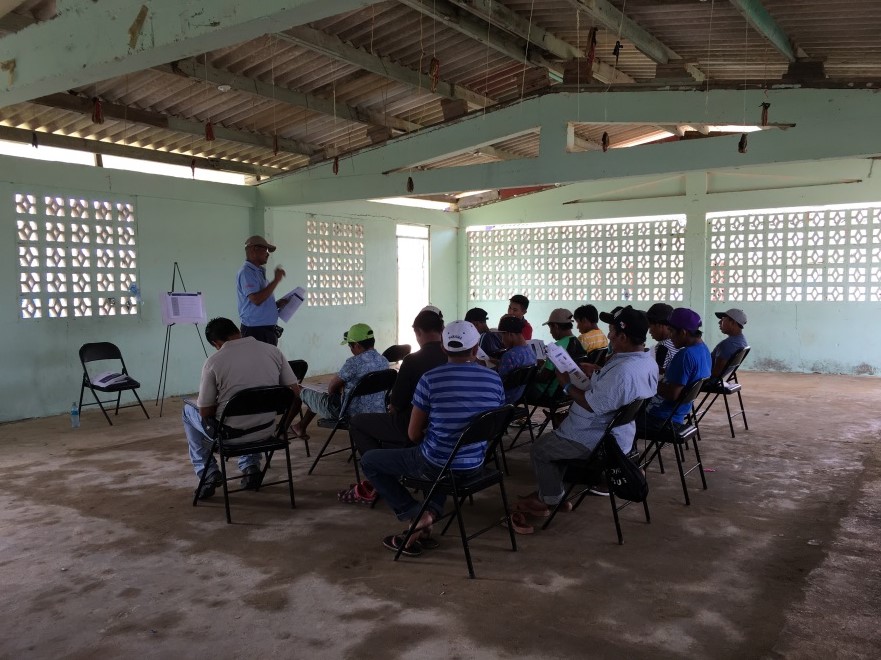
"Smallpox programme leaders stress the importance of empowering countries to solve problems locally."
The World Health Organization (WHO) targets having at least 10 new countries achieve malaria elimination by 2020, 10 more by 2025, and another 15 by 2030. According to this article, achieving these targets "will require internationally coordinated approaches, high degrees of engagement from politicians and communities, efficient organizational structures, and well-managed programmes." Justin M. Cohen here examines the smallpox eradication experience to understand what lessons can be learned about how to approach such an ambitious undertaking. The below summary focuses on some of the communication-related insights he identifies.
Cohen's review of 118 publications describing how smallpox programmes overcame challenges suggests eradication may succeed as a collection of individual country programmes - each deriving local solutions to local problems, yet with a role for the WHO and other international entities to facilitate and coordinate these efforts and encourage new innovations. In the smallpox case, WHO's guidance to countries changed substantially over the course of the programme as understanding of best practices evolved. Its initial recommendation for every country to vaccinate at least 80% of the population increased to a goal of 100% vaccination, before being replaced with a dramatically different recommendation to invest heavily in surveillance and to focus vaccination on the places where transmission was observed. Today, regular revisions of malaria guidance demonstrate that such dissemination of best practices across countries remains an important WHO role.
Publications describing the smallpox experience suggest the importance of employing flexible, problem-solving staff with both technical and operational backgroundss. When issues were found with some countries' production of the smallpox vaccine, WHO engaged vaccine experts to write simple manuals of production, and the WHO consultants worked with laboratories to improve their production processes. More broadly, there was agreement that the WHO's success was strongly linked to the ability to be as flexible and non-bureaucratic as possible.
In addition, political will has been cited as an important factor in the success of smallpox eradication and, as Cohen reports, is a necessity for eliminating malaria. For instance, in the smallpox experience, pressure from powerful allies outside the government was seen as critical to ensure the programme remained sufficiently well supported, even when smallpox was not in the headlines. "A lesson for malaria is thus the importance of getting well-connected leaders from business and high-profile institutions to act as advocates. The opinion of politicians can change based on what seems important for the next election, but smallpox programme examples show how they can be convinced by counsel from those they trust or respect. Malaria appears to already be doing a better job of identifying high-profile advocates; organizations with the explicit goal of maintaining malaria's global or regional visibility, such as Malaria No More or the African Leaders Malaria Alliance, identify champions..., while the End Malaria Council (http://endmalariacouncil.org/) seeks to bring business leaders together with public sector leaders to keep malaria a global priority."
Finally, lessons from smallpox programmes suggest strong engagement with affected communities can help increase the sustainability and reach of today's malaria programmes. Gaining the support of community leaders was commonly cited as a crucial step towards community acceptance of the smallpox vaccine. In Nigeria, vaccinators were reported to have convinced a village chief to support the programme by releasing a trained bird to swoop overhead and drop pro-vaccine leaflets while vaccinators were meeting with him. Other attempts to engage the community included deployment of midwives and other village workers to educate the community. "Best practices for proactive engagement of community leaders and ongoing communication and collaboration with at-risk populations should be encouraged to make communities active participants in malaria elimination programmes..."
In the case of smallpox, engagement with the private sector was reported to be generally minimal, though there were a few efforts to integrate private health care providers into the vaccination programme. "Given the importance of private providers and drug shops for provision of malaria treatment..., malaria eradication will necessitate much greater engagement with the private sector than occurred during smallpox eradication."
Another lesson to emerge involves the importance to smallpox programmes of creative, problem-solving staff who could figure out how to overcome obstacles that arose, tailoring solutions to the unique challenges and contexts faced by each country.
Cohen concludes: "To increase chances of success, malaria programmes should seek to strengthen programme management, measurement, and operations, while building flexible means of sharing experiences, tools, and financing internationally."
Malaria Journal (2019) 18:323 https://doi.org/10.1186/s12936-019-2956-y. Image credit: Clinton Health Access Initiative
- Log in to post comments