










































Social and Behaviour Change Communication for Trachoma
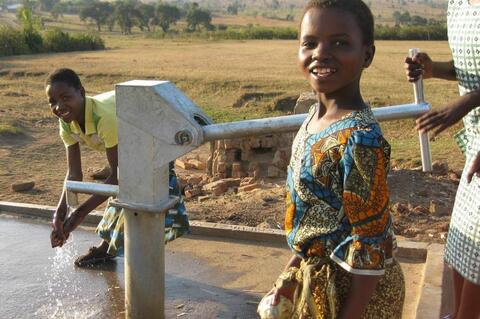
Running from 2012 to 2014 in Uganda, the Social and Behaviour Change Communication for Trachoma project was designed to improve social norms and practices around consistent face washing and environmental cleanliness in order to prevent trachoma, a leading cause of preventable blindness. The initiative included the creation of an e-toolkit, as well as formative research to understand key knowledge, attitudes, and behaviours that support or hinder improvements in face washing and environmental changes. Using collected resources and drawing on insights gained during the formative research, a physical toolkit focusing on behaviour change strategies was developed, approved by the Ministry of Health, and uploaded to the e-toolkit. The project was led by Sightsavers, in collaboration with Johns Hopkins Bloomberg School of Public Health Center for Communication Programs (JHU-CCP) and other partners, and was funded as part of a strategy funding grant with the UK government Department for International Development (DfID).
The project was designed to encourage effective behaviour change communication aligned to global strategies, while taking advantage of locally based, and focused approaches. It focused on the Facial cleanliness (F) and Environmental change (E) components of the World Health Organization’s SAFE preventive strategy for Trachoma control (Surgery, Antibiotics, Face washing and Environmental improvements). Across two endemic districts (Karamoja and Busoga), JHU-CCP identified evidence-based approaches to improve social norms and practices around consistent face washing and environmental sanitation, as well as developed tools to be shared among those working at the community level.
The approach was developed based on research that found that efforts to tackle the elimination of Trachoma infection had not adequately focused on face washing and environmental clean-up as an effective household level behavioural measure, particularly related social norms. Research also pointed out that improving access to clean water alone might not prevent Trachoma. It is necessary to "include strategies to change behaviours around use of that water as well as the acceptance and use of latrines...[and to] empower community members to understand that they have the ability to prevent Trachoma if they adopt appropriate hygiene and sanitation behaviours."
The project included the following components:
Component 1: eToolkit
Using existing resources and in collaboration with the K4Health project, a Trachoma Prevention eToolkit was created. This toolkit provides links to resources, examples of campaigns, training materials, peer reviewed publications, and resources for media. It is intended to provide streamlined access to databases, other eToolkits, and gateways for locating on-line information resources that are evidence based, peer reviewed, up-to-date, and useful for stakeholders. The eToolkit is also intended to be a platform for country-level managers to synergise efforts towards Trachoma-related national goals, allowing partners in the field and home offices to share resources, events, successes, evaluation data, and other information.
Component 2: Formative Research
JHU-CCP and Sightsavers conducted formative research to gain better understanding of the context, as well as knowledge, attitudes and behaviours related to reducing trachoma. The research activities included semi-structured in-depth interviews, and community-based observations. Community members and stakeholders were interviewed to understand the norms, perceptions, and attitudes influencing behaviours around Trachoma treatment, prevention, and control. Respondents included: healthcare workers; health inspectors, community leaders, and community members with knowledge of local culture; representatives of community-based groups and organisations working with Trachoma programmes; Trachoma patients including those who have vision loss, are being treated, and have successfully completed treatment; teachers; and mothers with young children. Overall, the study results showed limited knowledge about the cause of Trachoma and the strategies to prevent it. There also were specific cultural-, community-, household- and individual-level factors that increased perception of risk of Trachoma and decreased self efficacy to prevent infection with Trachoma. In addition, new understandings underlying attitudes and behaviours of local populations that increased risk of Trachoma were identified and provided deeper insights into antecedents to behaviour change. These new findings also demonstrated how different levels of influence factors in the environment intersect to influence the use and non-use of water and the behaviours related to sanitation that are deemed critical to the successful elimination of Trachoma.
The findings were presented to key stakeholders during a dissemination workshop in October 2013 and used to inform the development of a behaviour change communication strategy for face washing and environmental improvement. The final report, “Understanding Individual and Contextual Factors for Development of a Behavior Change Communication Campaign for Trachoma Prevention in Busoga and Karamoja Regions, Uganda” is now available on the e-toolkit.
Component 3: Physical Toolkit
Based on findings from the formative research and the collection of tools for the electronic platform, JHU-CCP collaborated with partners to introduce a new series of information, education and communication materials, as well as mass media and advocacy tools. Other tools that were considered for the project included guidelines on radio drama production and community theatre techniques, the establishment of school-based curricula and materials, and skill-building tools/strategies needed for identifying and addressing barriers in specific settings. With local partners, JHU-CCP provided technical assistance to pre-test all materials and ensure appropriate design, messaging, and value adds. JHU-CCP's collaborating NGOs and other local partners worked with community leaders and their representative environmental health workers on the need for additional attention to consistent and thorough face washing. Suggested items for the physical toolkit included: 1) family checklist of items needed for a clean face (soap, clean cloth or tissue, water source (or alternative water source, ie: tippy tap, depending on the hydraulic profiles of vulnerable communities), 2) information for health providers and environmental health workers including a pictorial guide of Trachoma warning signs, face washing guidelines, information on the benefits of 'Facial cleanliness' and 'Environmental change.'
Health, Water and Sanitation
According to JHU-CCP, "Trachoma is a neglected tropical disease that affects about eighty million people worldwide and can lead to blindness if untreated. It is prevalent in communities that have inadequate water supply, poor infrastructure for sanitation, poor personal hygiene behaviors and limited health services. The World Health Organization aims to eliminate Trachoma by 2020...While dung, dirt and dust, as well as lack of access to clean water resources, were identified by some respondents [in a JHU-CCP study] as contributors to Trachoma, personal hygiene, specifically clean hands and faces were not considered to be a concern for many in the communities, nor were they linked to disease transmission. In cases where respondents recognised the importance of face washing, their ability to follow through correctly on this behaviour was negatively impacted by the scarcity of clean water, long distance to water sources and poor technique. Researchers found that water was frequently rationed in the household, and using water for cleanliness became a very low priority."
Sightsavers, Johns Hopkins Bloomberg School of Public Health Center for Communication Programs, United Kingdom Department for International Development (DfID)
Centre for Communication Programs website, Centre for Communication Programs website, and Social and Behavior Change Communication for Trachoma [MS Word] on May 19, 2014, and email from Basil Safi, JHUCCP on September 5 2014.
- Log in to post comments