










































Strengthening Information Society Research Capacity Alliance (SIRCA) White Paper Series
Digitally enabled openness is characterised by greater transparency and collaboration made possible through digital technologies such as the internet. It has recently emerged as an organising concept across socio-economic sectors, including government, business, health, education, and science. Examples include the Open Government Partnership (OGP) to address government corruption and inefficiencies (see Related Summaries, below), open access to publications to make research available to a greater number of people, and the United Nations Educational, Scientific and Cultural Organization (UNESCO)'s 2002 Open Educational Resources Declaration, which seeks to use free and reusable educational content to provide quality basic education for all children, youth, and adults. These strategic applications of digital openness to achieve development aims can be grouped under the term 'Open Development'. As interest in these initiatives grows, researchers are seeking to better understand the benefits, costs, and risks of openness in developing contexts. There are challenges involved in researching the issues, including: methodological complexity to assess the impact of open activities; theoretical confusion about the nature of openness; and insular research conducted within disciplinary silos.
The International Development Research Centre (IDRC) funded the Strengthening Information Society Capacity Alliance (SIRCA III) programme to explore and deepen our theoretical understanding of open development. SIRCA III is a 2-year research network that includes interdisciplinary teams of 2 leading thinkers and practitioners who are developing cross-cutting theoretical frameworks in the area of open development. The intention of the programme is to build open development theory that is widely applicable and relevant to policymakers, community groups, and citizens alike.
SIRCA III is also a research capacity building programme that works with emerging developing country scholars. These emerging scholars are mentored by senior researchers to help them carry out high-quality research based on the theoretical developments of teams of leading thinkers.
The following SIRCA III white papers are the first step in cross-cutting, interdisciplinary open development theory building:
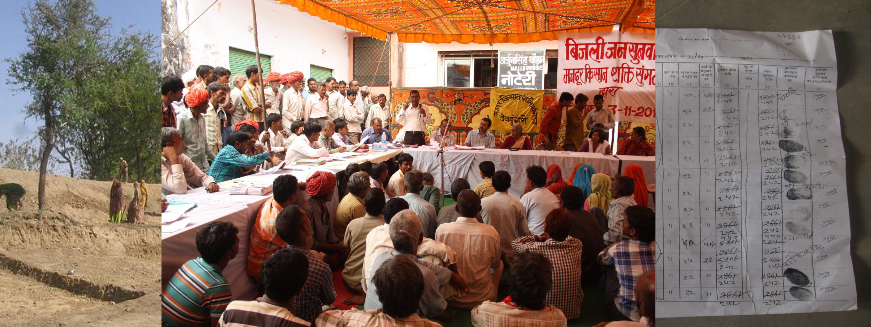
- Paper No. 1: Open and/or Apolitical: A critical re-examination of Open Information Systems [PDF], by Janaki Srinivasan & Bidisha Chaudhur, 2016 (10 pages). Abstract: "This project proposes a theoretical framework to analyse the phenomenon of learning among users of open information systems (OIS) in which learning is taken to be indicative of positive social transformation. In order to understand how learning takes place in the context of OIS use through the interaction of structures and agency, we draw on practice-based situated theories of learning and critical information studies. Such theories prompt us to adopt a broader processual view of learning as an everyday practice that shapes individual identity which can be then leveraged to negotiate varied life situations beyond the immediate learning of how to use an OIS. Based on this understanding of learning, we develop a framework that will critically examine different levels of learning occurring within a matrix of communities of practice (CoPs) specifically in the context of OIS use. The broader objective of this framework is to unravel the different opportunities of learning (as development) that OIS provide which were hitherto unavailable to its users."
- Paper No. 2: Resources, Learning and Inclusion in Open Development [PDF], by Marion Walton, Andy Dearden & Melissa Densmore, with contributions from Anja Venter and Chao Mbogo, 2016 (32 pages). Abstract: "Engaging with open development (OD) necessitates learning in which people appropriate and adopt new technologies and socio-technical practices. This typically involves informal learning (i.e. outside of formal education), and will differ between reading relationships (as a user of OD resources) and writing relationships (for full ownership or authorship of OD). If potential participants are unable to connect with existing learning networks, OD initiatives will have limited impact. Communities that aim to be 'open' may exclude people by virtue of race, language, literacies, gender, sexuality, phone/computer ownership, access to Internet or other aspects of identity. This project will explore the situated material conditions and informal learning practices that surround processes of inclusion in (and exclusion from) OD initiatives. The project will develop more detailed ethnographic and socio-material accounts of the informal learning processes and outcomes in such encounters. It will foreground the ways that global inequities of infrastructure, default identities and the cultural practices often associated with openness can 'format' participation in subtle but significant ways."
- Paper No. 3: Elements of Trust in an Open Model: Exploring the Role and Place of Trust in Open Education and Urban Services in the Global South [PDF], by Richard Ling, John Traxler & Anuradha Rao, 2016 (19 pages). Abstract: "We are interested in understanding the role of trust in open systems, particularly in the dominion of education and urban services. It is clear that open development can potentially lower the threshold, allowing many different people access to IT based applications for a variety of positive purposes. We would like to investigate how the absence, presence, or loss and recovery of trust impact the effectiveness and operations of an open system. We are interested in examining the cultivation, evaluation and maintenance of trust in various open systems by different stakeholders, including users, developers, consumers, as well as the external people and institutions that are connected to or interact with the system. How is trustworthiness a part of their evelopment? How do users develop a sense of trust in the relationships and material on the open systems? Is 'gaming' the information on open systems a problem for users and/or developers, and how is this dealt with? These questions are important when considering the efficacy of open development, particularly in the Global South, where empirical studies have not kept pace with the explosion of open initiatives in urban and peri-urban areas."
- Paper No. 4: A Critical Capability Approach to Open Development [PDF], by Yingqin Zheng & Bernd Carsten Stahl, with contributions from Becky Faith, 2016 (17 pages). Abstract: "Drawing upon the critical theory of technology/information systems and Sen's capability approach, the Critical Capability Approach (CCA) serves as a conceptual basis for a research framework that could be applied to assess the design, implementation and evaluation of open development projects. Instead of measuring the achievement of technological or political goals, we propose sets of research questions that seek to explicate the ideological and political foundations of openness, and the extent to which openness enhances users' well-being and agency freedom. The research framework aims to equip researchers with some conceptual guidance and methodological suggestions to carry out independent evaluation of open development initiatives, and in this process start a dialogue with policy makers, donors and designers, to engage with all key stakeholders and to protect the interests of the marginalised and disadvantaged. The CCA Research Framework is not sector specific and can be applied to any open development project. Researchers are encouraged to select, adapt and integrate some of the suggested research questions in accordance to the context and conditions of a particular project."
- Paper No. 5: Open development - A focus on organizational norms and power redistribution [PDF], by Anita Gurumurthy & Parminder Jeet Singh, 2016 (12 pages) - Abstract: "Open development is the employment of ICT [information and communication technology]-enabled 'openness' towards an improved distribution of power across the intended community of impact. Typically, ICT-based affordances rapidly transform the organisational context of development practice, enhancing organisational outcomes. But affordances cannot be mistaken for norms; the interplay between affordances and norms, and crystallisation of new norms, is critical for moving towards appropriate organisational outcomes. Further, improved distribution of power must occur not merely in the proximity of the '(networked) organising space' but across the intended community of impact. The continuum between the organising and community spaces in 'open initiatives' must be examined critically, especially with regard to governance and distribution of power. Empirical research to trace how norms related to development outcomes are built and sustained in open organisations, and how improved distribution of power in the wider community of impact is caused or not, would help understand and enhance the impact of 'open' practices and organisations on development."
- Paper No. 6: Public Engagement in Open Development: A Knowledge Stewardship Approach [PDF], by Katherine Reilly & Juan Pablo Alperin, with contributions from Betty Ackah, Belen Febres Cordero and Anis Rahman, 2016 (31 pages). Abstract: "Early open development work assumed that the Internet and openness decentralized power and enabled public engagement by disintermediating knowledge production and dissemination. However, over time, new intermediaries have become involved in the delivery of open information and in the stewardship of open knowledge. We have identified five models of intermediation in open development work: decentralized, arterial, ecosystem, bridging and communities of practice. The goal of this project is to produce exploratory research about trends in intermediation across three areas of openness work: open government, open education and open science. How do intermediaries add value, for whom, and where is this value accruing? Does intermediation serve to maintain openness and facilitate public engagement, or does it create new power structures? To answer such questions, we believe it would be productive to identify common trends or tendencies in how different types of intermediaries take on the stewardship of open information across the different domains of open development work."
Emails from Liane Cerminara to The Communication Initiative on September 1 2016 and September 14 2016 (including Project Approval Document, January 2014 and several PowerPoint presentations); feedback from Matthew Smith, forwarded to The Communication Initiative on November 15 2016; and IDRC website, September 16 2016. Image credit: Janaki Srinivansan/Bidisha Chaudhuri/Neesha Dutt: International Institute of Information Technology Banglaore (IIITB)
- Log in to post comments