










































Supplementary Immunization Activities for Measles and Rubella Vaccine in Vanuatu
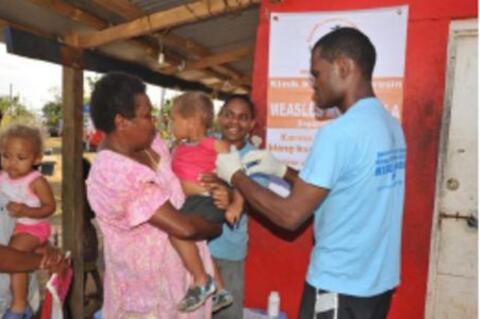
In early 2015, the Ministry of Health (MoH) Vanuatu in partnership with the United Nations Children's Fund (UNICEF) and the World Health Organization (WHO) conducted Supplementary Immunization Activities (SIA) for measles and rubella (MR) vaccines in response to a measles outbreak at the end of 2014. Vanuatu is divided into 6 provinces and more than 80 islands. As a result, the campaign was conducted in 2 phases; the Southern Provinces of Malampa, Shefa, and Tafea implemented the SIAs in September 2015, and the Northern Provinces of Penama, Sanma, and Torba continued in October 2015. The SIA also introduced the rubella vaccine into the routine immunisation schedule (RI) along with the measles-containing vaccine (MCV). Aiming to reach almost 100,000 children nationwide from one to 15 years old, this is the largest cohort of children ever to be vaccinated in SIAs in Vanuatu. During the campaign, children aged one to five years also received Vitamin A, deworming tablets, and the oral polio vaccine (OPV).
Prior to the implementation, immunisation training and microplanning workshops were held in an effort to ensure that high coverage was achieved through detailed planning, effective social mobilisation, efficient resource utilisation, and cold chain management.
Social mobilisation activities were conducted before and during the implementation of the campaign. A national advocacy meeting was held in July 2015 and was attended by multiple stakeholders from the government, civil society organisations, religious leaders, non-governmental organisations (NGOs) and the private sector including airlines, mobile phone companies and media. This meeting was designed to ensure effective collaboration and coordination to achieve a successful campaign. "This is...a great example of governments and international organizations working together to protect children," said Ridwan Gustiana, Immunisation Officer from UNICEF.
Mobile phone messaging is used to reach mobile phone users across the country. Radio spots are aired daily to reach communities in rural areas, while urban populations receive information through television panel discussions and regular newspaper articles. A large majority of people are also reached through direct community and school awareness programmes. In urban areas, the MoH is using sports for development programmes to mobilise schoolchildren during the campaign, either through football games or volleyball games, which are popular among school children.
Immunisation and Vaccines
This mass immunisation campaign was designed to protect children from measles in the aftermath of Cyclone Pam, which hit in March 2015. In the context of the disaster, infectious disease outbreaks have become a more serious risk in Vanuatu, especially with so many people living in crowded conditions with limited access to safe water and sanitation facilities.
According to the WHO, measles is one of the leading causes of death among young children. In 2013, there were 145,700 measles deaths globally - about 400 deaths every day. Poorly nourished young children are prone to severe measles, especially those with insufficient vitamin A or an immune system weakened by other diseases. During the period of 2000-2013, measles vaccination prevented an estimated 15.6 million deaths worldwide. The vaccination campaign described above reached more than 95% of the children it intended to reach in Efate, Tanna, Santo, and the most affected of the Shepherd Islands. Nearly 24,000 children, ranging from 6 months to 5 years, were vaccinated against measles and given vitamin A supplementation and deworming treatment.
MoH, UNICEF, WHO
Global Immunization News (GIN), October 2015; email from Ridwan Gustiana to The Communication Initiative on December 17 2015; and "Protecting the Children of Vanuatu from Measles". Image caption/credit: Young children receiving vaccinations in Vanuatu's capital, Port Vila. Credit: Philip Metois and © WHO Vanuatu/2015/Shrestha.
- Log in to post comments