










































Sustaining Vaccination Coverage: Continued National Commitment to Primary Health Care with a Strong Focus on Community Engagement - Case Study Sri Lanka
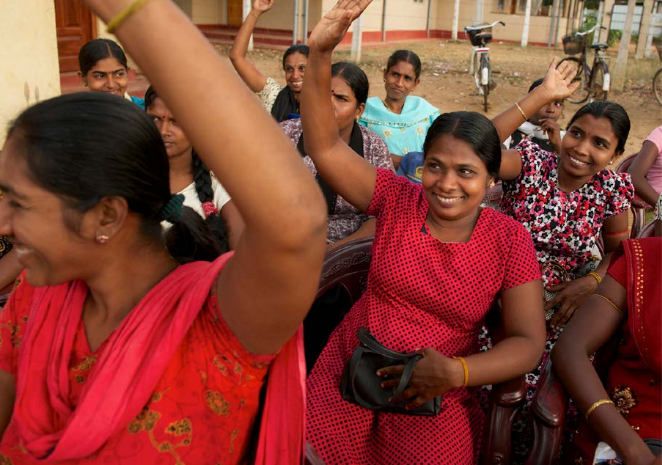
"[P]ositive engagement leads to empowerment and autonomy over an individual's own health, leading to patient demand for quality and safe services."
The United Nations International Children's Emergency Fund (UNICEF) has developed a health system strengthening model with a key pillar of community engagement, and the World Health Organization (WHO) have developed a Global Framework on Integrated People-Centred Health Services. In this context, the UNICEF Regional Office for South Asia (ROSA) has created a case study to explore how a strong, sustained commitment to community engagement in securing primary health care (PHC) for all has increased equitable vaccination coverage in Sri Lanka - a country where it has been reported that 99.1% of children receive their vaccinations in a timely, people-centred manner, with high-quality standards. As a result, Sri Lanka has been declared free from maternal and neonatal tetanus and poliomyelitis; the last case of virologically confirmed polio was in 1993; and Japanese encephalitis and congenital syphilis have been nearly eliminated.
The case study analyses how Sri Lanka set up this system, how it functions at local levels, and the key "human factors" central to implementation. In short, the use of public health midwives (PHMs), through the community-based Medical Officer of Health (MOH) system, brings health and health education to people's front door. Health workers draw upon existing community assets to ensure that beneficiaries are active participants in public programmes - not simply passive recipients of information. As such, there is both positive health seeking behaviour embedded in the population, with good health literacy for timely age-appropriate immunisations and strong public demand for high-quality, safely delivered vaccines.
UNICEF ROSA suggests that a confluence of factors account for the success of Sri Lanka's sustained vaccination coverage, which are are a product of a strong health systems structure, free health education for all, and high female empowerment and autonomy over health decision-making. Important elements of the health system include the provision of free healthcare services, strong leadership through the Epidemiology Unit of the Ministry of Health at the central level, and a well-established and time-tested system of integrated service delivery at divisional levels and community levels. Additional key factors of this health system include a strong health information system with a coverage rate of nearly 100%, political commitment, strong systems of accountability, and specific actions for sustainability, including fractional dosage of polio vaccines.
Elements of the approach include:
- Embedding immunisation services within a people-centred, integrated PHC system - key actions:
- Providing continuous care at the point of service delivery due to strong health systems structure
- Committing the life course approach, where immunisation is integrated into wider range of health services
- Engaging with patients, families, and communities for sustained coverage and vaccine acceptability - key actions:
- Improving the public's health literacy on immunisations (2 examples: (i) designing and disseminating audience-appropriate print content such as posters/leaflets in Sinhala, Tamil and English. The communications materials are not done by an external agency, but by the Epidemiology Unit, whom people trust; and (ii) providing the opportunity to communicate one-on-one (24/7, through mobile services) with a trained PHM who can listen to any concerns and answer any questions about vaccines)
- Improving the efficiency of vaccination services through community engagement (e.g., enabling awareness of and easy access to antenatal classes - through the lifecourse approach, all mothers are made aware of antenatal classes, and from these are prepared for childbirth and the necessary immunisations)
- Supporting self-management of immunisations (e.g., distributing the home-based child health development record)
- Bringing the community voice to service design and processes (e.g., empowering communities to have a voice through community groups and monthly meetings with the health service delivery teams, and providing health professionals with knowledge and skills on the importance of engagement)
- Sustaining the immunisation programme through strong accountability systems - key actions:
- Developing and implementing a unique communicable disease prevention strategy
- Practicing well-functioning methods of answer ability for transparency
- Ensuring strong delineation of responsibility
- Developing an independent committee on vaccines: the advisory committee on communicable diseases (ACCD), in which the National Immunization Technical Advisory Group (NITAG) is incorporated
- Ensuring equity in access to vaccinations: Strong commitment to addressing the social determinants of health - key actions:
- Removing financial barriers to health
- Improving the public's health-seeking behaviour through the government's commitment to free education for all
- Addressing any potential bottlenecks relating to geographical access and social barriers, including cultural acceptability of vaccines, through health systems strengthening initiatives
- Ensuring political commitment and financial sustainability for the immunisation programme - key factors:
- Political commitment
- Financial sustainability
- Coordination across government and multi-sector collaboration
- Leadership with experience at the grassroots
- Focusing on quality in vaccination service delivery - key factors:
- Time-tested national immunisation programme standards implemented to the grassroots
- A strong adverse event following immunisation (AEFI) surveillance system and response
- Use of a safe procurement process and maintanence of a buffer stock
- Strong cold chain management
- Efficient vaccine wastage
- Making the national immunisation programme sustainable and resilient - key actions:
- Responding to a global scarcity in vaccines
- Sharing lessons learnt and gaining knowledge and skills internationally through country partnerships, workshops, and trainings
- Investing in long-term training for health professionals related to safe vaccinations
Evidence has found direct impacts on a health service from an approach that is people-centred and focused on community engagement:
- Clients engaging in their own care have reported "higher-quality care, fewer errors and more positive views on the health system".
- Clients' experience is positively associated with: self-rated and objectively measured health outcomes, adherence to medication and treatment; and preventative care such as use of screening and immunisations.
- Engagement strategies such as health literacy, shared-decision making, and self-management improve patient adherence to treatment and reduce healthcare utilisation and cost.
- Human connection and compassionate, engaging relationships create motivation and satisfaction with health professionals' work, reducing possible de-motivation, burnout, and compassion fatigue.
Key lessons learned:
- Improving quality and equity
- Engage with the community through community groups to gain local wisdom.
- Use PHMs as a connection to the community to build up trust.
- Develop self-management for vaccinations through strong health literacy.
- Provide people-centred training to professionals to be able to counsel families with vaccine hesitancy.
- Give opportunities for the community and families to bring their voice to the design of services.
- Develop independent groups for vaccine quality improvement to credibility.
- Provide strong leadership at the central level (in Sri Lanka's experience, this is through the Epidemiology Unit).
- Improving accountability
- Ensure clear role delineation and that every health professional is accountable for their performance.
- Provide regular feedback.
- Hold health professionals accountable for their data through regular reviews and staff meetings.
- Improving efficiency
- Integrate data use and data quality improvement training into each health professional's curriculum.
- Make all staff responsible for their own vaccination-related data.
- Make vital registration mandatory to ensure high immunisation coverage.
- Integrate the work of non-governmental organisation (NGO) groups into the health system - no parallel systems.
- Maintain strong vaccine preventable disease surveillance.
- Improving sustainability
- Provide mandatory high-quality training for field level workers.
- Make immunisation a government-owned initiative, with a dedicated budget.
- Looking beyond the health sector
- Promote the importance of female education.
- Build public belief as a mechanism for long-term political commitment.
Foreseeable challenges include:
- International market forces: The side effects of the increasing global scarcity of vaccines, and pressures from negotiating with vaccine suppliers in a small country;
- Changing population demographics: An increase in uncontrollable information on vaccinations, increased potential for vaccine hesitancy, and reduction in donor funding;
- Lack of human resources: Shortages at all levels of the health system - in particular, PHMs - and need to create motivation for PHM job retention; and
- Health information system quality: Need to ensure that the health system can maintain the quality of the paper-based system whilst transitioning to an online system.
To overcome these challenges, UNICEF ROSA stresses the need for continued emphasis on maintaining community-based trust and demand through the MOH health structure.
UNICEF ROSA website, January 15 2020. Image caption/credit: Example of a community meeting on health © UNICEF ROSA/ Shezard Noorani
- Log in to post comments