










































Technologies for Global Health
"'How good is a cure if only ten people can have it…or we haven't got the money to train doctors to use it properly?' So asks Nadia Fall, director of a new production of The Doctor's Dilemma, which revolves around rationing for a new treatment for tuberculosis."
This LANCET editorial describes maximising use of current health technologies through community health innovations termed “frugal technologies” in an issue on access to beneficial health technology, including essential medicines and medical devices. Using the example of "Affordable Medicines Facility - malaria (AMFm)", with its July preliminary evaluation highlighted, the author describes the programme as subsidising 270 million artemisinin-based combination therapies (ACTs). "The evaluation report gives evidence for increased availability, affordability, and market share of ACTs in most of the eight countries in the pilot phase of the AMFm....These promising early results do provide some evidence that this novel financing mechanism helps to improve access to ACTs."
Though reducing the cost of ACTs, there is, as stated here, a significant affordability gap for HIV treatment drugs - "more than 80% of those with HIV/AIDS worldwide are still not receiving treatment due primarily to the high ongoing costs of antiretroviral drugs." A potential solution to malaria is the use of a bednet - their popularity has risen, according to the article when their colour is changed from white to green, increasing their use.
The term "frugal technologies...can encompass a new technology, a checklist, a quality improvement strategy, or approaches such as dialogue education..." An example of a frugal technology originating in a developing country is the Jaipur foot, a rubber prosthetic for people who have a below-knee amputation - "successfully rolled out in 22 countries. But still desperately needed are vaccines that are heat stable, a heat-stable form of oxytocin, and a test for sickle-cell disease that can be used in resource-poor settings. New frugal technologies do not have to be sophisticated gadgets, but can be as simple as a checklist. A 29-item Safe Childbirth Checklist has been developed and successfully piloted in India, with a draft version available by the end of 2012.
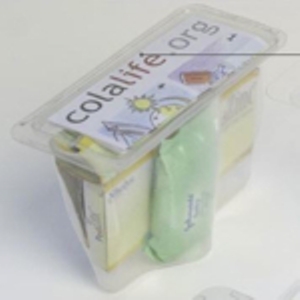
Technologies do not have to be specifically designed for health purposes to have an effect. Information technology has a part to play in ensuring that health advice, or behavioural interventions, reach the greatest number of people, for example via mobile phones. And the wider technologies associated with improving road safety, sanitation, and food supplies are crucial to improve health for all." Public or private development and distribution systems can be effective. "In the ColaLife project, being trialled in Zambia, essential medicines are transported in the space between Coca-Cola bottles in crates, taking advantage of existing distribution networks....From ACTs to Coca-Cola crates, there is much that can be done to ensure technology for health benefits all."
CORE Group cgcommunity, November 1 2012. Image credit: ColaLife
- Log in to post comments