










































THE THIRD EYE
...[W]e believe that stories backed with solid research can create content which will enter popular culture and have a profound social impact." - Mahesh Bhatt, ACEE
This edutainment initiative has been working since early 2013 to support Mumbai, India's creative communities of the industries of media and entertainment with timely information on key health, legal, rights, gender, and other social issues. Borrowing its model from Hollywood Health, and Society (HH&S), which provides entertainment industry professionals with information for health storylines, the Asian Center for Entertainment Education (ACEE) hopes to sensitise creative forces about the influence they have and the impact they can achieve in terms of behaviour change through their works of entertainment.
Through THE THIRD EYE, workshops, story tours, and road trips to sensitise writers on existing developing issues, exposing them to real stories, are organised on a regular basis. Vinta Nanda and Augustine Veliath, co-Founders of ACEE, work with Sandra de Castro Buffington, Director, HH&S and Chris Dzialo, Program Administrator, HH&S to help producers/directors/writers develop socially relevant content which can be mainstreamed. Upon the release and broadcast of productions that come out of sessions such as one held for creative leaders and young people aspiring to become part of the media and entertainment industries of India, THE THIRD EYE will measure how the experience has impacted behavioural change on the ground.
ACEE has also established a network of young leaders emerging from economically poor and marginalised Indian communities to create awareness through entertainment for those who live beyond the reach of present media. THE THIRD EYE is in the process of creating that content in partnership with various talents from the film and television business, with the goal of empowering the disenfranchised. According to ACEE, the industry has its eyes set out on the programme for help with its current or future projects. For example, director Kalpana Lajmi, who is co-writing a script titled "Safed Doli", based on the struggle of a girl child in a story set in rural Bihar, is working with THE THIRD EYE. Producer, director, and actor Soni Razdan, with co-producer Vinta Nanda, is working on a talk show for women, "Madat", and is in consultation with people from THE THIRD EYE to guide its content.
Health, Gender, Rights
THE THIRD EYE gets its name from a combination of the Hindu concept of an invisible eye that provides perception beyond ordinary sight and from a term commonly used for the lens of a film or TV camera.
A March 2013 story in The Economic Times reported that Bollywood is poised to become a US$5 billion industry in the next 2 years. The article quoted former United States (US) Senator Chris Dodd, chairman and Chief Executive Officer (CEO) of the Motion Picture Association of America, as saying that the film industry there contributes about US$640 million annually to the Indian economy. It is estimated that Bollywood produces more than 1,000 films each year, about twice the output of Hollywood. According to HH&S, television in India is also huge, with a wide range of programming and its own set of popular celebrity actors who are famous all over the country.
ACEE (Asian Center for Entertainment Education) and HH&S (Hollywood Health, and Society) in partnership with FICCI and The Producers Guild of India.
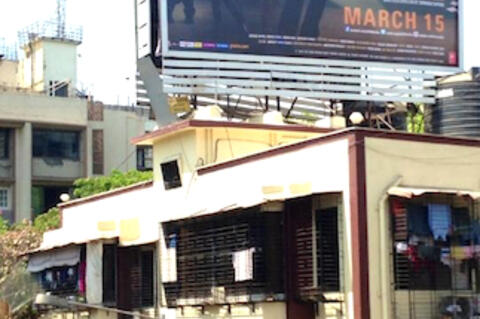
LinkedIn message from Augustine Veliath to The Communication Initiative on March 10 2013; "Asian Centre for Entertainment Education launches 'The Third Eye'", by Saloni Dutta, July 19 2013, exchange4media; and ACEE website and HH&S website - both accessed on August 27 2013. Image caption/credit: Mumbai billboard for film "Jolly LLB," a satirical look at the Indian justice system. Photo by Chris Dzialo
- Log in to post comments