










































Tisankhenji (The Choice is Mine)

The Tisankhenji radio programme consisted of 2 components: a 15-minute radio drama followed by a magazine programme called Tikhoza. Between 2005 to 2008, three different series were produced and broadcast, consisting of 13 episodes each, on the Malawi Broadcasting Corporation (MBC) Radio 2 and the privately owned Zodiak Broadcasting Station. Each station broadcast the programme twice per week, once during regular school hours and once on Saturday.
The drama part of the programme revolves around the character Alinafe Magombo, a 13-year-old girl with big dreams and goals. She is hardworking, disciplined, and responsible, but - like other girls her age - Alinafe encounters life's challenges and problems, and learns through her mistakes. The radio programmes follow her and her friends as they play, laugh, and learn through everyday situations.
According to the organisers, the process of developing the Alinafe story in each phase of Tisankhenji involves thorough social research and continuous interaction with the intended audience to ensure that the story taps into girls' emotional needs and reflects their day-to-day dilemmas. The research aims to further ensure that the programme is child-friendly and evokes the desired emotional and behavioural responses from audiences.
The magazine programme discusses issues and values dealt with in the radio drama. This involves interacting with the audience, playing back the pre-recorded programme, and discussing the varying themes and learning points, such as self-esteem, the importance of goals, and the importance of role-modeling. According to the producers, the use of both radio drama and a magazine programme is designed to allow the producers to guide their listeners' learning while at the same time giving listeners space to voice their views, reflect on the issues, and talk about them.
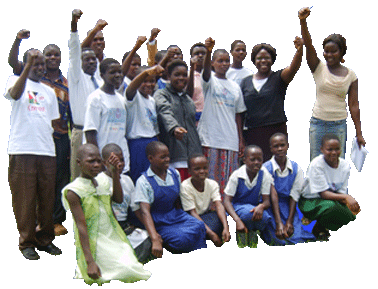
As part of this initiative, 48, school-based, Tisankhenji
Listeners’ Clubs were created - four per school, each with 30-
35 members. Facilitated by schoolteachers, the listeners’ clubs were intended to provide a space for girls to listen and share their reflections on the issues dealt with in each weekly isode. Designed originally for girls only, the clubs proved to be popular with boys also. In partnership with community organisation, listening clubs were also established for secondary audiences such as parents, teachers, and elders, to listen to the broadcasts every Saturday in small groups.
HIV/AIDS, Gender, Youth
This programme began through a collaboration with the United Nations Children's Fund (UNICEF) to scale up the use of UNICEF's collection of "Sara" materials for the Sara Communication Initiative in Malawi, and evolved into the "home-grown" concept of Tisankhenji which is broadcast in Chichewa. The Tisankhenji characters and storylines were based on the Sara productions.
Nanzikambe Arts works in Malawi and uses theatre for education, development, and social change. According to the organisers, Nanzikambe Arts is dedicated to creating theatrical forms of expression rooted in African culture and to developing an aesthetic that draws on traditional and local culture. The organisation also aims to use theatre to expose injustice, advancing among other things human rights, justice, equality, and the realisation of human potential through the arts. They also work to connect artists and audiences from diverse backgrounds, reaching across racial, ethnic, and geographical divides. Their work is based on the idea that storytelling and theatrical experiences can be transformative.
Johns Hopkins Bloomberg School of Public Health, Center for Communication Programs, Malawi Bridge Project, Business Eye, United States Agency for International Development (USAID).
Nanzikambe Arts website on May 5 2008 and October 23 2009 (no longer available and Using Entertainment Education to Promote Self-efficacy and Aspirations among Young Malawians: The Tisankhenji Radio Program [PDF] on October 27 2014.
- Log in to post comments