










































Toward Effective Government Communication Strategies in the Era of COVID-19
The University of Queensland (Hyland-Wood); Monash University (Gardner); University of Sydney (Leask); University of Western Australia (Ecker)
"[P]andemic risk communication requires ongoing engagement with communities."
Public health communication, defined as a two-way process engaging policymakers and communities, has been considered central to addressing the COVID-19 pandemic in Australia, a country that was successful, relative to some other countries, in reducing its infection rate early. This was the conclusion of a task force (Group of Eight Universities, 2020) whose report COVID-19 Roadmap to Recovery: A Report for the Nation points to the speed and scale of governmental intervention and how Australian communities have received, perceived, and acted on the information provided by governments and other agencies. Based on this experience, and informed by literature from the fields of applied risk communication, cognitive and social psychology, sociology, and public policy, this paper highlights some fundamental characteristics of effective governmental crisis communication. It then presents ten recommendations to guide pandemic communication strategies that are designed to engender community participation, support, and trust.
The review of the literature that opens the paper offers insights such as:
- Effective communication during a public health crisis is not merely about messaging.
- Trust is widely recognised as being a central pillar of effective public health crisis management; trust in government and organisations is enhanced when there is transparency in the information presented and the decision-making process.
- Since a coherence of values is conducive to trust, civic engagement (or community engagement) is necessary to identify shared values and enable communities and social networks to be involved in the decisions that will affect them.
- While increased interaction and shared identity will not ensure high levels of trust and mutual understanding, they are indispensable tools for communicators.
- To be genuinely effective in engaging maximum public support and participation, a public health communication strategy needs to be sensitive to the concerns and values of diverse publics and to work with different modes of information sharing.
- Communicators should anticipate disagreement with the evidence cited to support policy decisions in a pandemic due to the patchiness of data and contestation of the legitimacy of expertise, especially in areas that draw on competing values.
- People's engagement with and response to public health information and messaging is influenced by their cultural and social identity, age, gender, and access to resources.
- Successful delivery and impact of a message will in part depend on the process by which the conveyed content (e.g., a pandemic response strategy) is created; vice versa, broad support for a particular message, action plan, or strategy will depend on how its development process is communicated.
- Social media is a site of misinformation but also provides opportunities for effective communication, such as by allowing communities to themselves to become actively involved in sharing and honing relevant messages.
- Effective communications and leadership are central to the management of pandemics.
Based on this foundation, the authors offer ten recommendations for the development and delivery of public health crisis communications, which they argue can be applied to other public health and national challenges:
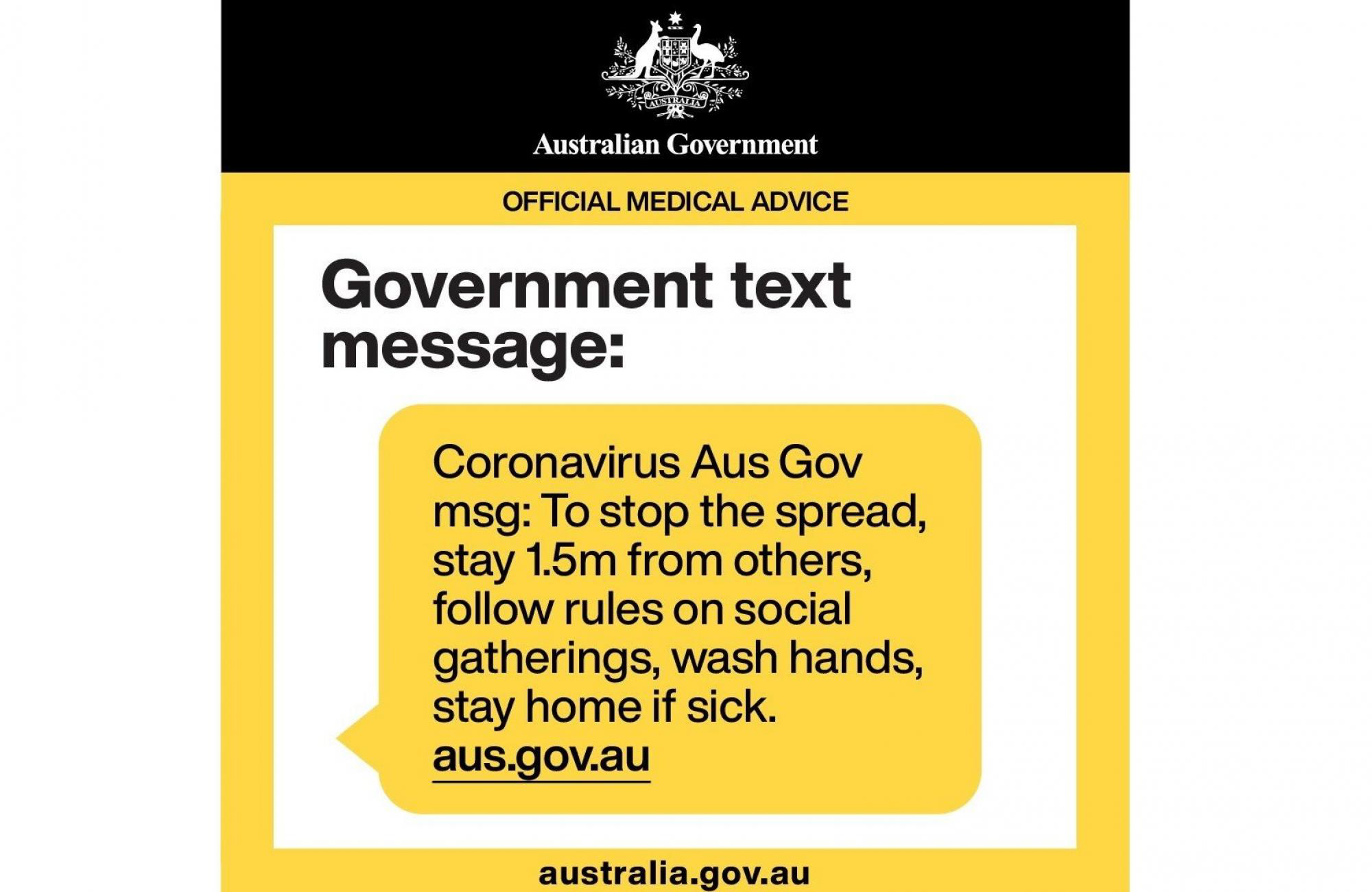
- Engage in clear communication - For example, messaging might focus on concrete actions (e.g., "keep 1.5 metres apart at all times") and specific periods (e.g., "beginning on Sunday, gatherings of ten people will be allowed"). People consider messages relevant when they both affect their lives and require relatively little processing effort. Despite the unavoidability of inconsistency during a pandemic, at any one point in time, communicators should aim for consistent messages and terminology. Building trust can be enhanced by communicating regularly (e.g., at fixed times) across many channels.
- Strive for maximum credibility - For example, leverage trusted, authoritative intermediaries such as medical and public health experts to communicate key messages. Engagement is optimal when using those who have relevant training, expertise, and trust within their networks. Public trust in experts is not automatic and cannot be taken for granted. Approaches for fostering trust in scientists might include identifying ways for citizens to participate in research, improving science communication, and adopting open-science practices.
- Communicate with empathy - Leaders should listen to the community's needs and concerns and express genuine empathy and concern. This could be done via short narratives, such as talking about the struggle of a specific person affected by the virus, though such anecdotes are not substitutes for proper policy action. Leaders should also communicate respect and a belief they trust the public, and they should praise groups or sectors of people on the frontlines and those who follow the provided guidance.
- Communicate with openness, frankness, and honesty - For example, explain why particular actions are essential, helpful, or problematic. When change is at hand, leaders should communicate early, even with incomplete information.
- Recognise that uncertainty is inevitable - It is important not to foster illusions of certainty, which could lead to the erosion of trust, and not to over-reassure as a way to reduce public fear and manage concerns.
- Account for levels of health literacy and numeracy - For example, it is recommended that communicators use both qualitative and quantitative estimates of risk, with the latter preferably expressed through simple frequencies ("the risk is very high - about 7 in every ten people are at risk").
- Empower people to act - Communication needs to be accompanied by appropriate measures to facilitate behaviour change and action; people need to have the capability, opportunity, and motivation to engage in recommended actions. Message framing is also vital; for instance, harnessing the power of togetherness can move people to act.
- Appeal to social norms - Promoting desirable social norms, using both descriptive norms (everyone is doing it) and injunctive norms (it is the right thing to do), can promote desirable behaviours. However, creating a sense of responsibility towards others by appealing to shared norms without alienating those who may not identify with such norms may be a tricky balance.
- Consider diverse community needs - For example, people with disabilities have specific and varied needs and can offer insights that should be considered when planning communications. In addition, language barriers need to be addressed through the timely translation of core communications into various languages. Cross-cultural competency may involve attending to the ways in which people prefer to receive information.
- Be proactive in combating misinformation - As soon as a particular piece of misinformation (e.g., "if you wear a mask, it is safe to enter crowded environments") gains a certain amount of traction, it is advisable to inoculate the broader populace by scrutinising the misinformation and pointing out the particular logical fallacy and the motivation behind its spread.
The paper next explains how to translate the ten recommendations into an effective communications strategy. Collectively, the ten recommendations emphasise the importance of ongoing, meaningful civic engagement. To that end, community reference groups can be regularly consulted to represent the socio-cultural diversity of respective communities. They could include: various ages of children and young adults; older adults (over age 70) and those living in residential care communities; indigenous people; gender-diverse/lesbian, gay, transgender, bisexual, transgender, and queer/questioning (LGBTQ+) communities; people affected by natural disasters; people with life-threatening conditions; and members of the hearing- and vision-impaired communities. Such groups allow planners to appreciate community concerns and needs and potential opposition to specific intervention strategies.
Part of the translation into practice process involves use of emerging digital technologies in pandemic-related communication and engagement activities. In this regard, policymakers face challenges, such as rapidly changing technologies, complex software systems that may have unintended consequences when widely deployed, and incomplete data collected on public health during pandemics. On the latter challenge, for instance, translating an effective communications strategy should reflect an understanding of data sovereignty concerning First Nations and Indigenous peoples and should involve oversight by an inclusive and comprehensive board.
The authors conclude by suggesting that this article "can serve as a guide for policymakers and communicators and provide value as an educational tool, a basis for public debate, a guide for empirical investigation, and a yardstick for holding governments to account." They call on theoretical and applied communications researchers to test and critically evaluate the framework outlined herein, noting: "Responding to pandemics is as much about communications studies, social psychology, and policy studies, as it is about epidemiology and virology. Effective public health communications in the era of COVID-19, therefore, require a genuinely cross-disciplinary perspective [that is] grounded in evidence and [that] reflects the values of democratic societies."
Humanities and Social Sciences Communications (2021) 8:30 | https://doi.org/10.1057/s41599-020-00701-w; and email from Bernadette Hyland-Wood to The Communication Initiative on March 30 2021. Image credit: Government of Australia
- Log in to post comments