










































Training Grassroots NGOs in Research: Process, Feasibility and Experiences
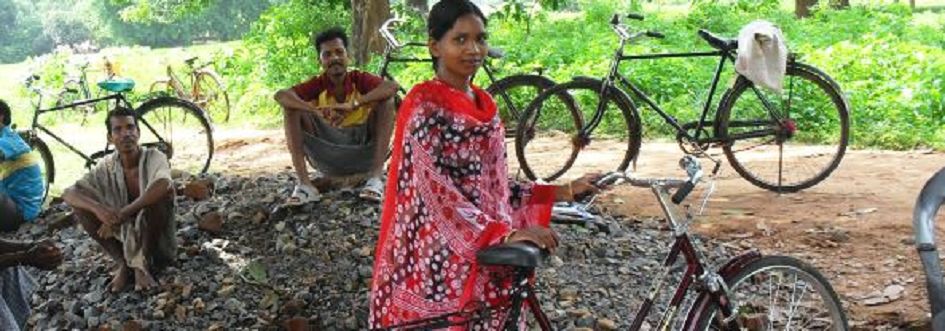
"Building research capacity of NGOs takes a long time and requires persistence. It needs academics and researchers to engage with NGOs and their networks, after developing a clear understanding of their ideology and their contribution to health and development of communities. At the same time, NGOs must be both proactive and interactive within the framework of the health research agenda."
This report describes and assesses a project that aimed to improve the research skills of non-governmental organisations (NGOs) in Theni district, India, to enable them to evolve as key players in health research and policy. Over a 2-year period, health researchers from Maharashtra Association of Anthropological Sciences-Centre for Health Research and Development (MAAS-CHRD) worked with Development Action Consortium (DAC) Trust and a network of NGOs in Tamil Nadu, implementing health and development programmes to build skills in health research. Project outputs included: training modules for training of lead trainers (bilingual English-Tamil), training modules used by lead trainers for training NGO staff (Tamil), a manual for training of trainers (TOT) in English, a manual for TOT in Tamil, observation sheets for training sessions, a feedback form for trainees, formats for evaluation of training sessions and trainees, and knowledge assessment forms for lead trainers.
Selected findings from the evaluation of this project include:
- 3 senior staff members from DAC Trust were observers for the lead trainers training workshops. Based on 15 parameters (e.g., "active involvement of all the participants was encouraged & valued in order to generate ideas, questions, conjectures, and propositions"), the sessions were categorised; all of the sessions except one (which was rated 'good') received a rating of 'very good'.
- 77 participants who attended the actual training workshops were given evaluation forms to rate the sessions and the lead trainers. More than three-fourths of the participants (n = 60/77; 80%) reported that the training met their expectations and a majority of the participants (n = 69/77; 90%) reported that the methods used during the training workshop made the concepts, terminologies, and contents of each session easy to grasp and understand.
- An external evaluator from Madurai Kamaraj University was invited to evaluate the lead trainers and the training method used for training staff of other NGOs. Using 9 parameters (e.g., communication skills), the evaluator "felt that the lead trainers used training methods which were successful in introducing their topics to the participants. The method used by them for teaching enabled the participants to grasp the various research concepts and terminologies with ease. He was pleased to see the lead trainers using energisers (short games) during their sessions which kept the participants active and alert. He was particularly content with the various group exercises used by the lead trainers for giving hands-on training to the participants on various aspects of research."
- The mid-term evaluation revealed findings such as: "The lead trainers' and NGO participants' understanding / perceptions about research had changed as a result of the information provided through this project. Many participants spoke about how they had always thought research was only to do with clinical / bio-medical aspects and not relevant to them as NGO project workers. As a result of the orientation and training provided by this project, they clearly articulated how this had changed and how they now had a good understanding of the relevance of research to their work, and its application."
- At the end of the project, NGO directors reported the trained staff had gained skills in planning, conducting surveys, documentation, analysis, and reporting, apart from communication and leadership. All of them agreed that the training had resulted in improvements in the performance of their staff members. Ten of the directors reported that their trained staff members had been able to put their training into actual use in their routine work; moreover, 6 NGOs had used their staff's newly acquired skills to plan and undertake a survey. All 15 directors desired that this type of training be continued to be offered.
Through this process, organisers learned that grassroots NGOs are keen to understand the basics of research and to apply the monitoring and evaluation (M&E) framework to their work; they are interested in finding ways to generate evidence based on carefully planned and conducted interventions and research studies so as to be able to disseminate information and undertake advocacy at local, national, and international levels. Suggested strategies for facilitating this include:
- Understand the needs of grassroots NGOs and their work profile so as to be able to plan the training and tailor the practical group exercises.
- Orient NGO directors/supervisors to appreciate the value of the training in their day-to-day work so as to get them to support their staff during and after the training.
- Keep NGO staff engaged in training sessions on research by using participatory methods and group exercises and using examples from their work situation.
- Plan training needs so that the trainees are allowed to simultaneously apply their learning in the course of their work.
- When training grassroots NGO staff as trainers who can train staff from other NGOs in research, support them and allow them to adapt the training modules used to conduct the training sessions.
- Develop a framework for assessing and evaluating the training sessions and the trainers so as to help them constantly improve their knowledge and training techniques.
"International Engagement Awards: Projects funded in 2010" [PDF]; and emails from Nikki Jeffery and Saju Joseph to The Communication Initiative on November 6 2012 and January 9 2013, respectively. Image credit: Target Tuberculosis
- Log in to post comments