










































Turning Social Listening Data into Action: Barriers and Recommendations Observed through a COVID-19 Rumor Response
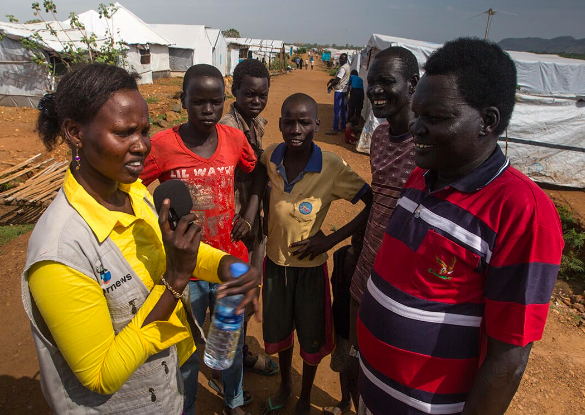
"Humanitarian actors are increasingly using social listening tools and methods as part of their 'infodemic' management, health emergency response, and overall humanitarian response. However, there is a lack of research examining how social listening findings are being operationalized."
This research report, published by Internews as part of the Rooted in Trust project, seeks to identify the impacts of, and barriers to, the effective use of social listening data in the COVID-19 response. The study is meant to serve as a first step towards a community brainstorming about the opportunities and barriers that can be encountered in social listening projects, offering observations and lessons learned by practitioners and recommendations to improve the impact of social listening projects.
The study defines social listening as: "Capturing conversations that are ongoing in communities about a specific issue (i.e. COVID-19 pandemic) or in a much more general way about anything that is of concern and interest to people. These conversations take place online (social media listening) and offline (face-to-face focus group discussions, radio, interviews, etc.)." The data captured through social listening are analysed to: help identify needs and demands for programme implementation; gain insights on information gaps, concerns, misinformation and rumours; and guide the production of risk communication products.
As explained in the report, "The COVID-19 pandemic has seen an unprecedented increase in the use of social listening methodologies for humanitarian and health response, Risk Communication and Community Engagement (RCCE) and infodemic management." However, there is a gap in evidence when it comes to the actual impacts of its utilisation and how it is being operationalised, which this report seeks to address. The research is based on the analysis of seven key informant interviews (KIIs) with organisations that are conducting social listening activities as part of the humanitarian and health response to COVID-19. They include the United Nations Children's Fund (UNICEF), Africa Infodemic Response Alliance (AIRA), the International Federation of Red Cross and Red Crescent Societies (IFRC), Nigeria Centre for Disease Control, Internews, and Ground Truth Solutions.
The paper is structured around three areas of investigation:
- The differences between what organisations are hoping for (expected results) and what they have observed so far (observed results) in relation to the impacts of social listening;
- The major barriers affecting the utilisation of findings derived from social listening; and
- A preliminary brainstorm around recommendations that could mitigate the effects of the barriers identified and contribute to a realisation of the expected results.
Overall, the expected results of social listening expressed by the interviewees can be grouped into four broad categories:
- Improve "infodemic" management - through identification and debunking of pandemic-related misinformation, trend analysis, and informing responses to common questions and concerns.
- Strengthened community engagement - though improved two-way communication with communities, which improves transparency and strengthens trust.
- Responsive programming and policy design - through the inclusion of community perspectives in programme and policy design and delivery, as well as adaptation of programming based on community input.
- More collaborative coordination - including data sharing between humanitarian, health, and government actors; collective decision-making; and joint working.
Regarding the observed results of social listening, the findings suggest that social listening efforts are already having applications, as organisations learn to incorporate and adapt the methodologies to their own programming, slowly considering its value to guide responses. Existing observed results so far identified by organisations conducting social listening include: improved RCCE; the ability for more agile adaptation in programming based on social listening data; a proliferation of social listening efforts and the incorporation of social listening as a core activity of "infodemic" management; and the fact that, despite it being accepted as a key component of RCCE, it is still not being universally considered as a reliable source to inform more general programmatic design and decision making by all responders, mainly at the policy and national health system levels.
Following the discussion of expected and observed results, the report looks at some of the major challenges preventing the realisation of social listening as a transformational tool for humanitarian response. It identifies thirteen major barriers, which exist at each of the three stages of the traditional social listening project workflow: data collection and analysis, presentation and dissemination of findings, and turning findings into action. For data collection and analysis, the study found that the qualitative nature of the data, the predominance of a social-media-only listening approach without an offline component, a reliance on traditional engagement statistics, limited qualified human resources, and issues around collaboration all hamper the effective use of social listening findings. For the presentation and dissemination of findings, the study found that issues around data sensitivity, fears of sharing negative feedback, and limited coordinated dissemination obstruct the usefulness of social listening findings. Finally, when it comes to using social listening insights to inform response, the study found that limited capacity to track structural impacts, inflexible programme design, siloed organisational cultures, single-issue focus, and political contexts all constrain effective responses to social listening data.
In order to overcome each of these barriers, the report outlines twenty recommendations intended for a range of different actors, which include donors, cluster leads, project managers, data collectors, data analysts, and decision-makers. For example, in relation to barriers to data collection and analysis, one recommendation is that donors should invest in health system preparedness by supporting the development of local "infodemic" management capacity. Related to barriers to data presentation and dissemination, one recommendation is for project managers and decision makers within health and humanitarian organisations to work to understand their different audiences' needs and interests before developing products so that products can better be tailored to their needs. They should also train partners on the value of social listening before sharing data. Recommendations around barriers to actioning data suggest that cluster leads, who are steering collective and coordinated responses, develop a collective action tracker shared among members of the coordination group.
Editor's notes:
- The video below, which is from a February 14 2023 online event hosted by Internews, discusses the main findings of this research and recommendations for the way forward with guest speakers including representatives from the African Infodemic Response Alliance, Ground Truth Solutions, and IFRC. See below or click here to watch it.
- Please get in touch with Irene Scott, Internews Humanitarian Director, at irene.scott@internews.orgto learn more about Internews' projects and methodologies. The authors of the above-summarised paper can be reached at: aposadabermudez@internews.org, rlopezinigo@internews.org, and/or sportj@who.int
Internews website on March 2 2023; and email from Rocio Lopez Inigo to The Communication Initiative on November 16 2023. Image credit: Internews