










































Use of Mobile Phones to Help Assess Quality of Polio Campaigns
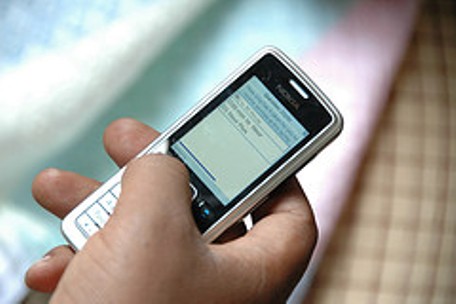
From the Polio Pipeline, No.7 Winter 2011: "The Global Polio Eradication Initiative (GPEI) is actively evaluating ways to utilize mobile phone technology to collect and analyze data on immunization activities." The data collection application EpiSurveyor, an open software tool, is designed for low-specification mobile phones. Used in developing country applications, it consists of web-based software for designing forms and viewing data, and a Java-based mobile phone application for data collection (with or without network coverage). Data is sent to a remote server, where it can be viewed and downloaded from any computer with internet access, giving the benefit of real-time transfer of data and the removal of manual data entry.
"The GPEI is now expanding this approach, utilizing the application of this software to collect Lot Quality Assurance Sampling (LQAS) data of polio campaigns to assess risks and guide improvements in both endemic and re-infected countries. LQAS is used to validate real-time independent monitoring data in areas of discordant epidemiologic and monitoring data. To date, an application has been developed and tested internally. The application will be further evaluated in the field before being subsequently rolled-out more broadly, with view of replacing paper forms currently used for data collection during LQAS."
Scale-up application of this technology is planned and has already been employed in Kenya. "Following the importation of polio into Turkana, Kenya in 2009, the Kenyan Ministry of Public Health and Sanitation implemented Short-Interval Additional Dose (SIAD) campaigns in August and October 2009 to rapidly stop the outbreak. With the SIAD approach, campaign managers needed even faster turn-around of information to monitor campaign performance and take corrective action where necessary. Standard, paper-based surveying methods of monitoring the campaign would have been prohibitive. That is why independent campaign monitors used EpiSurveyor software downloaded onto basic Java-enabled mobile phones, while field supervisors were able to deliver reports to the national level within hours of finishing the campaign thanks to the automatic report feature of the software. Health officials collected the information on the phone and then transmitted the data to the central servers. National and sub-national level managers had a constant snapshot of the campaign in the 12 target districts in real-time and could monitor the progress on the website. In addition, a GPS-enabled mobile phone allows [users] to record and transmit GPS coordinates of each sampling site so that any geographic gap in monitoring can be identified. Any weaknesses observed were acted upon nearly immediately. Such interventions included the re-distribution of the vaccines where field stocks were running out, dispatching supervisors for problem-solving, staff and transport redeployment, immediate investigation of suspected cases, as well as re-enforcement of radio messages for communities. The use of EpiSurveyor and mobile phones thus enabled managers to make real-time evidence-based decisions, thereby improving the efficacy of the campaign."
According to the GPEI website, the Polio Research Committee (PRC) is soliciting operational proposals on a range of topics, to improve the implementation and evaluation of polio eradication strategies.
For more information, contact:
Global Polio Eradication Initiative
Web-based contact form
Global Polio Eradication Initiative (GPEI) web site, June 16 2011.
- Log in to post comments