










































Utilizing ICT in Demand Generation for Reproductive, Maternal, Newborn and Child Health
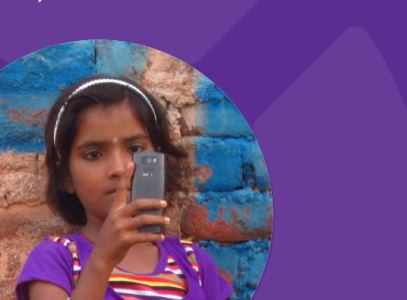
"This resource provides an in-depth look at three programs that illustrate the use of information and communication technologies (ICTs) and new media - specifically using mobile technologies - as part of an integrated strategy to increase demand for and use of reproductive, maternal, newborn and child health (RMNCH) commodities and services."
The three case studies of: Mobile Alliance for Maternal Action (MAMA); Ananya; and Mobile Technology for Community Health (MOTECH) are chosen as examples on how to use technology as part of a larger, integrated communication strategy for demand generation. It is intended as a guide for programme managers, planners, and other professionals involved in the design, implementation or evaluation of demand generation programmes for underultilised commodities named by the United Nations Commission on Life-Saving Commodities (UNCoLSC) for Women’s and Children’s Health and serves as part of the Demand Generation Implementation Kit or I-Kit.
"Demand generation increases awareness of and demand for health products or services among a particular intended audience through social and behavior change communication (SBCC) and social marketing (SM) techniques....", including creating new users, increasing demand among existing users, and taking market share from competing behaviours. Increased utilisation of the commodities can be achieved by - along with assurance of increased supply, services, and training:
- "Creating informed and voluntary demand for health commodities and services
- Helping health care providers and clients interact with each other in an effective manner
- Shifting social and cultural norms that can influence individual and collective behavior related to commodity uptake
- Encouraging correct and appropriate use of commodities by individuals and service providers alike"
Key concepts are: (i) SBCC (communication to effect change at the individual, family, community, environmental, and structural levels for improvements such as better health) and (ii) SM (marketing concepts (product, price, place and promotion) integrated with other approaches to influence behaviours for social good). Channels and approaches include: community mobilisation; entertainment education; ICTs, including mobile and smart phones, short message service (SMS), and social media, such as Facebook and Twitter; interpersonal communication (IPC); and mass and traditional media.
The case studies, in brief, represent the folowing strategies:
- MAMA (see related summaries below) aims to improve health and nutrition outcomes among pregnant women and new mothers and their infants, through sending text or voice health messages via mobile phones. Messages can include: information on, for example, attendance at antenatal care clinics, nutrition, vaccination, cord care, and use of insecticide-treated bed nets; skits; and quizzes. This model follows theories that hypothesise that, when informed, women will plan to change behaviours.
- Ananya (see related summaries below) also uses mobile technologies and mass media. It focuses on both increasing knowledge of health providers and using mass media to educate consumers in an effort to generate demand for - and utilisation of - maternal, infant and child health services in India. Created by BBC Media Action, the programme utilises a "combination of face-to-face communication, ICT, mass media and community work...", and includes Mobile Academy, a training course to expand and refresh CHWs’ knowledge of 10 life-saving behaviours, delivered via mobile phone; and Mobile Kunji, a job aid that combines mobile service and an illustrated deck of cards supporting key maternal and child health messages.
The mobile programmes use IRV technology, allowing the human caller to interact with a computer through the use of voice and tones based on keypad selection that can be accessed from any mobile phone handset. CHWs can access for their clients the authoritative voice of “Dr. Anita". Women can subscribe to a Hindi mobile messaging service, Kilkari. Complementing these are the mass media and community-based interventions, for example, street theatre and long-format radio programmes, discussed in women’s listening clubs.
According to research on the uptake and scale-up, from August 2012 to February 2013, use of Mobile Academy and Mobile Kunji was eight times higher than expected, with 75,000 unique users calling Mobile Kunji, while 21,500 CHWs initiated and paid for calls to Mobile Academy in its first 7 months.
- MOTECH aims to determine how to use mobile phones to increase the quantity and quality of prenatal and neonatal care in rural Ghana by providing two integrated mobile health services: Mobile Midwife focuses on the client, and Nurses’ Application focuses on the provider. Due to a culture of phone sharing and male dominance, messages are tailored to parents, with some focused on men. Using the IVR system, languages have expanded from English to Kasem, Nakam, Senya, and Fanta. The nurse application helps with recording and tracking care for women and newborns, as well as providing access to a database for querying due dates, appointments, etc. Focus group evaluations found that credibility was established when messages described changes during pregnancy that women then experienced. Participants mentioned changes in diet, arriving early at health centres for delivery, and increased care seeking as positive behaviour outcomes.
Recommendations include:
- "Consider an integrated communication strategy of ICT and new media...
- Consider multiple ICT and new media services, products, and applications to reach intended audience...
- Tailor health messages to the individual subscriber...
- Involve household decision makers when appropriate...
- Position ICT and new media within a broader system, including service delivery...
- Plan early for scale-up...
- Plan for sustainability, develop sustainable financing...
- Form strategic partnerships..."
Life Saving Commodities website, October 17 2014.