

























Development action with informed and engaged societies

After nearly 28 years, The Communication Initiative (The CI) Global is entering a new chapter. 

Following a period of transition, the global website has been transferred to the University of the Witwatersrand (Wits) in South Africa, where it will be administered by the Social and Behaviour Change Communication Division. Wits' commitment to social change and justice makes it a trusted steward for The CI's legacy and future. 

On the transfer, co-founder Victoria Martin expressed her pleasure to see this work continue under Wits' leadership, knowing that co-founder Warren Feek (1953–2024) would have felt deep pride in The CI Global's Africa-led direction. 

As Wits, we honour the team and partners who sustained The CI for decades and look forward building from that strong base. This includes co-founders Warren Feek (1953-2024) and Victoria Martin as well as La Iniciativa de Comunicación (CILA), which continues independently at lainiciativadecomunicacion.com with links to The CI Global site. We are also eager to forge new partnerships and entertain new ideas as we consider how best to contribute to social and behaviour change in our rapidly evolving environment.

If you are joining the International Social and Behaviour Change Communication (SBCC) Summit in Panama, please join Wits and CILA on Monday, 22 June, to share your thoughts and suggestion for the relaunch of the Communication Initiative. We will be in Pacifica 5 from 12-1:25 for the Refuel, Reflect, and Renew Lunch Series: The Communication Initiative: celebrating a driving force for Communication for Social Change and the way forward. We will reflect on the legacy of Warren Feek and family in creating the Communication Initiative, consider the contributions of CI over the years and then turn our attention towards the future in this dynamic session. 

If you are unable to join us in Panama, we still want to hear from you. Please contribute your thoughts by following this link: https://redcap.link/CommunicationInitiative2026 or reaching out to ci_surveys@commint.com

You can also follow the QR Code:

 https://redcap.link/CommunicationInitiative2026

Time to read
1 minute
Read so far

Village Environmental Assistance Project (VEAP)
0 comments
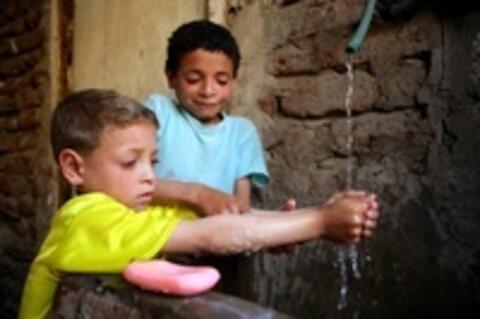
Launched by the United Nations Children's Fund (UNICEF) and completed in August 2005, the Village Environmental Assistance Project (VEAP) aimed to extend access to safe drinking water and proper sanitation in Upper Egypt, focusing on the most deprived and vulnerable villages. This included a communication awareness campaign that trained Egyptians through the use of booklets, posters, calendars, and puppet shows. It also aimed to educate communities on how to care for their drinking water resources and sanitary services and to promote healthy hygienic behaviours.
Communication Strategies

VEAP worked by following four main tracks at the same time: ensuring the water supply is safe; working to improve sanitation; providing hygiene education aimed to improve hygienic and environmental awareness and behaviour; and building the capacity of the key players in the water and environmental sector.

The project organisers developed a number of different ways of teaching communities about hygiene and the environment. Volunteers from the project villages were trained in areas such as community mobilisation, communication skills, personal hygiene, safe methods of handling water, and assessment and reporting on environmental problems in their villages. By training volunteers in the skills necessary to take care of their own families, and also in methods of communicating what they have learned to others, UNICEF hoped that the message would spread effectively and accurately, reaching far beyond the people who attended the training.

In addition to training, the project distributed information through booklets, posters, and calendars. The project also conducted educational puppet shows. Featuring the well-known Egyptian folk character Goha, the puppet show toured the areas where the project was being implemented, spreading the messages of the communication campaign in what was meant to be an entertaining and culturally appropriate way.

Development Issues

Environment, Health.

Key Points

UNICEF worked through VEAP to extend access to safe drinking water and proper sanitation to 0.5 million people, living in deprived, relatively isolated villages of Fayoum, Beni Suef, and Minya governorates.

Partners

United States Agency for International Development (USAID), UNICEF, Drinking Water Supply and Sanitary Drainage Agencies, Egyptian Federation for Boy Scouts.

Sources

UNICEF website on June 9 2005; email from Hannan Sulieman to Soul Beat Africa on May 21 2007; and UNICEF website on January 27 2009.

Teaser Image
http://www.unicef.org/egypt/Egy-MC-WES.JPG