










































Voice, Agency, Empowerment: Handbook on Social Participation for Universal Health Coverage
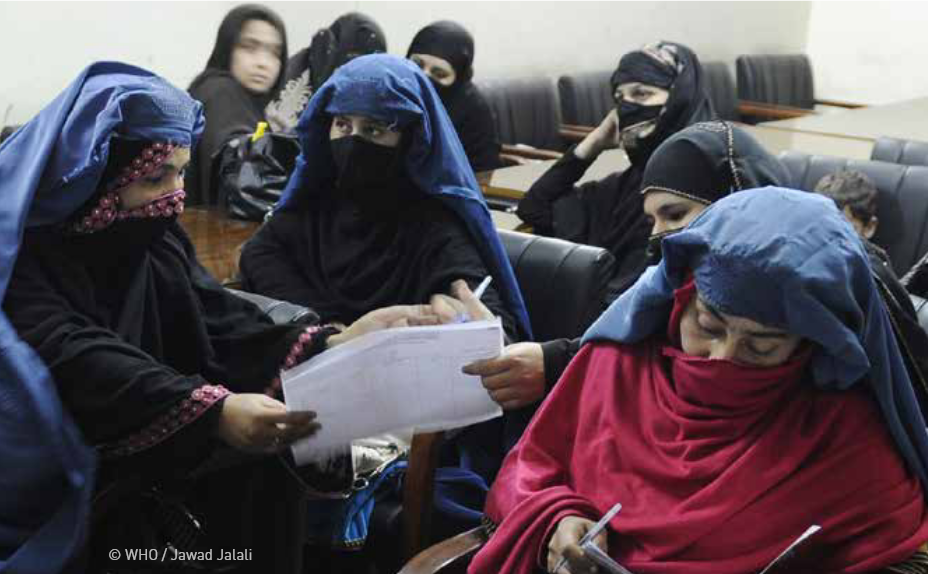
"The COVID-19 pandemic has demonstrated that societies are only as well-protected as their most vulnerable members; but equally that engaged, educated and empowered communities are one of the best defences against health threats." - Dr. Tedros Adhanom Ghebreyesus, Director-General, World Health Organization (WHO)
This practical resource is designed to help policymakers and others strengthen social participation for health decision-making and institutionalise participatory governance to drive universal health coverage (UHC). The handbook specifically focuses on bringing in the voices of people - either directly, through communities, or through civil society organisations (CSOs) - into policymaking for health through inclusive governance that ensures no one is left behind. Because centring people's voices into health policy- and decision-making is complex in practice, despite its simplicity in theory, the handbook is designed to provide practical guidance, anchored in conceptual clarifications, to support government institutions in setting up, fine-tuning, improving, and institutionalising new or existing participatory health governance mechanisms.
The handbook unpacks the different tasks policymakers should reflect on and undertake when bringing people's voices into health policymaking. Examples include creating an enabling environment for participation, ensuring good representation, strengthening capacities, increasing policy uptake of participatory process results, and sustaining participatory engagement over time. A fundamental premise of the handbook is that policymakers can leverage format and design elements of a participatory process to address power dynamics amongst participants, thereby fostering more meaningful contributions to the process.
Chapters provide practical guidance for policymakers to navigate the challenges of convening hard-to-reach population groups, of brokering dialogue when views are polarised, and of addressing socially inherent power imbalances that hinder frank discussion.
The process of handbook development included primary data collection in nine countries under the guidance of the Social Participation Technical Network (SPTN). The social participation experience of these nine countries are referred to repeatedly throughout the handbook; a brief summary of each of the case studies' focus areas and main findings are thus provided in boxes in chapter 1 for readers' ease of reference.
Specifically, chapters include:
- Participation: A Core Instrument for Voice, Agency, and Empowerment - This chapter introduces the rationale, themes, and terminology of the handbook; provides the rationale for social participation; and offers an overview of the different types of participatory spaces commonly used in health. The latter include: in-person, open-for-all forums; consultative methods with attendance by invitation; deliberative engagement methods, such as citizen panels; and formalised mechanisms with fixed seats for populations, communities, and/or civil society.
- An Enabling Environment for Participation - Considering that culturally and socially underpinned hierarchies and established channels of influence are brought into the participatory space, willingly or unwillingly, this chapter offers an analysis of power and what it means for participation. As noted here: "...power underpins the conscious and sub-conscious principles which define the prevailing rules of society....[T]he principal means to attain the objectives which a policy-maker sets out for a participatory space is to create an environment where power imbalances ingrained in a country's political, social, and economic circumstances are evened out as much as possible. Chapters 3 - 7 in this handbook lay out which steps to take to do this, focusing on the key issues facing decision-makers when managing a participatory process."
- Representation in Participation - One pivotal aspect of participatory space design is how representatives are selected and derive legitimacy; an in-depth reflection on representativeness is provided in this chapter. Besides a well-reflected selection process based on criteria that are adapted to the policy question at hand, the format and design of participatory processes heavily influence whether or not adequate representation is ensured. Well-reflected design features of participatory spaces can facilitate participants taking on their representational role and offer a safe space where all contributions are valued fairly and as equally as possible.
- Capacities for Meaningful Government Engagement with the Population, Communities, and Civil Society - The capacities that are necessary to design, steer, and take part in a participatory process are reflected on in this chapter. A central theme is that increased capacities lift the power and influence of those who have less of it (often lay citizens and civil society) while highlighting to those in positions of power (often government, but also potent interest groups) that humbly listening to diverse voices can help bring about more sustainable policy solutions.
- From Population Engagement to Decision-Making - The very notion of acknowledging, if not addressing, an imbalance of power and influence, and its consequences for a collective debate, means that all actors take on different roles within the participatory space than they might outside of it. This entails a learning process for all sides, one that does not always provide obviously visible policy gains in the short term. The long-term vision is fostering trust in health system institutions, a culture of dialogue and listening, and workable solutions. Strategies for arriving at such solutions, with effective policy uptake of participatory process results, are examined in this chapter.
- Legal Frameworks for Participation - Levelling out the playing field in terms of power and influence is also at the heart of frameworks that provide a legal basis for participatory activities in health. This chapter examines how designing such frameworks with the power balance lens in mind can contribute to more meaningful engagement of all stakeholders with each other.
- Sustaining Participatory Engagement over Time - This chapter addresses the issue of maintaining the motivation for participation over time and ensuring that it becomes institutionalised as a modus operandi of the health sector. For example: "Using local resources and leaders can help keep up trust and interest in a participatory space, while also more effectively moving towards a policy objective."
Dr. Ghebreyesus, quoted above, writes: "I hope countries use this handbook to start new conversations, to deepen existing conversations, and to invest in the most valuable commodity in health: trust."
252
Voice, agency, empowerment: handbook on social participation for universal health coverage. Geneva: World Health Organization; 2021. Licence: CC BY-NC-SA 3.0 IGO - from the WHO website, June 3 2021; and email from Marjolaine Nicod to The Communication Initiative on June 4 2021. Image credit: © WHO / Jawad Jalal