










































What's up with Fertility Awareness and Why Integrate It into SBCC Programming? Learning from Uganda, Rwanda, and Nepal
Institute for Reproductive Health (IRH), Georgetown University
Fertility awareness is defined in this presentation as "actionable information about female and male fertility throughout the life course, and an understanding of how this knowledge applies to one's own circumstances and needs." The problem is that, in the absence of such awareness, women want to delay and space births but are not using family planning (FP). The Institute for Reproductive Health (IRH) at Georgetown University is working in Rwanda, Uganda, and Nepal on this problem, using social and behaviour change communication (SBCC).
Broadcast nationwide on two stations in Rwanda, "Impano N'Impamba" is a year-long, 104-episode serial radio drama based on social learning theory. Developed by IRH and Population Media Center (PMC), it covers family planning/ healthy timing and spacing of pregnancy, HIV/AIDS prevention, youth reproductive health, gender-based violence, and maternal and child health.
In Uganda, IRH and Save the Children developed Emorikinos Daadang Etogogogitoth Alatanakithi Ngidwe (EDEAN), or "Come Together to Strengthen Child Spacing", which is a 6-month peer learning and community theatre pilot intervention on: couple communication, menstruation, fertility, and family planning.
Household surveys at baseline and endline (intervention n=400, control n=200) of EDEAN - and a post-broadcast cross-sectional, nationally representative household survey comparing listeners and non-listeners (n=1,477) of "Impano N'Impamba" - both found that participants/listeners were more likely to have higher fertility awareness, self-efficacy, and communication around family planning.
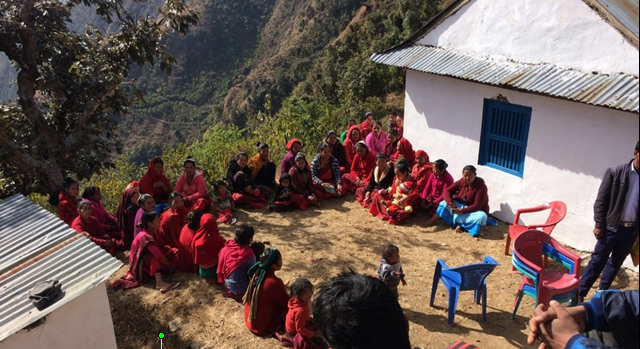
Conducted in 5 districts in Nepal, again by IRH and Save the Children, Pragati, or "Fertility Awareness for Quality of Life", is a package of 9 games developed to diffuse information on: fertility awareness, side effects and misconceptions about FP methods, and social and gender norms around FP use (son preference and early childbearing). It is implemented by female community health volunteers, health mothers group champions, and male champions. (For more on Pragati, access the related presentation referenced below.)
Lessons learned from these experiences:
- Games and storytelling can get people talking about fertility and FP and improve community reflection - important steps along the path toward behaviour change.
- Before you begin integrating fertility awareness into an SBCC intervention, explore the social norms, stigmas, and misconceptions around fertility and FP.
- The opportunity for group reflection after receiving the information is important for shifting attitudes and norms around fertility and FP.
- SBCC solutions aimed at generating demand for FP need to be paired with strong service delivery to shift behaviour from intent to use.
Editor's note: The above is a summary of a presentation delivered by Lauren Van Enk at Shifting Norms, Changing Behaviour, Amplifying Voice: What Works? The 2018 International Social and Behavior Change Communication (SBCC) Summit featuring Entertainment Education, held April 16-20 2018 in Nusa Dua, Indonesia.
Click here for the 20-slide PowerPoint presentation.
Click here for a related presentation from the Summit, "Let's Play! Using Games and Critical Reflection to Diffuse Accurate Fertility & FP Messages to Hard-to-Reach Populations in Nepal". It was presented by Naramaya Limbu, also of IRH, and explores Pragati, discussed above.
Emails from Lauren Van Enk to The Communication Initiative on April 27 2018. Image credit: Nokafu Sandra Chipanta, IRH