










































Where the Water Meets the Sky - Documentary
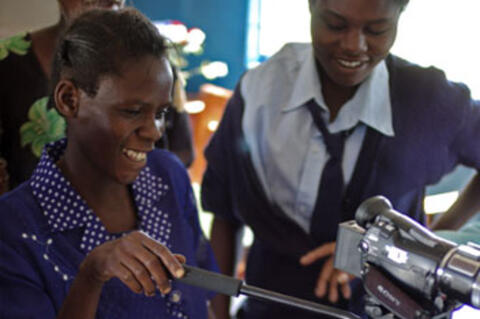
The film documents a workshop held by Camfed that involved teaching a group of 23 women about how to make a film as a way to speak out about their lives and challenge local traditions. According to Camfed, many of the women involved could not read or write, and few had been exposed to film or television. The film portrays the workshop process, as well as the stories of the women involved, focusing on one particular young woman, an 18-year old orphan, Penelop, and her struggle to provide for herself and her siblings in the wake of her parents' deaths. Ultimately, the film goes beyond documenting the workshop process and telling Penelop's story, and becomes a journey in empowerment, as the women challenge age-old social injustices within their community and encourage serious change.
Camfed decided to make the documentary film of the workshop process in Zambia after a similar workshop in Ghana. According to Camfed, the workshop process in Ghana proved transformative change for the women who participated, and, for that reason, they suggested that the women participating in the workshop in Zambia be the subject of a documentary film.
For more information and to view a promotional trailer, see Where the Water Meets the Sky website.
HIV/AIDS and Gender
According to Camfed, the women now call themselves "The Samfya Women Filmmakers". They are already working on their next film project. Some are going to school for the first time, and others have started new careers.
Where the Water Meets the Sky was named Best Film in the Global Insight category at the Jackson Hole Film Festival which was held June 5-9 2008 in Jackson Hole, Wyoming, United States (US).
Camfed began training women in filmmaking in 2003 as a way of empowering them to tell their own stories, in their own voices. According to Camfed, African women are often presented to the rest of the world by outsiders, through the lens of poverty, illiteracy, and illness. Camfed's filmmaking initiative seeks to reverse that model, transforming them from subjects into authors. It seeks to provide marginalised women, who have virtually no outlets for expressing their views, with a way to challenge injustices in their community and advocate for change. Through the dynamic medium of film, their stories also have the potential to reach thousands of people. In sharing those stories with their community, they foster dialogue around sensitive issues and stir compassion instead of judgment. In sharing the films with an international audience, the films aim to subvert misconceptions, sow genuine understanding, and make a call for action.
Where The Water Meets the Sky website on January 18 2010 and October 19 2010.
- Log in to post comments