










































Working with Young Key Populations in a Hostile Legal, Socio-cultural and Political Environment
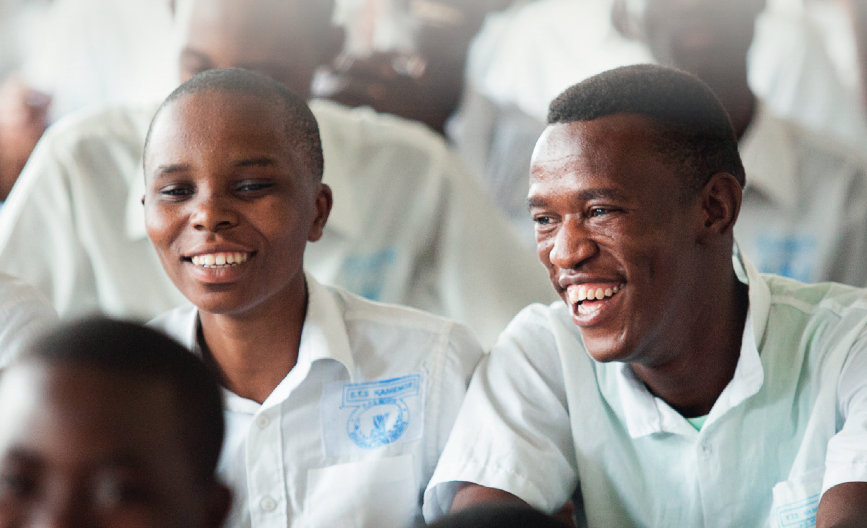
This case study looks at the experience of Alliance Burundaise Contre le SIDA (ABS) implementing the Link Up project in Burundi. Link-Up was a five-country project (2013-2016) that was designed to improve the sexual and reproductive health and rights (SRHR) of young people most affected by HIV in Bangladesh, Burundi, Ethiopia, Myanmar, and Uganda. The report highlights how, in spite of a hostile political, legal, social, religious, and cultural environment, ABS and its partners were able to implement a strategy to improve the SRHR of young people (aged 10 to 24) affected by HIV in general, and of men who have sex with men, young women who sell sex, and people living with HIV in particular.
The Link Up project carried out SRHR interventions in existing community-based HIV programmes and created linkages with SRH service providers in the public and voluntary sectors. The Burundi project was innovative in that it “worked with young key populations who are most affected by HIV. Most of them are socially neglected or excluded, experience stigma and discrimination, and are marginalised. From the beginning of the HIV response, few actors have worked with these groups because of social taboos and stigma.”
In spite of progress in responding to HIV, stigma and discrimination, gender-based violence, homophobia, and other human rights violations relating to HIV are still widespread in the country. The report describes some of the root causes that hinder the HIV responses. These include: discriminatory policies and laws that criminalise some key populations in Burundi; socio-cultural and religious factors limiting these key populations’ access to quality health care; the limited capacity of community-based organisations resulting in HIV-education approaches that are not underpinned by active community participation or engagement; and a weak political commitment to gender equality, which has hampered progress in integrating gender and human rights into the national response to HIV and AIDS in Burundi.
The case study looks in particular at five strategies used by ABS, which all aim to ensure quality service delivery for vulnerable young key populations. In brief, these are:
- Partnerships - As a network of over 400 national non governmental organisations (NGOs) working in HIV and health, ABS adopted a strategy to not provide services directly but to ensure that they are delivered by specialist partner organisations working under its guidance and coordination.
- Training peer educators - Young people trained as peer educators go on to further reach young people with useful information regarding SRHR and HIV, covering prevention, treatment, and human rights.
- Supervision to improve peer educators’ performance - In their daily work, peer educators are regularly supervised to improve peer educators’ performance through capacity building and increased motivation, to encourage better organisation in tracking the young people they are in charge of, and to provide support if needed.
- Advocacy - In implementing the Link Up project, ABS had to take into account the country’s complex and challenging legal, ethical, and socio-cultural contexts and, as part of their activities, conducted advocacy workshops for policymakers.
- Research - This included a survey on the scope of backstreet abortions among young women who sell sex.
The results of the project are discussed with the help of graphs and tables, and the results are compared to anticipated outcomes. Overall, the report states that targets have been met and surpassed in most cases. “These results suggest that ABS had not only largely underestimated the capacity and engagement of the actors involved but also the relevance and effectiveness of the strategies used. The number of young people reached has risen steadily year on year, along with the number of referrals and the number of young people sensitised and trained.”
The report describes some examples of good practice emerging from the project and how they were implemented. These include: the use of peer educators; the use of HIV-positive young people to support young people who have undergone HIV testing; the documentation of human rights violations using the REAct (Rights, Evidence, Action) system; an emphasis on youth participation; and the use of youth/parent dialogues.
Lessons learned include:
- “Taking into account age groups, gender and key populations has been crucial to achieving the project’s objectives.
- Such is the range of perceptions, reach, personalities and even levels of understanding among young people that service provision must be tailored to meet individual needs.
- Private-public partnerships and partnerships with community-based organisations help expand access to SRH and HIV services.
- The regular supply of commodities and their well-organised distribution by young people themselves are key to ensure the provision of quality SRH services.
- Training young people on health-promoting behaviour is vital. It requires an appropriate space where young people can reflect and not only access care.
- Engaging young people in all aspects of planning allows them to take ownership and facilitates implementation.
- Documenting cases of violations of sexual and reproductive rights is a very important step for advocacy: it means that advocacy is informed by evidence.”
Finally, the report looks at some of the challenges and future plans for the project. Challenges include scaling up the intervention to cover other geographic areas and developing young people’s knowledge and personal skills regarding SRHR in the face of various sources of information, which can often convey contradictory messages. As one of the future plans, ABS will seek to undertake advocacy so that community health systems - such as the network of community health workers and committees defending human rights - integrate the notion of SRHR into their work.
International HIV AIDS Alliance website on November 7 2017.
- Log in to post comments