











































Young Reporters' Network Tanzania
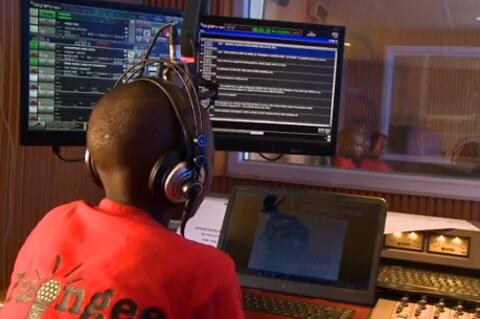
The YRN works with child volunteers aged 10 to 17, with special emphasis on recruiting vulnerable and marginalised children, for example: children living with or affected by HIV and AIDS, children living on the streets, and children who face stigma, discrimination, hunger, and violence. Through the network, children learn skills of handling and using radio equipment and cameras and reporting and producing quality programming for children. The young reporters meet regularly to brainstorm themes and story ideas for their 30-minute programmes.
The young reporters produce 30-60 minute programmes in different formats, including audio diaries and commentaries, interviews, and talk shows. The programmes enable the young reporters to share true stories about their lives, about living with HIV, about living on the streets, about neglect, and about child rights.
Each collaborating non-governmental organisation (NGO) identifies and works with 15 young people to ensure they have a safe and supportive place to meet, are safe and protected while reporting in the field, and have access to key decision-makers for their radio stories. Each NGO is allied with a local community radio station, which provides 30 minutes of airtime every two weeks, as well as guidance in story development and production. The produced programmes are also shared through the Tanzania Community Radio Network (as free content), and every week one of the Young Reporters Network programmes is broadcast on national radio, TBC Taifa.
Radio programmes can be listened to and downloaded from Soundcloud.
The project also runs a Mtandao wa Wanahabari Watoto Tanzania Facebook page.
Children, Rights, Media
According to UNICEF Tanzania, "the voices of young people continue to remain silent in Tanzania even though they face significant challenges and obstacles to their well-being, growth and development. Child rights rarely feature in the mainstream media and if they do are usually tokenistic and from an adult’s perspective. Therefore, young people seldom have the opportunity to influence or comment on the way their own stories are told. One cannot dispute the fact that given the right opportunity, young people do have a wealth of knowledge, experience and ideas that are unique to them, enabling them to offer key insights and perspectives on the issues that concern and affect them."
According to the UNICEF website, as of March 2013, over 200 children have been trained in radio reporting and handling of digital and flip cameras in Arusha, Dar es Salaam, Morogoro, Shinyanga, Kigoma, Kilimanjaro, Mwanza, and Zanzibar.
UNICEF Tanzania, Zanzibar Association of People Living with HIV and AIDS (ZAPHA+), Mkombozi, Save the Children and Plan International; and Zenji FM, Radio Sauti ya Injili, Radio Tumaini, Pambazuko Radio, and TBC Taifa.
UNICEF Tanzania website and UNICEF Eastern and Southern Africa website on June 30 2014.
- Log in to post comments